Lol Apple made it impossible to understand how to turn on and off the laptop and removed the startup sound leaving you with zero feedback when you start the laptop for an eternity.
If you read the details of that decision, they're pretty interesting - they only did it because people were claiming CloudFlare were supporting their ideas.
Matthew Prince basically said "this is dangerous" and a month or two later that exact decision was being used against them in court to take down a copyright infringer.
Not saying one way or another about it being a good or bad decision, but they definitely knew they were setting a scary precedent when they did it.
The chaos coming out of an equity battle will make the 2 of 2:1 worth less than making the thing successful. You have no power here, as you should know as a c-suite guy, so suck it up, work hard and wait.
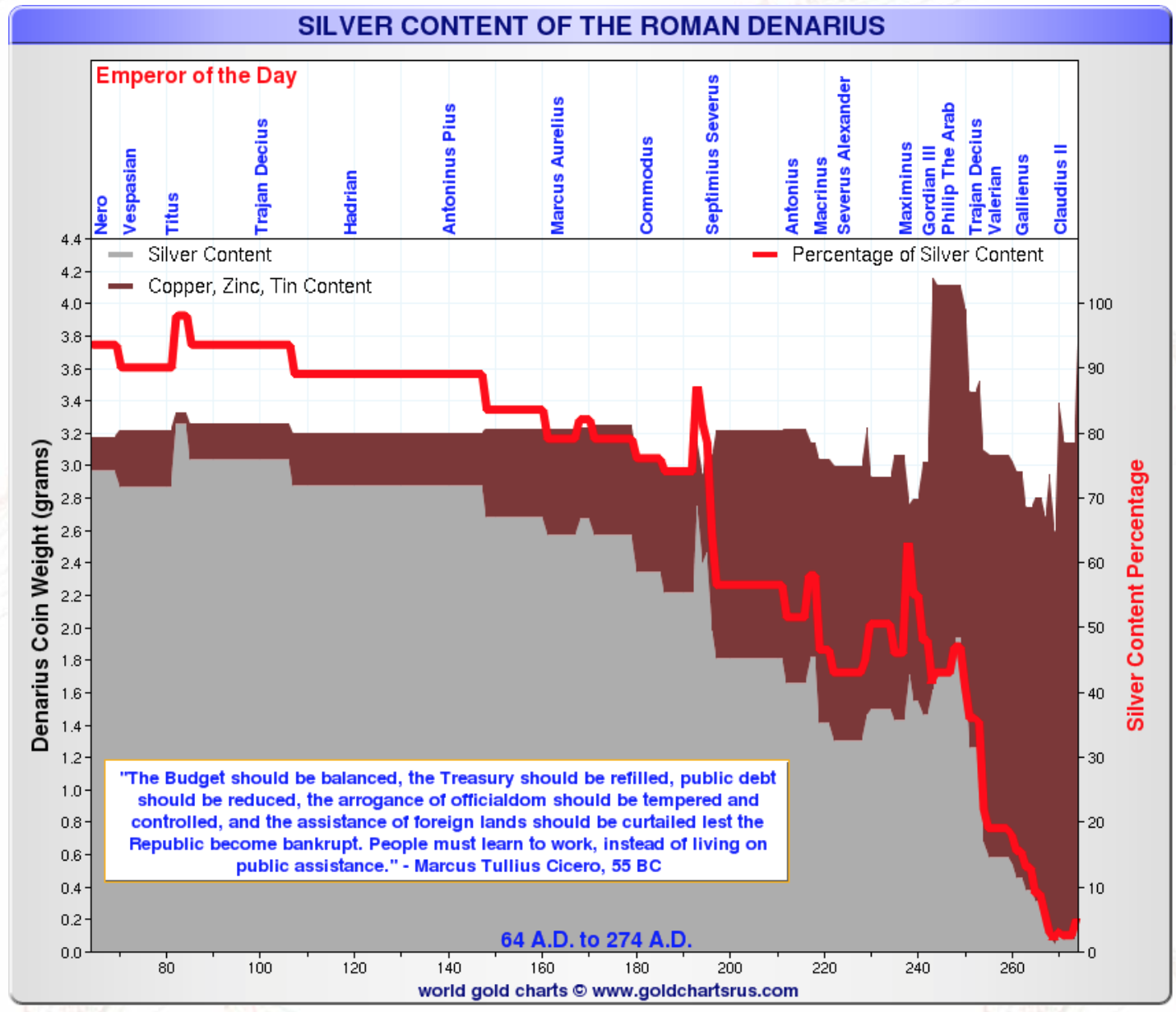
Rome devolved into a multicultural empire where the elites imported foreign tribes to provide cheap labor, usury was rampant and the native stock stopped having children.
Yes, for almost all projects I work on due to the plugin ecosystem. If size is a concern I will look at zepto, a smaller 80/20 implementation of the jQuery API. And I almost always use intercooler.js to keep my js footprint small.
If by Europeans, you mean white, then that isn't true. The US incarcerates whites at the rate of 450 per 100k which is roughly double the rate of any European country except for Russia and equal to Russia's rate. It's triple or more the rate of incarceration in most of Western Europe.
If you are referring to people who are actually from European countries, then I haven't seen data on that, but Europeans in the US would be a very small non-representative sample of Europeans, so I fail to see the relevance.
Yes, Europe is sending us their best so the sample in the US is not representative.
I think you are responding to someone talking about people who share the cultural upbringing of Europe rather than race. Unless you think race is a powerful indicator of criminality?
There’s a strong negative correlation between latitude and crime. One hypothesis is that people further away from the equator spend more time inside annually, and thus have less opportunity for crime.
Alaska is next to South Carolina. DC tops the list. Both of these are relatively small populations, but then you have Michigan and Indiana above New Mexico.
If there's a correlation there, it doesn't seem obviously strong.
Some of that list is ordered how I'd expect, but I wouldn't have guessed that NY has significantly lower than US-average murder rates, and Alaska significantly higher. Interestingly both CA and TX are pretty much exactly at the US average, despite fairly different politics/policies.
NY has restrictive gun-controls, is quite urban/dense and has the 2nd highest gdp/capita by state. They're all correlated with lower murder rates, that helps explain things a bit on NY.
The one thing NY does have is high inequality measured in gini, the highest of all states. That usually drives crime/murder rates. But it's probably because of rich outliers (extreme upper capital class), rather than a big gap between lower-uppermiddle.
Canada has far more restrictive gun control than NY, yet we are already on track to beat NY state in shootings this year with some cities having a 94% increase in violent gang offenses involving illegal handguns according to StatsCan. The difference must be policing and whatever gang strategy NY state has developed to get kids not to join them.
Could you reference me? Canada's murder rate is about 1/2 of the NY rate, and about 1/3rd of the US rate, and is about half of its peak 40 years ago. Canada has roughly the same amount of murders as NYS but the latter has 54% (let's say half) the population.
It's true that the rates are rising for a few years in a row, but this is nothing new. If anything, Canada's typical pattern is to see a rise a few years in a row, followed by a stronger drop. [0]
It's also true that gang related offences were part of the recent rise. But let's also note that they entail about 100 of the 600 murders in Canada, 15.5% in the last year for which I can find data. (2016). The vast majority of murders are done not by strangers but by friends or family, not related to gang violence.
About 95% of the world (not counting the US) has a lower per capita income than the poorest US cities.
Arguably the poorest US state, West Virginia, has a typical murder rate of around 3 to 4 per year per 100k.
Vietnam has been extraordinarily poor for the last half century, only recently beginning to climb economically. Its murder rate is typically 1 to 1.5 or so.
Per capita income probably only has a correlation in regards to the resources you have available to deal with crime problems if such presently exist, rather than being the defining characteristic of whether eg murder will be prevalent in a nation.
> About 95% of the world (not counting the US) has a lower per capita income than the poorest US cities.
Sure if the average salary in Vietnam is $150/month then yes per capita income is going to to be lower than the poorest cities in US. $150/month is a different story in NYC or SF. It would have to be adjusted for purchasing power or maybe just looking at poverty rates.
> So how effective is that alone? It seems per capita income would be the prevalent factor.
It isn't, alone, in a cherry-picked example. But ceteris paribus it's a explanatory factor.
I mean, one could also use your argument the other way around and question whether income is effective as a factor by itself. Cherry pick some country with similar levels of median wealth and a wildly different murder rate and gun laws. Like say the Netherlands and the US. Doesn't really prove a point, it'd be silly to now claim income isn't an important factor.
Here's one take-home message: if you made up a country which was 10% like Venezuela and 90% like Germany, then it would have murder stats double the USA.
It would also have a GDP much like the USA, and would qualify for the OECD.
Obviously this is just about how averages work -- the high violence stats of the 10% can completely skew the average, but their low income stats can't. But it's worth remembering, every time someone tries to tell you what an outlier among rich countries the US is. It's a large, diverse, country... and often different averages are telling you facts about completely different people & places.
Amsterdam has a murder rate commonly as high as the whole of the US. That isn't a rational comparison and isn't indicative of the murder rate of the Netherlands.
Yet millionaires sit having tea in St Louis right now with zero fear that they are in any danger. City metrics are as useful as state and country. Some places are safer than others. Usually determined by how much mONEY is available in that place to pay for armed force to keep it safe.
Try having a conversation with Europeans about how many trillions of dollars in reparations they owe black Americans and black Latin Americans (those that are descendants of slaves), for the millions of slaves their various nations/empires transported from Africa to North and South America over centuries.
It’s an internal problem first and foremost and progress needs to be made at home first. There are models to follow. New Zealand had been making slow and steady progress righting colonial wrongs. There have been many missteps and failures but the overall direction is positive. Important differences though - systematic and large scale slavery didn’t happen and the time frame during which the damage was done was shorter.
My point primarily is that, the discussion about reparations, is almost universally isolated to how much the US Government should have to pay. It almost universally excludes the nations that dominated the slave trade, such as Britain. Various rich, powerful European nations benefited massively from the economic output of the vast slavery they initiated and maintained, while suffering essentially none of the consequences, leaving the young US nation (and obviously numerous other nations in the Americas like Brazil or Haiti) to deal with those consequences ever since.
There's no scenario where you can propose the Netherlands should compensate slave descendants in the Americas, to the tune of hundreds of billions of dollars or more, where you're going to convince them to even have that conversation. People of the Netherlands today will simply tell you they had nothing to do with it, and should not be held responsible for past sins, and that's the end of the conversation (unless you want a small token sum to wipe away the guilt and grievance).
New Zealand’s problems due to colonisation stem almost entirely from the British government. It should be them paying to fix it and not New Zealand, with liability for actions that New Zealand pays for starting from when we governed ourselves. However this isn’t going to happen - Britain will never pay, so fixing it ourselves is the only course that repairs the damage that can be repaired. The sooner action is taken the better.
It’s simpler here because much of the harm done relates to land theft. Working out who you repay when people don’t necessarily know where they were kidnapped from and what they lost is not the same.
You didn't mention the African kings and chieftains who sold the captured members of rival tribes to the Europeans in exchange for guns and rum. The is a key link in the slave trade that is ignored in these discussions. If you think Europeans were walking into jungles and capturing slaves themselves, you are sorely misinformed.
Not sure I see any of that where I am but if you want to stretch that view, Africa gave us humans so who owes who? There is plenty out of Africa that has helped the rest of the world, why the blinkered view?
Edit: I see that your account is a throwaway that spends its time defending the slave trade.
Well that's actually precisely the problem and conversation that reparations always prompts.
Most people's hands are clean in a direct sense. Almost nobody in a developed nation has clean hands indirectly. Very few white people were slave owners or traders. How could one possibly account for the benefit a white (or black or asian) person in Britain today derives from British slavery in the 18th century? How could you possibly proportion reparations on any nation? Should a person that immigrated to Britain in 1978 from China, have to pay taxes to cover those reparations? Plausibly there's no way to deal with that fundamental issue that doesn't involve harming extremely large numbers of strictly innocent people, and the theoretical cost would be massive if you did attempt to do it (such that it would be guaranteed to be a tax on everyone across the board, regardless of race or guilt).
I've seen a lot of valid discussion of reparations in my lifetime. The topic itself is perfectly legitimate as a discussion matter. I've never once seen a practical way suggested that it could be implemented justly in regards to any of that nations that were responsible for the African slave trade.
Only 1.2% of the former slaves interviewed by the Works Progress Administration in the 1930s reported having been raped by a master. Today, 22% of black women report having been raped.
According to Steven Crawford in "The Slave Family: A view from the slave narratives", 51% of black slaves had intact families. In 2011, only 37% of blacks had intact families.
> Today, 22% of black women report having been raped.
In the first search result I found for this, it says 18.8% of African-American woman are raped in their lifetime, 17.9% for Caucasian. They also indicate that some of the differences in numbers have to do with cultural perceptions of what constitutes rape and privacy about personal matters.


This is why a lot of front end folks should look at an alternative like intercooler:
http://intercoolerjs.org
It is far less violent to deal with, with a much lower barrier to entry and satisfies most needs of most web apps.