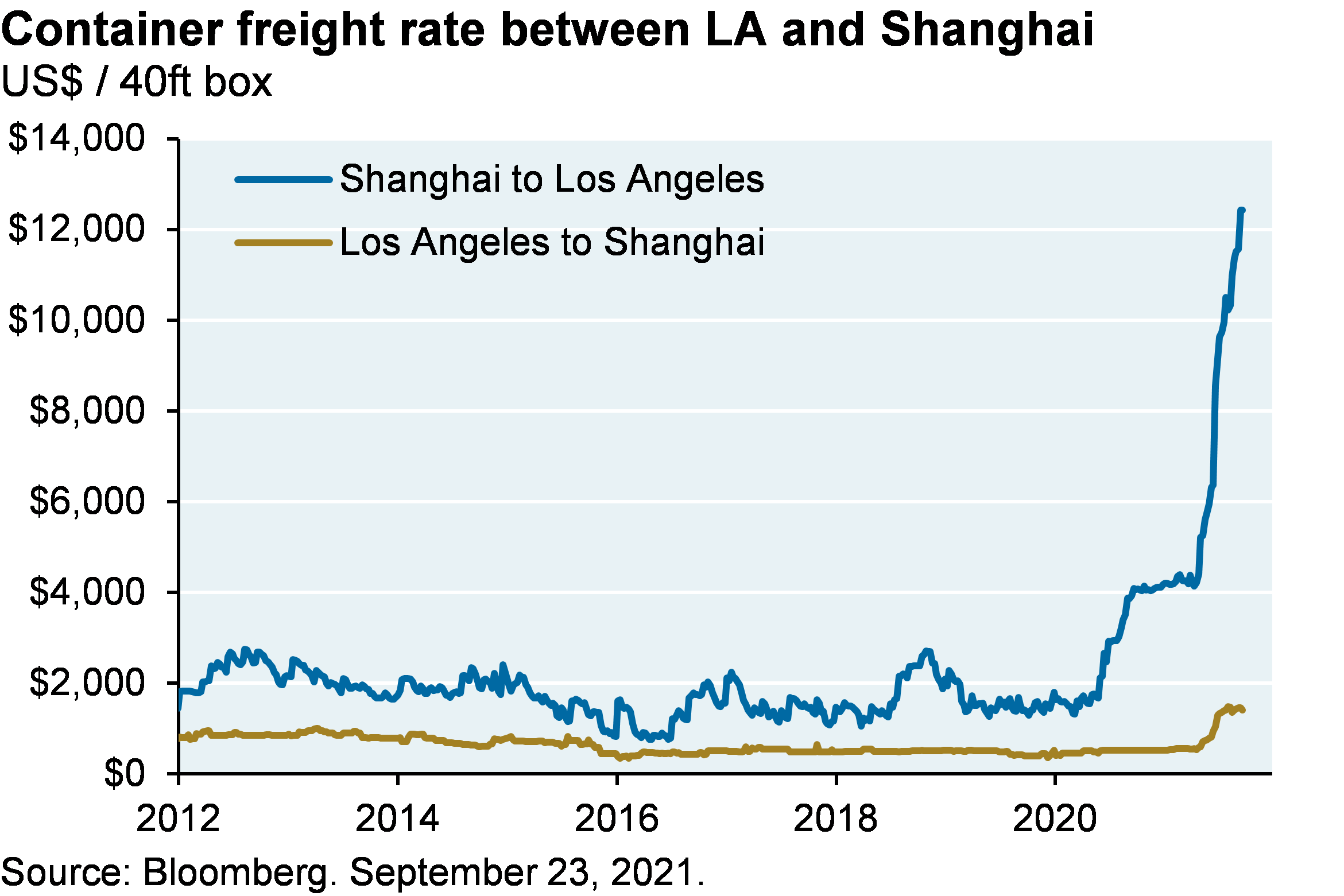
Your last point is being reported. It's cheaper for the Chinese to export containers (with subsidized steel) than it is for shipping them back, so they're just making new ones.
Conjecture, but policy wise, this could relate to steel tariffs, decrease Chinese steel imports to the US and finding the container market to allow you to keep pumping money into the industry
It's not that it's cheaper to make new containers. It's that the opportunity cost of waiting for the ship to be loaded with empty containers is more expensive than immediately heading back to Shanghai with an empty ship so that you can make another very lucrative journey to LA.
That's my limited understanding of the situation. I could be wrong.
The goods waiting in Shanghai are not in freshly minted containers. If they were, shipping from LA to Shanghai would be much more expensive than your graph suggests, because otherwise it would have been cheaper to ship one from LA than buy new one in Shanghai, and so people would do that instead of buying new containers.


Conjecture, but policy wise, this could relate to steel tariffs, decrease Chinese steel imports to the US and finding the container market to allow you to keep pumping money into the industry