There are quite a few comments here about benchmark and coding performance. I would like to offer some opinions regarding its capacity for mathematics problems in an active research setting.
I have a collection of novel probability and statistics problems at the masters and PhD level with varying degrees of feasibility. My test suite involves running these problems through first (often with about 2-6 papers for context) and then requesting a rigorous proof as followup. Since the problems are pretty tough, there is no quantitative measure of performance here, I'm just judging based on how useful the output is toward outlining a solution that would hopefully become publishable.
Just prior to this model, Gemini led the pack, with GPT-5 as a close second. No other model came anywhere near these two (no, not even Claude). Gemini would sometimes have incredible insight for some of the harder problems (insightful guesses on relevant procedures are often most useful in research), but both of them tend to struggle with outlining a concrete proof in a single followup prompt. This DeepSeek V4 Pro with max thinking does remarkably well here. I'm not seeing the same level of insights in the first response as Gemini (closer to GPT-5), but it often gets much better in the followup, and the proofs can be _very_ impressive; nearly complete in several cases.
Given that both Gemini and DeepSeek also seem to lead on token performance, I'm guessing that might play a role in their capacity for these types of problems. It's probably more a matter of just how far they can get in a sensible computational budget.
Despite what the benchmarks seem to show, this feels like a huge step up for open-weight models. Bravo to the DeepSeek team!
They have had the best math models for about a year most folks just didn't know about it. You can't find inference on APIs, but I run these at home, this is also the advantage of open models.
You are of course specifically referring to the math optimised models, not the chat ones folks would generally encounter. Not that I’m trying to contradict you, your point is super valid and I agree with you! But I’m supplementing to help anyone following along who may make choices.
Shouldn't one use e.g a Wolfram Alpha MCP endpoint for math in AI? From what I've seen on even premium non-quantized models, I would never ever trust the innate ability of a LLM to calculate.
When you say "Gemini", which exact model do you mean? You know there are several and they vary a lot in how capable they are? Pro 3.1 Preview, 2.5 Pro (their latest non-preview pro model), Flash 3 Preview, ...
Same with GPT-5: Latest 5.5, prior 5.4, or actually the original 5 (.0)?
You can't talk about model performance without specifying the exact model.
My apologies, I thought it would be implicit that I am using the top-tier model of the time given the challenge of the tasks. GPT-5.5 was too new in this top comment (although I did test it a bit in a comment below), so I was using GPT-5.4. Gemini is Pro 3.1 Preview.
I reviewed how DeepSeek V4-Pro, Kimi 2.6, Opus 4.6, and Opus 4.7 across the same AI benchmarks. All results are for Max editions, except for Kimi.
Summary: Opus 4.6 forms the baseline all three are trying to beat. DeepSeek V4-Pro roughly matches it across the board, Kimi K2.6 edges it on agentic/coding benchmarks, and Opus 4.7 surpasses it on nearly everything except web search.
DeepSeek V4-Pro Max shines in competitive coding benchmarks. However, it trails both Opus models on software engineering. Kimi K2.6 is remarkably competitive as an open-weight model. Its main weakness is in pure reasoning (GPQA, HMMT) where it trails Opus.
Speculation: The DeepSeek team wanted to come out with a model that surpassed proprietary ones. However, OpenAI dropped 5.4 and 5.5 and Anthropic released Opus 4.6 and 4.7. So they chose to just release V4 and iterate on it.
Basis for speculation? (i) The original reported timeline for the model was February. (ii) Their Hugging Face model card starts with "We present a preview version of DeepSeek-V4 series". (iii) V4 isn't multimodal yet (unlike the others) and their technical report states "We are also working on incorporating multimodal capabilities to our models."
That's fine for procedural tasks, and I understand its value there. But these particular tasks I'm referring to occur on the front lines of research. You can't expect the prompts to be incredibly detailed, since those details are the whole challenge of the problem. I think there is value in having models that are capable of making really good preliminary insights to help guide the research.
I really wanted to get excited about opus but in my own real world usage, I wasn't getting much out of it before hitting my limits. meanwhile i can abuse codex on 5.5 for hours getting a whole lot of work done. Plus, open code and PI are much more fun and interesting harnesses to work from than claude code imho.
I will however say that claude work and design are really great up until i blow its limit.
I'd be interested to know when that Opus 4.6 baseline is from given their recent recognition of performance issues. Do you have a paper posted on this review?
Ack. I took the benchmark results that AI Labs themselves published for their models. So the Opus 4.6 baseline would be from the time that Anthropic released the model.
Wondering how gpt 5.5 is doing in your test. Happy to hear that DeepSeek has good performance in your test, because my experience seems to correlate with yours, for the coding problems I am working on. Claude doesn't seem to be so good if you stray away from writing http handlers (the modern web app stack in its various incarnations).
Very cool to hear there is agreement with (probably quite challenging?) coding problems as well.
Just ran a couple of them through GPT 5.5, but this is a single attempt, so take any of this with a grain of salt. I'm on the Plus tier with memory off so each chat should have no memory of any other attempt (same goes for other models too).
It seems to be getting more of the impressive insights that Gemini got and doing so much faster, but I'm having a really hard time getting it to spit out a proper lengthy proof in a single prompt, as it loves its "summaries". For the random matrix theory problems, it also doesn't seem to adhere to the notation used in the documents I give it, which is a bit weird. My general impression at the moment is that it is probably on par with Gemini for the important stuff, and both are a bit better than DeepSeek.
I can't stress how much better these three models are than everything else though (at least in my type of math problems). Claude can't get anything nontrivial on any of the problems within ten (!!) minutes of thinking, so I have to shut it off before I run into usage limits. I have colleagues who love using Claude for tiny lemmas and things, so your mileage may vary, but it seems pretty bad at the hard stuff. Kimi and GLM are so vague as to be useless.
My work is on a p2p database with quite weird constraints and complex and emergent interactions between peers. So it's more a system design problem than coding. Chatgpt 5.x has been helping me close the loop slowly while opus did help me initially a lot but later was missing many of the important details, leading to going in circles to some degree. Still remains to be seen if this whole endeavour will be successful with the current class of models.
Do you an idea of how well these models perform on set theory problems or more niche fields in mathematics? So the model would have to both understand a paper that’s not in its training data, and use this to write proofs.
This is all fairly niche stuff I'm trying it on (well, the first three problems anyway), so yes, it needs me to give it several papers that are not in its training data and use them to write proofs. I would expect my experiences to transfer to set theory problems as well.
Very interesting. I wonder how much of this is due to the context length. I am unclear on the implementation strategy, you ran this problem as a 1-shot using chat mode, or using each on an agent harness?
Has nothing to do with context length, they have experience training math models, they have a model that would take gold in IMO and a lean prover. Both have been out for almost a year.
> there is no quantitative measure of performance here
Have them do multiplication or other complicated arithmetic. You say that isn't difficult. Then why do they burn 200k tokens in 20 minutes without converging? I did a deep exploration to help myself understand here [0].
I don't want to give away too much due to anonymity reasons, but the problems are generally in the following areas (in order from hardest to easiest):
- One problem on using quantum mechanics and C*-algebra techniques for non-Markovian stochastic processes. The interchange between the physics and probability languages often trips the models up, so pretty much everything tends to fail here.
- Three problems in random matrix theory and free probability; these require strong combinatorial skills and a good understanding of novel definitions, requiring multiple papers for context.
- One problem in saddle-point approximation; I've just recently put together a manuscript for this one with a masters student, so it isn't trivial either, but does not require as much insight.
- One problem pertaining to bounds on integral probability metrics for time-series modelling.
Regarding the first problem: are you looking at NCP maps for non-Markovian processes given you mention C*-algebra? Or is it more of a continuous weak monitoring of a stochastic system that results in dynamics with memory effects?
I'd be very curious to know how any LLMs fare. I completely understand if you don't want to continue the discussion because of anonymity reasons.
More of the latter. It's a pet project of mine, and all of the LLMs tend to utterly fail at getting anywhere with it, at least in chats. In an agentic setup, it can chip away at some aspects, but it needs serious guidance on relevant language, notation, and concepts. To me, it demonstrates that the LLMs are not particularly good at crossing literatures, but then again, humans rarely seem to be good at that either...
It would be wonderful to have a deeper insight, but I understand that you can disclose your identity (I understand that you work in applied research field, right ? )
Yes, I do mostly applied work, but I come from a background in pure probability so I sometimes dabble in the fundamental stuff when the mood strikes.
Happy to try to answer more specific questions if anyone has any, but yes, these are among my active research projects so there's only so much I can say.
I have plans to publish the problems, not any plans to publish how well the LLMs perform on them. The standard for publishing benchmarks is very high, and I'm really just posting vibes here. Still, I hope my experiences are useful to some people, as others experiences have been useful to me.
Agreed, they also have great documentation. There's something to be said for documentation that is so concise, well laid out, and immediately actionable for those looking to get started quickly.
For me, DeepSeek has been the best so far, in terms of coding skills, performance and documentation all together. Too bad this is flagged as 'concerning' when it comes to privacy, while on the other hand Gemini, ChatGPT and Claude are way beyond that, especially their mobile apps requiring a lot of permissions.
First you clone the API of the winner, because you want to siphon users from its install-base and offer de-risked switch over cost.
Now that you’re winning, others start cloning your API to siphon your users.
Now that you’re losing, you start cloning the current winner, who is probably a clone of your clone.
Highly competitive markets tend to normalize, because lock-in is a cost you can’t charge and remain competitive. The customer holds power here, not the supplier.
Thats also why everyone is trying to build into the less competitive spaces, where they could potentially moat. Tooling, certs, specialized training data, etc
Our (western) economic model forces competing individual companies to be profitable quickly. China can ignore DeepSeek losing money, because they know developing DeepSeek will help China. Not every institution needs to be profitable.
Ah yes, the Western economic model forcing individual American companies like Amazon , Youtube and Uber to become profitable after.. checks notes _14 years_ for Uber, 9 years for Amazon, many years for Youtube.
yes, they want to win the same way they won more or less every other economic competition in the last 30 years, scale out, drop prices and asphyxiate the competition.
Yeah, it’s an interesting one. I think inertia and expectations at this point? I don’t think the big labs anticipated how low the model switching costs would be and how quickly their leads would be eroded (by each other and the upstarts)
They are developing their moats with the platform tooling around it right now though. Look at Anthropic with Routines and OpenAI with Agents. Drop that capability in to a business with loose controls and suddenly you have a very sticky product with high switching costs. Meanwhile if you stick with purely the ‘chat’ use cases, even Cowork and scheduled tasks, you maintain portability.
No, they are not. If they were "racing to AGI" they would be working together. OpenAI would still be focused on being a non-profit. Anthropic wouldn't be blocking distillation on their models.
If by AGI you mean IPO, sure. I genuinely don't believe Dario nor Sam should be trusted at this point. Elon levels of overpromising and underdelivering.
If you want other people to know whether you're being genuine or sarcastic, you'll have to put a bit more effort into your comments. Your comment just adds noise.
I spent only two minutes reading their documentation and it’s clear no one did any proofreading and it’s full of mistakes made by non-native speakers.
Example: the second sentence on the first page says “softwares” but “software” is a mass noun that cannot be pluralized.
Example: the third page about tokens has some zipped code to “calculate the token usage for your intput/output” and obviously “intput” should be “input” but misspelled.
As a company that produces LLMs, they could have even used their own LLM to edit their documentation to fix grammar issues, and yet they did not.
Maybe I’m just extra sensitive to grammar and spelling issues but this kind of lack of attention to detail is a huge subconscious turnoff. I had to fight my urge to close the tab.
Yeah I think those details are the least of most peoples concerns. I can't vouch one way or another for DeepSeek's documentation but for me what matters most when reading documentation is being able to get the information I want efficiently, not whether someone spelled "software" as "softwares", which is a very common spelling in Asia as an FYI.
I read OpenAI or Anthropic's documentation nowadays and it's just so full of useless junk and self-congratulation that makes it a miserable experience to go through. It's a real shame because OpenAI used to write stellar documentation and publish really lucid papers just few years ago.
I try hard not to care but subconsciously spelling errors and grammar issues scream low-quality work to me. It’s the kind of mistake that’s the easiest to correct, and they didn’t bother.
The phrase “missing comma” is missing an article. You need “a” or “the” before that. As a result when reading your comment, I subconsciously think of it as low quality.
But it’s okay. HN comments aren’t supposed to be high quality anyways. I know mine aren’t. But the official product documentation ought to be.
Between you, me, and the Deepseek team, so far as I'm aware, only one entity has caused the Western frontier model companies to panic by delivering an open model that competes far more cheaply, to the point where people are running versions of it at home.
So they spelled software wrong. So what? Outside of this being the mental equivalent of a too-scratchy-sweater for the kinds of people sensitive to that sort of thing, I don't see why it matters.
Those of us that have spent a lot of time programming with non native English speakers (the majority of software engineers on earth) have learned long ago that English ability has no correlation with engineering ability.
It may be a sign deepseek isn't "only for" Americans. Billions of non-native speakers communicate in "flawed" versions of English. Similar for other languages. Circling back to polish instructions for the picky among the Americans... hmm
If it tickles anyone's subconscious feelings, it would be their internal guiding myth of exceptionalism.
With their recent forays into authoritarianism, it's becoming ever harder to paper over the reality.
This tells me a real developer wrote the docs, instead of someone with good English writing skills but is less technical.
> they could have even used their own LLM to edit their documentation to fix grammar issues
In my experience companies who do this rarely stop at using LLMs to fix grammar issues. It becomes full on LLM speak quite fast, especially if there isn’t a native English speaker in the room who can discern what’s good and bad writing.
> Example: the second sentence on the first page says “softwares” but “software” is a mass noun that cannot be pluralized.
I constantly see and hear this mistake from actual humans too.
It's fairly ironic that your own comment contains run-on sentences, speculative claims and phrasing peculiarities like "could have even" instead of "could even have". Perhaps you are less sensitive to this than you think!
There is a difference between conversational speech and formal speech like documentation. It isn't rational to criticise use of the first when such speech is complaining about errors in the latter.
It's strange that you criticise "could have even" when it is a phrasing clearly being used for emphasis. "Could even have" makes no clearer sense in context.
>we implement end-to-end, bitwise batch-invariant, and deterministic kernels with minimal performance overhead
Pretty cool, I think they're the first to guarantee determinism with the fixed seed or at the temperature 0. Google came close but never guaranteed it AFAIK. DeepSeek show their roots - it may not strictly be a SotA model, but there's a ton of low-level optimizations nobody else pays attention to.
Nobody does it because it’s expensive. If you remove the requirement for perfect reproducibility you open the door to lots of optimizations. Most people prefer faster cheaper results over perfect reproducibility. When the model is intrinsically statistical the value of perfect reproducibility is … limited.
It's interesting that they mentioned in the release notes:
"Limited by the capacity of high-end computational resources, the current throughput of the Pro model remains constrained. We expect its pricing to decrease significantly once the Ascend 950 has been deployed into production."
Early takeaways: from this release, DeepSeek V4 Flash is the model to pay attention to here. It's cheap, effective, and REALLY fast.
The Pro model is slow, not much better in coding reasoning so far when it works, and honestly too unreliable and rate limited to be of much use, currently. Hopefully that improves as new providers host the model. Flash is working fine, and is currently performing competitively with recent releases, but only on agentic workflows. Check back in 24 hours for full combined scoring with tool use and long context for both models.
Many of the frontier Chinese AI labs have released near-frontier models that are just a little bit behind Opus 4.6 in terms of speed, tool use ability, or long context handling. Open weights are winning the AI race, led by China. Crazy couple weeks of releases.
Mimo V2.5 Pro by Xiaomi (not open weights) is actually the best performer of the latest string of Chinese releases in our combined, comprehensive benchmarks, despite getting less attention. Kimi K2.6 is the most interesting open weights release, still. DeepSeek is not the leader in the space anymore.
An interesting pattern with the latest string of Chinese releases is the much better agentic boost (models are not as smart out of the box, but their ability to iterate in a loop with tools makes up most of the difference). Deepseek V4 Flash exemplifying this -- not a smart model on the first try, but it makes up for it over the course of a session.
I would say all benchmarks are inherently subjective. How is yours better? It seems to produce a little bit strange results. Opus 4.6 being worse than 4.5 for example. Or chinese models being rated too high. Kimi, Deepseek or GLM are all great in open source world, but I don't believe they are ahead of SOTA models from Anthropic, OpenAI or Google.
No, some benchmarks are definitely objective, but most can be easily gamed. For example, most of the benchmarks on the model cards: they have measurable answers that don't rely on a human judge (a human made the question, but the answers are measuring some uncontroversial knowledge or capability). But because there is a single, correct answer, and those answer leak (or are randomly discovered and optimized for in training), they lose value over time, and regardless, they have a ceiling on the intelligence they can measure.
Others are purely subjective, like LMArena, which really only measures the personality and style preferences of the masses at this point, because frontier LLM technical answers are too hard for the average person to judge.
Then there are some interesting one-off benchmarks, but they lack enough rigor, breadth, and samples to draw larger conclusions from.
So we designed our benchmark with 3 goals: objective measurements (individual submissions not dependent on a human or LLM judge), no known correct answer (so simulations can scale to much higher levels of intelligence), and enough variety over important aspects of intelligence. We do this by running multiple models in cooperative/competitive environments with very complex action spaces and objective scoring, where model performance is relative and affected by the actions of other participants.
And yeah, there are some interesting results when you have a more objective benchmark. It should raise eyebrows when every single sub-release of every company's model is better across the board than its predecessor -- that isn't reality.
you are arguing with your belief instead of an objective truth. benchmark is more objective, if you don't agree with it, come up with a better one. but what you believe doesn't matter.
It was not a confrontational take. But all benchmarks are designed by humans, we are not that great at measuring intelligence. So it is somewhat subjective. I was just arguing with the word "objective". Not with the results per se.
I agree that benchmarks are inherently subjective.
but the fact that you cite your brief as your main argument is funny - you don't even have any inherently subjective numbers to justify what you believe, you only have "I don't believe".
Sure, I have mixed up two things together. I don't think this benchmark is bad, I just did not like it is presented as the ultimate objective truth. The other thing I have mentioned is that it delivers different results from other benchmarks, so the "believe" stems from other benchmarks.
I'm particularly interested in it being REALLY fast - do you have any rough tok/s numbers for the flash model? I'm excited for unsloth to drop some quants that I can try and run locally, but really curious how it's been performing speed wise. In general I actually over-index on speed over intelligence. I'd rather a model make mistakes quickly and correct in a follow-up than take forever to get a slightly better initial result.
Take a look at the Time column in https://gertlabs.com/?mode=oneshot_coding -- this is the total time to complete a solution for a reasonably complex problem end-to-end (you would have to divide by avg submission size to estimate tok/s). It's fast in the sense that most of the smart, recent Chinese releases are quite slow, especially the DeepSeek Pro variant. Opus 4.7 is also quite fast.
If pure speed is most important for your use case, GPT-5.3 Chat is the fastest model we've tested and it's still reasonably smart. Not meant for agentic tool usage / long context, though.
So it might be more useful for business applications or non-engineering usage where you don't need exceptional intelligence, but it's useful to get fast, cheap responses.
I see the value in that, but there are a few reasons that isn't on the immediate roadmap -- mainly, it shifts focus from measuring the model to measuring the harness. The agentic benchmark section you see on the site is comparable to how an agent would perform using an open harness like Pi. But latest tool-using models are pretty well adapted to any harness, so I think that's less of a factor in overall model performance.
I’d like somebody to explain to me how the endless comments of "bleeding edge labs are subsidizing the inference at an insane rate" make sense in light of a humongous model like v4 pro being $4 per 1M. I’d bet even the subscriptions are profitable, much less the API prices.
This price is high even because of the current shortage of inference cards available to DeepSeek; they claimed in their press release that once the Ascend 950 computing cards are launched in the second half of the year, the price of the Pro version will drop significantly
The constant improvements of SOTA are the main thing keeping the investment machine running. We can't really remove training costs from inference costs, because a bunch of the funding and loans for the inference hardware only exists because the promises the continuous training (tries to) provides.
It really isn't. We get coding work actually done today on Opus 4.5. That's not SOTA any more, and anything proximate to that level, even quite loosely, is genuinely useful.
> "can I get my coding work actually done today" vs. "this can do customer support chat"
I think you need to define "can get coding work done" for this to make sense. Ive been using GPT-3 back-then for basic scripts, does that count ? Or only Claude-Code ?
This, I have been doing my side hustle code with open code an 3.2 reasoner and it is way better than what I have at day job with copilot and whatever models are there.
API prices may be profitable. Subscriptions may still be subsidized for power users. Free tiers almost certainly are. And frontier labs may be subsidizing overall business growth, training, product features, and peak capacity, even if a normal metered API call is profitable on marginal inference.
Research and training costs have to be amortized from somewhere; and labs are always training. I'm definitely keen for the financials when the two files for IPO though, it would be interesting to see; although I'm sure it won't be broken down much.
I was thinking the same. How can it be than other providers can offer third-party open source models with roughly the similar quality like this, Kimi K2.6 or GLM 5.1 for 10 times less the price? How can it be that GPT 5.5 is suddenly twice the price as GPT 5.4 while being faster? I don't believe that it's a bigger, more expensive model to run, it's just they're starting to raise up the prices because they can and their product is good (which is honest as long as they're transparent with it). Honestly the movement about subscription costing the company 20 times more than we're paying is just a PR movement to justify the price hike.
Anthropic recently dropped all inclusive use from new enterprise subscriptions, your seat sub gets you a seat with no usage. All usage is then charged at API rates. It’s like a worst of both worlds!
SSO Tax is a large part of it, controls around plug-in marketplace, enforcement of config, observeability of spend. But it’s all pretty weak really for $20 a month.
And Microsoft are going the same route to moving Copilot Cowork over to a utilisation based billing model which is very unusual for their per seat products (I’m actually not sure I can ever remember that happening).
Prices are not just hard cost of inference. Training costs are not equal. Chinese labs have cheaper access to large data centers. I also suspect they operate far more efficiently than orgs like openAI.
My thoughts exactly. I also believe that subscription services are profitable, and the talk about subsidies is just a way to extract higher profit margins from the API prices businesses pay.
They got loans to buy inference hardware on the promise of potential AGI, or at least something approaching ASI, all leading to stupid amounts of profit for those investors.
We therefore cannot just look at inference costs directly, training is part of the pitch. Without the promises of continuous improvement and chasing the elusive AGI, money for investments for inference evaporates.
In China you need to appease state goals. In the US you need to appease investor goals.
China will keep funding them regardless of their income, because the goal is (ostensibly) a state AGI/ASI. In the US, the goal is an ROI which may or may not come with AGI/ASI.
They are different economies with different goals. We can look at past Chinese national projects and see that they are fine with burning $50 to get [social goal] that's worth $5.
But seriously, it just stems from the fact some people want AI to go away. If you set your conclusion first, you can very easily derive any premise. AI must go away -> AI must be a bad business -> AI must be losing money.
It is possible to question the sustainability of the AI buildout and not have a dogmatic position on AI development.
There are still major unanswered questions here. For instance, all of the incremental data capacity build out is going to businesses that have totally unknown LT unit economics and that today are burning obscene amounts of cash.
The people who doubted the sustainability of dot com era bubbles were correct even though the tech was actually transformational. Personally I expect roughly the same outcome.
Before the AI bubble that will burst any time now, there was the AI winter that would magically arrive before the models got good enough to rival humans.
As this is a new arch with tons of optimisations, it'll take some time for inference engines to support it properly, and we'll see more 3rd party providers offer it. Once that settles we'll have a median price for an optimised 1.6T model, and can "guesstimate" from there what the big labs can reasonably serve for the same price. But yeah, it's been said for a while that big labs are ok on API costs. The only unknown is if subscriptions were profitable or not. They've all been reducing the limits lately it seems.
Is there evidence that frontier models at anthropic, openai or google or whatnot are not using comparable optimizations to draw down their coats and that their markup is just higher because they can?
not soooo much though. It's heavily subsidized for residential consumption, but industrial power rates are almost comparable to the US (depends on the state you go to etc).
They don't make sense, they're a lie that these AI companies keep spamming using bots so that useful idiots perpetuate it, so that they can keep draining us of money. Straight out of the Anthropic handbook. They've always been cheap to run. I wouldn't be surprised if Anthropic is running for <$1 for 1M/tok.
I mean, not one "bleeding edge" lab has stated they are profitable. They don't publish financials aside from revenue. And in Anthropic's case, they fuck with pricing every week. Clearly something is wrong here.
you know, if you don't have to pay insane salary for your top engineers, and don't have to pay billions for internet shills to control the narrative, then all of the labs will be insane profitable.
I haven't seen anyone claiming that API prices are subsidized.
At some point (from the very beginning till ~2025Q4) Claude Code's usage limit was so generous that you can get roughly $10~20 (API-price-equivalent) worth of usage out of a $20/mo Pro plan each day (2 * 5h window) - and for good reason, because LLM agentic coding is extremely token-heavy, people simply wouldn't return to Claude Code for the second time if provided usage wasn't generous or every prompt costs you $1. And then Codex started trying to poach Claude Code users by offering even greater limits and constantly resetting everyone's limit in recent months. The API price would have to be 30x operating cost to make this not a subsidy. That would be an extraordinary claim.
I’ll note that it’s common and dangerous, in that there’s a generation of engineers who are at risk of leading each-other astray as to the economics and therefore probability distribution of outcomes for some firms that will massively impact their careers.
I think I understand the major reasons for this meme, but I find it really worrying; there were lots of incorrect ‘it’s a bubble’ conversations here in 2012-2015, but I don’t think they had the pervasive nature and “obvious” conclusion that a whole generation of engineering talent should just, you know, leave.
Meanwhile I am hearing rational economic modeling from the companies selling inference; Jensen, (a polished promoter, I grant you) says it really well — token value is increasing radically, in that new models -> better quality, and therefore revenues and utilization are increasing, and therefore contrary to the popular financial and techbro modeling of 2023, things like A100s still cost quite a lot whether hourly or to purchase. (!) Basically the economic value is so strong that it has actually radically extended the life of hardware.
I just hate to imagine like half of the world’s (or US’s) engineering talent quitting, spending ten years afraid, or wrongly convinced of some ‘inevitable’ market outcome. Feels like it will be bad for people’s personal lives, and bad for progress simultaneously.
People shouldn't be quitting the industry, agreed. There's plenty of work to do even with AI assistance.
But how is that a counterpoint to tokens being subsidized? They obviously are subsidized, this just isn't arguable at all. The claims in the linked post make perfect sense. If they weren't subsidized the investors in AI labs would all be minting money instead of burning it.
It doesn't matter if token value is increasing. What matters is how fast it increases relative to the price increases, the repayments on the debt loads and other things we can't really know here on this forum.
Every attempt I've seen to argue this fact away is merely playing with numbers e.g. excluding every cost except inf hardware+energy, even though labs are always training and have large costs outside of compute. This might or might not be a good way to predict the future of these orgs, but it doesn't help anyone argue inference is profitable today (because inference is literally the only thing OpenAI/Anthropic sell and they lose money).
The whole computing industry is in a super weird place right now that feels temporary, like Wile E. Coyote spinning his legs suspended in mid air. Until the economics of the AI industry stop being driven by FOMO and weird, hard to interpret quasi-religious or geopolitical motivations, it's impossible to make accurate predictions about what the impact on software jobs will be. Historically a tech like this would have started at super-high prices and the token cost would have gradually fallen over a period of decades, giving people plenty of time to adapt. Look at the cost of flying, desktop computers, mobile phones, etc. AI is attempting to short circuit that normal technological path and pack decades into years by convincing capital holders that they have no choice but to "invest" because it'll be a winner-takes-all repeat of web search and social media. Yet it's not shaping up that way.
> But how is that a counterpoint to tokens being subsidized? They obviously are subsidized, this just isn't arguable at all.
Why would Microsoft subsidize Anthropic's models when they serve the Claude model on Azure? They charge the same price as Anthropic. They aren't an investor in Anthropic.
There are numerous independent model serving companies that are clearly profitable serving non-Frontier models (Kimi K2.5 etc). It's easy to work out the raw costs of B200 GPUs, and then see what you need to charge for an API and see they make money.
The frontier labs charge a lot more than these companies.
The frontier labs have said they are profitable on inference.
Most people believe that training (and maybe subscriptions for some users) is where they lose money. Why do you think otherwise?
Who says it's MS subsidizing those prices and not Anthropic themselves? Just because someone rehosts a model doesn't imply they get to set whatever price levels they want.
I don't think otherwise, I just think it's meaningless to differentiate between training and inference. What the frontier labs sell is inference. They can't just exclude costs required to engage in that business unless they plan a pivot to just serving Chinese models in a commodified market.
Yes, tokens for random no-name firms serving Kimi K2 probably do make money, although even there it's unclear because so many datacenters and GPU purchases have been made on credit etc. And if we assume that's sustainable forever then you can assume training/staffing costs should be subsidized to zero and say sure, token serving is profitable in that situation. But we were discussing the top labs.
Yeah, subscriptions used to be extraordinarily generous. I miss those days, but the reinvigoration of open weight models is super exciting.
I'm still playing with the new Qwen3.6 35B and impressed, now DeepSeek v4 drops; with both base and instruction-tuned weights? There goes my weekend :P
It's the decades of performance doesn't matter SV/web culture. I'd be surprised if over 1% of OpenAI/Anthropic staff know how any non-toy computer system works.
> I’d like somebody to explain to me how the endless comments of "bleeding edge labs are subsidizing the inference at an insane rate" make sense in light of a humongous model like v4 pro being $4 per 1M. I’d bet even the subscriptions are profitable, much less the API prices.
One answer - Chinese Communist Party. They are being subsidized by the state.
When China does it it's communism. When companies in the west get massive tax cuts, rebates, incentives and subsidies, that's just supporting the captains of industry.
Open Source as it gets in this space, top notch developer documentation, and prices insanely low, while delivering frontier model capabilities. So basically, this is from hackers to hackers. Loving it!
Also, note that there's zero CUDA dependency. It runs entirely on Huawei chips. In other words, Chinese ecosystem has delivered a complete AI stack. Like it or not, that's a big news. But what's there not to like when monopolies break down?
> Also, note that there's zero CUDA dependency. It runs entirely on Huawei chips.
That is a huge claim to make with no evidence.
I researched what you said, and I have found no statement to that effect in their paper[0], on huggingface[1], twitter[2], WeChat[3], or in their news release[4].
They only mention as a footnote in only the Chinese version of their news release that they plan to reduce inference costs with the Ascend 950 supernode when it releases[5]. The only mention of Huawei in their paper is that they validated a technique to lower interconnect bandwidth on Ascend NPUs and Nvidia GPUs[6].
Comments like this are why I go to the comments! I never would have thought to check.
And while I'm here I want to note that I feel there's a big misunderstanding of what is and isn't demonstrated by DeepSeek. So far as I can tell the major (and important!) innovation is reproducing near-frontier level capabilities at a fraction of the cost, but it may be the case that iterating forward at the frontier is the costly thing and is a cost borne by Western companies and that nuance seems to get lost with DeepSeek. Which is not to say that as a matter of principle that non Western companies aren't sometimes capable of jumping into the lead (Kimi has been super impressive) but if GPT/Claude/etc "only" lead at the frontier with more expensive models, that's still a moat.
If you can get something almost as capable for a fiftieth of the price, in most cases you'll do that. You might still send a few tokens to the more expensive option for the exceptional, difficult cases, but that's maybe 10% of the tokens at most. I don't see how it'll be possible to keep spending what anthropic, openai, google etc are spending if they're only going to see the trickiest 10% of tokens.
Maybe I need to spell out the step that connects them - how will those companies afford to keep "iterating forward at the frontier" when they probably have a huge crash in their income coming from competition with good enough, but 1/50th the price cheaper and open models.
Iterating forward at the frontier doesn't seem like a sustainable approach if everyone else can catch up with you in 6 months.
Thank you for this due diligence, I was just reading through the technical report and couldn’t find any references to the software stack or hardware mentioning Huawei either and came back here wondering about this comment that I had read earlier.
> DeepSeek indicated that current service capacity for the V4 Pro series is constrained by a computing crunch, though pricing could fall after new clusters powered by Huawei's Ascend 950 chips come online in the second half of the year.
Only mention of Huawei in that article (as of now).
Did you read any part of the link you posted? Huawei is mentioned once and not in the context of the model being trained or currently running on Huawei chips.
At least when I pulled random citations off Wikipedia I could reasonably trust whoever put it there figured it was tangentially related to what was being cited. I’m not sure I could get away with putting a literal press release that I didn’t read anywhere.
They mention it uses MXFP4 quant which is a blackwell capability but it looks like this is also supported by ascend 950 series according to marketing material
DeepSeek is planning to use Huawei extensively for inference
“Due to constraints in high-end compute capacity, the current service capacity for Pro is very limited. After the 950 supernodes are launched at scale in the second half of this year, the price of Pro is expected to be reduced significantly.”
That HN is quick to upvote an unsubstantiated comment ( the grandparent one, because it aligns with the anti US bias? ) and downvote fact finding one doesn't bode too well for the community as a whole. I have seen enough how polticial ideology colors everything in my home country( Malaysia), and the decline of the country is palpable, and I don't expect to find such a thing here. We are supposed to be impassioned and rational, right ?
Render to Jesus what's due to him, ditto for Caeser.
Jensen Huang said this in his recent interview - that China has the best/most engineers, it has the chip making ability, it's a good thing they wanna build on a Nvidia stack - but if you push them they will build on an all Chinese stack - but the interviewer was being a numb head who kept parroting the propaganda of Western tech supremacy
They would have moved to their own stack regardless. They've got the people and resources for it, and they've witnessed the fallout of globalization and experienced dependency on semi-hostile political powers enough to know that it's the smart move.
It's also more or less the same move that they've been using pretty much since the WTO entry: take on foreign manufacturing, copy the products, sell knockoffs as their own, build new products on top of the that knowledge.
Jensen came across as incredibly defensive and intentionally close-minded, shows that even billionaires suffer from "a man can't understand something if his paycheck depends on him not understanding it."
Your assertion is silly: did Tesla selling electric cars into China stop them from delivering their own industry? They were going to develop their domestic industry regardless.
We simply don't know the counterfactual, if they had unlimited access to Nvidia chips, how far ahead would their models be?
I thought Jensen’s comparison to Huawei’s cell phone hardware infra (towers and networking) to be an interesting comparison- that shutting them out of a market was one of the causes of their current position in the market. It made them more dominant in the end.
I'm American. If the choice is between the current US direction or China, then no, I don't think the word "healthy" should be anywhere near this discussion.
We need to accept that being too close to America is harming us and start funding projects to protect our assets e.g talent leaking out to American entities.
america is a continent. let’s take back our vocabulary (fellow european here).
the little orange man shows very well what i mean when he started giving names to the gulf of mexico.
"In English, North America is its own continent as is South America. The two can be collectively labeled the Americas or the Western hemisphere. Canadians frequently refer to themselves as North Americans and never as Americans. To insist this change is to demand the entire world’s lingua franca redefine words and thereby cause mass confusion for its speakers simply because doing so would be consistent with an arbitrary definition found in a foreign language."
I doubt many Spanish or Portuguese speakers refer to themselves in English.
Regardless, sure South Americans can absolutely call themselves Americano in the continental sense. But I know in Brazil for example "Americano" is casually understood to mean from the US, and in general South Americans are more likely to identify as argentino, brasileiro, chileno, colombiano, etc., or as sul-americano/sudamericano.
Most importantly, when speaking English, virtually all will avoid American for themselves because they know in English it means estadounidense.
People in China live under totalitarian rule, that much is true.
But how free is the average North American, where getting sick can bring you and your family financial ruin? Where the "free press" is controlled by corporations who are also the main source of campaign funding for politicians? Where their urban spaces are designed to require you to have a car and promote complete atomized individuals?
All these things are from the private sector and may be left behind if you like (do younger generations even listen to corporate news?)
The real issues are government surveillance and it increasingly getting involved in my personal matters, but it’s still more free than any other country I could go to. Look at countries in Europe like the UK without true freedom of press arresting people for mean tweets and giving them years in prison.
We can talk about all this stuff on an American form, but good luck talking about any of China's issues on a Chinese Forum. Lets not talk about how China regularly kills Catholic priests and bishops. Anyone who tries to glaze China is a propagandized fool.
..you forgot to mention that any technology in China, foreign or domestic, can and will be used for and to the benefit of the -military- party.. But like someone posted: "not perfect" fits the bill.
Check out the Sean Ryan Show with Palmer Luckey on China and military tech.
Meta, Google and co control all your private data. GDPR is a european thing not an american or chinese thing.
CIA/FBI have their own massive data centers (see snowden) inkl. their own older bigger palantr style software.
Elon Musk was able to connect a Starlink server to your data and no one cared. He and his Duche aeh sry doge baby boys were able to access and download all Social Security Numbers.
If someone knows were Putin and all the other world leaders are at any given moment, I would bet its USA first than China if even because i don't think China cares that much about it than USA does.
And everyone out of scope of this, lives probably in some rural USA town were no one cares for you at all anyway, but thats the same thing as in China.
Really laugh my ass off, so much whataboutism and American centrism when the debate is whether China is trustworthy on AI. Given your ignorance you should go and do your research, but I will help you a bit here.
- Control goes beyond politics
state corporation monopoly, 党支部 in private sector, crackdowns on NGOs and charities.
- A single, all-encompassing ideology
Party led, mandarin speaking Han Chinese nationalism, blended with Little Pink's unquestionable support for Xi and the party.
- No meaningful private sphere
社区网格员
- Mass mobilization and propaganda
We saw mobilizations on Chinese social media, attacking celebrities who don't openly say anything the party wants them to say. Mobilization in real life is rare though, cos it had shown it can backfire.
tiananmen square was in 1989. Hong Kong was snuffed out like a light. Covid saw people caged and sealed in their houses. You do not need to look back at the cultural revolution to see the prc for what it is.
Kent state saw 4 people unjustly killed. Tiananmen killed 100 to 1000x as many people and that’s just in the area with the reporters. The crackdowns in the other 300 cities without cameras were almost certainly much more brutal.
Going further, discussion about Kent state won’t get you in any trouble in the US, but discussing Tiananmen in China will get a far different response from the government.
Comparing the two only highlights just how much more extreme and repressive the Chinese system is despite all the US moves toward authoritarianism.
Is your contention that Hong Kong is also a totalitarian society? Have you been to Hong Kong in the last 5 years? I feel like people saying these sorts of things are just completely divorced from reality.
> Covid saw people caged and sealed in their houses.
No. There were a few incidents very early on, when everyone was (quite understandably) panicking about a new, deadly virus that nobody had ever seen before, when some local city officials barred the doors of people who had just come from Wuhan. That was a scandal inside China, and it was immediately reversed.
What China did do quite extensively was border quarantine, and during localized outbreaks (caused by cases that slipped through quarantine at the border), mass testing and quarantine measures. This was during a once-in-a-generation pandemic that killed millions of people. In China, these measures saved several million lives. The estimates are that China's overall death rate was about 25% that of the US, and these measures are the reason. By the way, Taiwan and Australia took nearly identical measures, and I very much doubt that you would call them totalitarian societies.
> That was a scandal inside China, and it was immediately reversed.
Tell it to the people in Wuhan, and Shanghai, Urumqi, and other cities that had lockdowns. I was in Shanghai in 2022, I was confined to my apartment for nearly 3 months, you couldn't be more wrong.
Shanghai was locked down as a health measure during a major outbreak in the middle of a pandemic that killed millions of people around the world.
Lockdowns were done in many places in the world, including in Taiwan. I get that you're angry about being inconvenienced, but you weren't living in a totalitarian state. You were inconvenienced because there was a massive public health emergency, and the government had the choice of either locking down one city or letting the virus spread to the rest of the country and kill millions of people.
God I wish I could just block you. So called inconveniences in the name of so called massive public health emergency? First of all it was the Omicron variant, we knew its mortality rate is low, second it did spread to the rest of the country by the end of 2022 and killed millions of people, so what was the fucking point? If you have to downplay all suffering by calling them inconveniences, I guess there's no one could convince you anyway, you better hope it doesn't happen to you.
Anyway here are few links and videos for those curious what happened
Here's a fun one, a fake app for Covid Health Code, which was required to enter any public space and private business and even your home https://ilovexjp.pages.dev/
The Omicron variant killed more people worldwide (including in the US) than any other variant.
You were personally subject to quarantine measures in early 2022, and that irks you. On the hand, if you spent the pandemic in Shanghai, you were more free to go about your life than people were in the West for most of 2020-2021.
What argument? It was just contradiction, he didn't care how much evidences and points I brought. 3 months of trauma and depression and it is just merely irk in his eyes. It was just an unfunny, callous version monty python's sketch.
Trump's smarter than he lets on. He plays the buffoon in public, but he's smart enough to have gotten elected twice. Which is two times more than I've managed to.
You don't have to be smart to be elected. You have to be a good liar. And it's really easy to be a good liar when you have gotten so deep into bullshitting that you believe your own lies.
Also, being useful to the right people helps. Because they will dump their own money and time into bolstering your campaign.
Outside of gay people, the rest is your projection: they are homogenous society, racial problems are nonexistent. US is heavily heterogenous and despite that you segregated like a third of society at the time.
Sorry, I have lived and worked there 6 years in different cities and I do speak a fluent (though with a very heavy French accent) mandarin. It's totally not my projection but my experience first hand.
During the "diaoyu island" incident in the 2010s the sushi shop 200m near my appartment got sacked, and all japanese-brand car get smashed.
My black (and indian) friends all complained how hard they were treated. And when talking with my Chinese friends they all had very .... interesting... point of view.
As a different Brit I do not accept such moral relativism.
China’s governments actions are on a completely different level - for example:
“””
Since 2014, the government of the People's Republic of China has committed a series of ongoing human rights abuses against Uyghurs and other Turkic Muslim minorities in Xinjiang which has often been characterized as persecution or as genocide.
Why do we ignore all the human right abuses the US perform abroad? Iraq, Afghanistan, now Iran, Gaza and Lebanon through Israel, support to Saudi Arabia (which would not exist without the US), El Salvador... And inside it's also horrible with its treatment to immigrant.
That should be at least comparable (if not worse) than what China is doing.
El Salvador is blessed by evil criminals put away from the streets. It took thousands of those who you defend for a whole country to be free to enjoy tranquility and security. I was born there and I know better than you calling us evil
I am not telling that imprisoning the criminals is a bad things, but the conditions in which this has been done and how they're treated in prison is against human rights by any measure.
This is how china tried to justify its genocide against uighers. Was theboutrage against that just politically motivated? Or do americans only care about ethnic cleansing when theyre not the ones doing it
The US supports the genocide in Gaza, it supports the bombing of Lebanon. The US itself has now started (another) war and bombed Iran.
China is repressing the Uyghur and threatening Taiwan. I don't agree with these actions but is really "orders of magnitude" worse than the destruction the US facilitates in the Middle East?
With Trump they are now openly hostile to European democracies, and ICE and doing their best at repression within the US.
It's a little insane to me people comparing negatives of US and China. I mean, the simple fact we're allowed to say just about anything we want that is critical of the administration on this forum, in English and nothing happens is clear there is no comparison.
You have no idea the full breadth of the Chinese government because information is closed so quickly, in America it's all on display right in front.
I don’t know if we’re ahead of the curve but that tired feeling has started turning into hate here in the EU. I guess being threatened with invasion does that to you.
The next decade is going to look very different with America Alone.
I grew up in the states when I was younger, always feeling some closeness to Americans even after I moved back to Europe.
With all that goes on it has changed. Recently I sat on a plane near some Americans discussing their holidays here, and I noticed I felt contempt. Sitting their with insane privilege as their government torches the world.
Individuals remain individuals, and one really ought not to be prejudice. However the lack of resistance I see in in the “land of the free” as their “democratic” institutions collapse just makes me believe they never cared at all. In France cars are torched if the pension age is raised. In America the rise facism apparently doesnt matter to them.
>However the lack of resistance I see in in the “land of the free” as their “democratic” institutions collapse just makes me believe they never cared at all.
Largest protests in US history just in the past year:
My sister and brother recently graduated from college, have been searching for jobs for over 6 months, they can't find anything. They're politically liberal Californians.
Where are you? Are you doing anything at all? Is commenting on Hacker News and taking a paycheck and maybe donating to some politicians all you're willing to do?
As a resident of MN I'm very proud of what fellow Minnesotans did to stop ICE's violent and illegal detentions here. Unfortunately the non-violent protest and anti-ICE techniques were met with violence from ICE, but the protests themselves were non-violent and well organized.
as were the protests in the 60s. violent uprisings give greater permission for violent suppression. nonviolent protests that are met with violence draw greater scrutiny. the american behemoth rarely turns quickly.
Every single no kings protest led to zero results and were a mockery of what protest is even supposed to accomplish. These single day protests where everybody just goes home the same night are doing nothing.
Us as Americans have forgotten what a protest and resistance against the political elite even is. Its not a fucking dance party for already well off people to pretend they're actually doing something meaningful which is what usually gets the most publicity from these.
zero _immediate_ results. hate is a powerful motivator and hard to overcome, and the political machinations also don’t really allow for immediate feedback. we will see what happens this midterm cycle. polls show repudiation of the current administration across all dimensions.
It's just that mobility is still too easy. Anyone with slightly above-average intelligence and a bit of drive can join the oppressors, their arms are wide open. Fraud/corruption is rampant and accepted, all you have to do is open a daycare or homeless shelter and "bend the knee" by claiming some sort of disabled/minority/veteran/woman status. CA has raised over $80 billion for "homeless" and the money is getting spent but very little on the homeless.
This provides a pretext to murder people and lock shit down. Violent behavior maked the general public prone to accept and even welcome authoritarian behaviour and policies.
We need to fight it on the streets non violently with actions that disrupt not destroy and resist in the courts and ultimately in the ballot box where we can win.
Breaking shit is the path of most resistance. Do not do this unless you're young and poor.
The way to win is economic resistance. Stop spending and stop paying taxes. Crash the fucking economy so deep into the ground that the country self-immolates.
A bad economy is a noose around the neck of the people who own it, which in this case is the right wing authoritarians. The next people in line are the social democracy leftists. Look to Mamdani for where we're going when we hang the traitors.
From my small bubble it's not that. I'm Dutch, married to an American who now knows enough Dutch such that we can treat it as a secret language when we're in the US.
My family in law seems to swing slightly republican. As a Dutchie, I could get some answers because I'm too naive not to talk about politics. So I got to probe a bit. What I simply found was that they'd say "I can't trust the news, none of it. Not CNN, not Fox News, nothing". Then I'd say "well in the Netherlands, I'd argue that while news outlets have their bias, you can trust them on basic factual reporting". She looked at me with a stare that I could only describe as "oh but honey, you're too young and naive to understand". To which I thought "you don't know the Netherlands. We're not perfect but we're nowhere near as deranged as what I'm seeing here".
I think that explains a lot of it for some people. The trust in the media, all media, is completely broken. Trump has how many fellonies now? Can't trust it. Kamala is doing what now? All talk. DOGE is fixing the government? I fucking hope so! But can't trust the damn news. Whether they do or don't, they are always burning money, god damn bureaucrats.
I feel that's the mindset that my family in law has.
> I can't trust the news, none of it. Not CNN, not Fox News, nothing
This view gets echoed here on HN a lot. I find it very strange to be honest, because I tune in to CNN and I see lots of bias in the commentary and editorial, but when it comes to factual reporting they are pretty straightforward and down to earth. It seems to me that the real issue is people don't seem to distinguish between reporting and editorial content / commentary. Stop watching that garbage and actually consume the factual content and analysis. Yeah it's dry and boring but if that isn't enough for you then it just shows you never cared about facts in the first place.
> but when it comes to factual reporting they are pretty straightforward and down to earth.
No, not really. I mean for me, yea, sure, easy. But in the general case? It depends on who you are.
The reason I trust CNN is because when a Dutch news source reports more or less the same thing, I can easily see the reporting matches with that of CNN. Because of this, I personally have some built up trust with CNN. When I look at Fox News, oh deary... it's nothing like what I see on the Dutch news.
This is not something I do consciously, it's simply that I happen to watch Dutch news sometimes and I happen to see American news sometimes and it costs no effort for me to compare. Combine that then with that on HN I also sometimes see BBC and similar British venues (e.g. The Economist is also British I believe?), and now I suddenly have 3 countries worth of news sources.
Many Americans don't really know that the UK exists other than that they rebelled against it. Many Americans almost haven't left their 20 mile radius world (many also did of course). But it's these people that I tend to have a lot of in my in-law family or however you call it (schoonfamilie in Dutch). I'm quite exotic to them in that sense, and definitely foreign. Thank god they have some Dutch roots.
Point being: with that mindset, you're not checking out what the BBC has to say on a topic. You're checking American news, not because of patriotism but simply because of that's all you know and going outside of what you know costs effort. And you already have a job to do, come home late, just want to watch your shows in the evening and that's it.
I am by no means saying that this is representative for all Americans, it isn't. What I am saying is: I see this a lot in my slice of the US. The reason I'm sharing it is because what my in-law family is saying is definitely at a much more personal level than whatever conversation I've had with some random, but lovely, person from a hacker space or hacker house in San Francisco.
Yet, I don't see this view a lot on the news. Nor do I hear Dutchies talking about it, they are simply out of the loop when it comes to a view like this. I don't know how prevalent it is, but if many people of a family of 50 to 100 people is in a situation like this, then my bet is that they aren't the only family.
Yes, CNN and your Dutch news are both largely captured by people with terrible ideas. Yes BBC is way worse and is a stain upon Britain as a constant stream of 3rd worldist jihadi antisemitic propaganda.
One issue with factual reporting is what facts are getting reported, given that public attention is a very limited resource. People consistently extrapolate from data without knowing if that data is good or bad. So if I show you news with 100 stories of people doing awful things on channel A and 100 stories of people doing awesome things on channel B, both will be factual, but one will have you living more in fear of everyone while the other will inspire you. These are still biases.
One of the least (to the extent possible given the topic) political examples is stranger danger. Kids are safer than ever before, but due to the way stories are reported when bad things do happen to kids, parents are less trust of strangers than ever before (and this is despite the evidence it isn't the strangers who are the risk to kids). The sum total experience that media provides now leads to parents being far more fearful and restrictive of their children than past generations, all without needing to tell any lies.
If all the police reports and research into stranger danger being a false narrative can't combat it, how will ideas with far less evidence to the contrary be countered? Should parents trust the news when it comes to the topic of stranger danger?
The core problem with the news is that they know how to lie by telling the truth.
You can string together true statements that lead to a false viewpoint very easily. _This_ is the bread and butter of this awful media empire we have nowadays.
Vaccines contain cancer causing agents. Vaccines have crippled people for life. Vaccines have lead to children dying. Do you still want to get a vaccine?
All of those are true statements. But the whole thing is a lie.
I think the biggest lever is just what they decide to give airtime to. It's known that humans are extremely moldable by anchoring- whoever they hear from first they are more likely to trust, and repetition- whatever they hear most they are more likely to trust. Key arguments are picked in some weird process I have yet to figure out, and then 90% of prime airtime is going towards whether <1% of the population people should be able to identify as another gender instead of all the real stuff going on that people should be hearing about.
My running hypothesis has been the trust breakdown arises from social-media overexposure driving lazy nihilism, which in turn gave free reign to a uniquely-corrupt class of politicians. But I'm not sure how to neutrally evaluate that.
I think the collapse of public trust was very intentional, and the result of a much longer term effort than social media.
The most famous examples are likely the tobacco industry spreading misinformation through self-funded studies and experts, and the fossil fuel industry doing the same to seed doubt about climate change. But of course we can think of countless examples of entire industries and individual large corporations pushing out misleading bullshit, threatening or outright killing journalists and activists to cover up their catastrophic fuckups and their chronic conscious excretion of negative externalities.
This has all of course been going on since the dawn of time, but to focus on the last century in the US, we've seen all sorts of corporations and coalitions of rich and powerful people push misinformation into nearly every sector of our society - universities, science, journalism, politics, etc. in order to undermine confidence in shared facts, corrupt people's ability to discern whether or not something is fundamentally true, and sow confusion so that they can continue to operate in perpetuity in this chaotic maelstrom of doubt.
Lots of capture of government towards these ends as well, we can look at the concomitant constant cuts to education in order to weaken people's understanding of the world and ability to think critically. The revocation of the Fairness Doctrine was probably a step change, and Trump represents the sharpest recent escalation of all this.
From day one, he's done everything he can to shred any collective notion of shared objective truth. Anything he doesn't like is fake news, and the idea that the media is lying, scientists are lying, experts are lying, and institutions are lying, he has spread so fucking successfully through society, to the point where Americans no longer have anything like a shared sense of reality.
It seems like we're being reduced to tribes who are organized primarily around faith in various charismatic individuals.
I think this is fundamentally the worst thing he's done, because it lays the foundation for virtually every other conceivable and inconceivable abuse. If people can't even agree on what is happening, we're fucked. People and institutions in power can do anything they want to whoever they want, because the public has lost their ability to even recognize the danger posed to them collectively and thus mount any resistance based on a shared sense of reality.
Social media has definitely famously accelerated aspects of this like the fragmentation and the spread/magnification of fringe worldviews through echo chambers, but I think it's just one (and maybe this is controversial, but I'd be willing to be generous enough to think the 20something year old creators were too stupid to conceive of these long term consequences at first, but who knows, maybe not) element in a much longer and more intentional, malicious war against the many for the benefit of the few.
Not only that, but in tandem the collapse of social capital in the US has been the result of a very intentional process (on top of the multidecade undercurrent of declining social capital). This according to Robert Putnam himself (sorry, don’t have time to find the source now but will add it later).
Trump got so much support because people knew for a long time that the Establishment of mainstream media was switching a lot more towards promoting narratives rather than unbiased journalism. It became worse as paper and TV news was getting replaced by ad-driven clickbait. He called out the previously unquestionable Institutions, and then a lot of people just accepted what he said after that (very simplified).
This is quite interesting. I'm not sure what can to be done to reverse this?
When you've reached a level of untrust where you deem trust itself naive, how can you recover?
Teach Americans to look at news sources in other countries?
Shooting from the hip here. Feels like a duct tape hack on first thought.
I mean that's what I do, subconsciously. I think a lot of Europeans do this because a lot of Europeans tend to speak English and then their actual native language, or something similar (e.g. I wonder how Swiss people experience this).
> In France cars are torched if the pension age is raised.
This is not something to be proud of. You guys are giving yourself loaned freebies, retiring 5+ (!) years earlier than countries like BeNeLux and Germany, and are pretty much expecting the EU to eventually pick up the pieces which will drag us all down.
Other countries don't directly pay for the pensions, but France is staring into a giant fiscal abyss because of their low retirement age (and other generous social benefits). Any attempt to change those results in the country being taken hostage by rioters, thus nothing changes.
At some point France will be in too deep shit and will look to the EU to cover for them. We will all pay for that. And it is deeply unfair because other countries their citizens have accepted later retirement and more frugal benefits to keep their countries fiscally healthy.
France could cover the fiscal hole in other ways, but taxing corporations and wealth at a higher rate also consistently ends up being blocked. And each year the hole gets deeper.
> Any attempt to change those results in the country being taken hostage by rioters, thus nothing changes.
Your theory doesn't actually match with reality, given that Macron's retirement reform was passed into law despite protests. As currently enacted, the age of retirement in France will progressively increase from 62 until reaching 64 in 2030.
Reform wasn't passed, it was forced via a technicality after riots made it politically unpalatable, and it has put France in a governing crisis ever since.
Also, retirement in North, West and Central EU is 67+, not 64. Greece is at 67 too, although begrudgingly.
Again, I'd be equally happy if France covers the fiscal hole some other way, but I am not going to cover for a country that is willingly becoming the sick man of Europe because they want to live comfortably on borrowed time. Which, by the way, is a literal repeat of Greece its crisis. Time is a flat circle indeed.
> Reform wasn't passed, it was forced via a technicality after riots made it politically unpalatable, and it has put France in a governing crisis ever since.
You can call it a technicality if you'd like, but, the article 49.3 mechanism is a legitimate tool for the government under the French constitution. It is arguably designed to allow the government to pass pragmatic, but politically unpalatable projects like retirement reforms.
As for the governing crisis, it is simply a matter of Macron having used up the rest of his political capital on this reform, and he will conclude his term next year.
You are giving the impression that France is some kind of failed state unable to correct its course, where in actuality, the democratic process literally worked as intended:
  1. Macron proposes a necessary welfare reform to start reigning in the budget
  2. People go out and protest (unsurprising, as welfare cuts are universally unpopular)
  3. Macron's government uses an unpopular mechanism to pass the reform into law, which contributes to his government becoming a lame duck.
> Also, retirement in North, West and Central EU is 67+, not 64.
This is simply moving the goalposts of our discussion, so I will not respond. France's reforms under Macron are real, and directionally-correct.
It’s not bs. France is lobbying for “Eurobonds”, debt they can take at German interest rates and with Germans etc holding the bag, for about two decades now.
I a European who spent the last decade in America and I'm not sure I'd call Americans privileged compared to Europe. With money being the one means you have to be treated well in society, comparing it to Europe, America feels like the hunger games. Want healthcare (ie surviving)? Healthy food? To own your house? Welcome to the games
As a middle-class American, I don't feel like I have much input into the Iran war. I've voted, I've signed a few petitions, and I'm open to more suggestions for how I can stop the war, but I don't really think I can do much else- protest somewhere I suppose and hope that's helpful somehow
As a European, how do you influence your government?
Started by Russia against Ukraine and without active participation of Europe. US literally attacked Iran to support Israel.
If we go by analogies, Ukraine should've waged genocidal war against Belarus and eventually started bombing Russia and then Europe joined and they bombed Russia together.
> The other half has been ringing the alarm bells for well over a decade; it seems to make no difference.
I feel like the issue there is that alarm bells in of themselves solve nothing. I won't extend that argument to one of its obvious conclusions, but instead I will say that efforts to attack education and critical thinking skills all contribute to people being susceptible to their democracy being corrupted and robbed blind - so having an educated populace with a sense of integrity and respect of human rights would help!
How would you solve it ? Alarm bells don’t work, half the time we do walkouts and protests they frame us as violent and just focus on some kids doing something stupid as if that’s what the protest was.
Any incidents of looting or fires? The protests were just an excuse for people to steal and destroy. Nothing bad happens? The protest was just a cute little parade.
They just come up with excuses to dismiss protests because it's inconvenient to even consider that the protesters concerns are valid and need to be addressed by making actual changes.
Eventually, people have to get into politics and deal with the BS to make things right. It's hard and thankless, and so far it seems the Left has only been able to get people in who are personally profiting a lot. That's why almost none are willing to rock the boat in a meaningful way, and they get no support. Just like how DOGE failed in getting most of its cost cutting recommendations approved because they were stopped by the Right.
It's probably a bit more nuanced than "half this, half that"; when you look at the facts, most voters aren't that extremist. A lot of votes vote one way or the other because they would simply never vote for the other.
This is why the swing voters / swing states are so important in the US, because only a few million are flexible enough to switch sides.
Of course the core issue is that there's a two party system; while I'm sure that in a healthy democracy the current republican and democrat parties would be the bigger ones, they wouldn't have a majority.
> This is why the swing voters / swing states are so important in the US, because only a few million are flexible enough to switch sides.
Of course if the USA was an actual democracy, electing it's president by popular vote, then this would not be an issue - every vote would count to tip the balance in favor of who the people wanted to elect, not just the votes of the 20% fortunate enough to live in a "swing" state.
> A lot of votes vote one way or the other because they would simply never vote for the other.
This, for me, is the crux. Politics is treated like a team sport in the US, you pick your side and cheer them on no matter what. And team sports in America are even more bananas - you grow up supporting the Brooklyn Dodgers and a few years later they're 2.5k miles away with a new name. This seems a perfect example of what's happened / happening to the Republican Party - it's not the same party any more, but everyone who tied their entire personality to cheering for the red team is still cheering for it as it burns the country to the ground. I predict that inside ten years it will have also had the name change and probably be run out of Florida or somewhere.
not all of us are just "sitting here with insane privilege." it's quite dangerous for some of us right now.
I'm trans. this Administration does not like us. after Charlie Kirk's murder, things got legitimately scary. Musk was retweeting people who called us "deranged bioweapons" who needed to be "forcibly institutionalized." NSPM-7 is surveilling and infiltrating trans organizations. the Heritage Foundation proposed labeling us as "ideological extremists," in the same category as neo-Nazis. if I'm arrested, I'll go to a men's prison where I'll likely be given to a violent inmate as his cellmate to "pacify" him (V-coding.)
so yeah, I keep my head down. a lot of Jews kept their heads down in Germany in the '30s, you know? and just like then, it doesn't seem like other countries are too keen on taking us in as refugees. I hope that changes if things get bleak.
I wish you well but your made up trans genocide is not comparable to jews in the '30's and unless you and your family are being rounded up and executed please stfu about it. Thank you for coming to my TED talk.
you're right, I shouldn't compare the "eradication" rhetoric back then to the "eradication" rhetoric now. I shouldn't compare the concentration camp rhetoric then to the institutionalization rhetoric now. I shouldn't compare the systemic rape then to the prison rape now. I shouldn't compare the ambient risk of being arrested on the street then to the risk of being arrested in day to day life in unsafe States now. I shouldn't compare the ugly, antisemitic propaganda posters then to the ugly, transphobic propaganda posters now.
and I certainly shouldn't compare the moral panic then to the moral panic now.
I offer two hypotheses on why my original comment has been so heavily downvoted:
1. people think it's not that bad, or not going to get that bad, and/or
2. people think my people deserve it, while yours didn't.
Not like the 1930s, no. But there are similarities in the discourse to how jewish people were demonized in the decades (well, centuries, in that case) previous. Your comment seems to suggest that no one should speak up for themselves until they face literal genocide. Care to walk that back?
Not really the same at all. For a start, Jewish men didn't have laws passed to grant them unrestricted access to every space intended only for women. But men like the commenter upthread have had this done for them, at the request of allied activists. Can you see why this is such an unpopular policy? And that's just the tip of the iceberg. There's a whole child-harming medical scandal on top of this.
I won't defend those laws, if you'll agree not to defend the opposite legislation which would force very masculine-appearing individuals into the same women's spaces (obviously scary to the women there), and very feminine-appearing individuals into (scary-to-them, for obvious reasons) exclusive men's spaces. The bathroom issue is an area of easy agreement for people of good will: provide a few private, gender-neutral spaces. Job done.
The activists who talk about non-binary whatever being the apotheosis of humanity are annoying, because the reality is far more boring: transgender experience is a totally normal part of human variation. There's lots of evidence that they've always been a small minority in every society, much like most (all?) other sorts of neuro-divergence. They deserve recognition, dignity, respect, and reasonable accommodation, just like every other human being.
The rhetoric on the other side, however - there are examples linked in this thread, if they haven't all been flagged - is truly dire, eliminationist stuff. It's the same as has said about jews, and many other scapegoated minorities. Regardless of anything else, those sorts of statements must not be made about any human being, in any civilized society.
Concern for children's safety should be thrown towards the Catholic Church [0], and arguably even more towards various Protestant churches [1], which have remained in the midst of a decades-long rampant unchecked child sexual abuse crisis.
I suppose this could be rage bait, but would you justify the violence that the poster is afraid of also if someone is “ilk” of the other side of the aisle? E.g. white nationalist types?
Does being “extreme” justify extra-judicial violence?
"If you make reasonable discourse impossible, then unreasonable discourse becomes inevitable."
What do you stand to gain in running defence for the trans radicals on the fringe? They hold extremely unpopular views. If it comes to them being violently suppressed by the state, they will have no one from the out-group and not even the moderates from the in-group coming to aid, and will have only themselves to blame for this. If you do not see it this way, then chances are you are in an echo chamber and are prevented from perceiving reality correctly.
yup. I was taught in school in Europe to admire Americans and their might. Only in the last few years I've come to understand they are maybe one of the worst western countries there is. Countless wars, even under Obama, so it's not a president x or y thing. It's culcture. I would go as far as to say I'd rather visit Russia than America at this point. America is great at hiding their true colors and we've been properly brainwashed in the West by this.
Russia is still whole other level of evil compared to America.
If nothing else, Americans at least put some value on the lives of their own troops - when the F15 got shot down in Iran, the launched a massive rescue operation. Back in the 70's public pressure over casualties pretty much ended Vietnam war. Meanwhile Russia in Ukraine is sending just meatwaves of young Russian men, one after another to die for nothing, far surpassing death toll of USA in Vietnam, and their government & most citizen seem to be okay with that. That is what I find most terrifying about Russia. The utter lack of compassion and care towards their fellow Russians that just happen to be poorer, or live in the provinces rather than rich cities. Don't get me even started on how they treat their troops, the culture of corruption and abuse in the armed forces...
Both countries are ruled by psychopaths, but Russia is way, way more rotten as a society.
Not so much a trade war as basic economic forces, and it's been going on for much longer than that. When infrastructure improves, companies and customers can look further to get their stuff done. If it's cheaper to do your industrial or manufacturing work abroad and have it transported to your country, that just happens.
The powers that be try to slow this down by banning imports outright (you can't for example import American chicken into Europe because of food safety laws), or high import taxes (Chinese EVs have a 50% import tax in Europe and the US to protect the local car manufacturers. Which is fair because the Chinese EV manufacturers are state-sponsored so their prices are unfair. Then again, western companies get billions in investor money to push the prices down).
You mean the west handed their industry to china over the last 15 years? Its not like the US is any better off in this. The EU is not a country, so you can't talk about it as if it was. Each country has their own companies and industries. There is AI in Europe, and its growing, however we might not be as "energetic" about destroying our countries to build giant data centers to serve our billionaire overlords. That does not mean that there is no investment, there is, including a bunch of American corporations like Amazon. But there is also a lot of corruption and bribing (lobbying - lets call it what it really is, no more whitewashing) going on around that too.
So again, stop referring to EU as a country, we are not, and it just annoys any Europeans as it comes of as "Americans who don't understand the world outside of the USA".
As someone that lived in Britain for 15 years until 2024, I'm not sure a nation with a GDP per capita lower than Poland, that is now poorer than every state in America, with a gang rape epidemic the government tried to suppress investigating should really concern itself with how other countries are ran.
You've confused the mean with the median. GDP Per Capita is not a measure of how well-off the people in a country are.
American states have a lot more income inequality than the UK does, which (due to positive "non-parametric skewness", I think) pulls their GDP Per Capita upwards.
Preventing the number one sponsor of terrorism from getting a nuke absolutely saves people. Even if you don't like the externalities of it. Or is the HN crowd still believing the "we just want nuclear energy (with highly enriched uranium)" story? I genuinely don't know. Humans have a near infinite ability to stare at the sun and insist it's dark, so long as it supports their world view.
Even US Intelligence didn't believe they were close to getting a nuke. And given that they were in negotiations about controlling their nuclear program before the US attacked, it's hard to credit US foreign policy on this front
Prices are also expected to drop significantly in H2 as they move to Huawei Ascend 950 super nodes.
Yes, even compared to this low price point.
As before, the headline news with DeepSeek isn't in the benchmarks, but that they're competitive there while being gut churningly cheap for the Western AI industry.
Let's see how long it takes before the big US AI companies start lobbying to outright ban use of Chinese AI, even the open source / local models. For "national security" reasons, of course.
> Let's see how long it takes before the big US AI companies start lobbying to outright ban use of Chinese AI, even the open source / local models. For "national security" reasons, of course.
In the US, yes, but Huawei has been gaining ground selling its SuperPod/Ascend turnkey solutions internationally, with some major recent wins in Thailand, Brazil, Egypt and Morocco.
This is a pretty banal comment at this point. Open source is the term used in the LLM community. It's common and understood. Nobody is going to release petabytes of copyrighted training data, so the distinction between open source vs weights is a rather pointless one.
"Open source" as a term has evolved due to its success. It wasn't some malicious attempt at redefining things from the technical elite. It was a natural shifting of language, as happens with all words, as it entered more common usage.
It's entirely reasonable that this colloquial understanding would be applied to new categories such as AI models. I'm sure it'll be applied to many other things that don't fit the OSD either. That's just language for you.
I am all for monopoly breakdown. But there is an argument that this is anticompetitive strategy designed to undercut the commercial viability of the other labs. In free trade negotiations this is called “dumping”: selling a product below cost at a high volume to gain market share by driving competition out of the market and then raising prices when you’ve outlasted them.
Theoretically yes. It is entirely possible to poison the training data for a supply chain attack against vibe coders. The trick would be to make it extremely specific for a high value target so it is not picked up by a wide range of people. You could also target a specific open source project that is used by another widely used product.
However there is so many factors involved beyond your control that it would not be a viable option compared to other possible security attacks.
I believe this is possible but unlikely. I don't think a Chinese company trying to break down the US's stronghold in this field would do this short term. I think it is in their best interest to be cheaper, better, easier, and more trust worthy until competition looks silly.
It's like suggesting BYD has a high likelihood of making their cars into weapons or something. It's not in the company or their countries interest to do that.
Sure it could happen but I bet it would only happen in a targeted way. Why risk all credibility right now and engage in cyber warfare?
BYD and Tesla have the same ability to brick their cars anywhere. It's less a "weapon" and more a way to cripple a subset of people overnight if they so choose. A general major downside of "connected" products.
Okay what gain does China or BYD or similarly, Tesla and the US get by crippling their customers products? It doesn't make sense except at the point of a ww3 scenario where China is an adversary. I don't follow the news too closely, but I see no inklings of that at least.
Yeah, it would specifically be in instances where global conflict is afoot. Aka what people are thinking about when they think about national security risks.
There is a flip side too. It might be advantageous to maintain good will with namesake products so the opposing sides population has reservations. Similar to how thai restaurants all over the us are subsidized by the Thai government so we have their backs in they get invaded.
It's hard to predict, but personally I would be way more worried about other outcomes than supply chain attacks in vibe coded products people deem as mission critical.
This is quite obviously because China have strict regulations and censorship of social media and US doesnt. YouTube Shorts and Instagram is full of the same garbage in US.
All China (or anyone) has to do is deliver a close to equal product at a much cheaper price and make it scaleable / usable... which is what they're doing. It doesn't have to be malicious at all. Just a good product at a good price. The US is basically in a recession that's hiding behind insane AI investments.
I don't mean that flippantly. These things are dumped in the wild, used on common (largely) open source execution chains. If you find a software exploit, it's going to affect your population too.
Wet exploits are a bit harder to track. I'd assume there are plenty of biases based on training material but who knows if these models have a MKUltra training programme integrated into them?
Do you think doing any of those things with in the next year does more to forward China as a super power then say, dethroning all of the US hype around LLMs?
Tech ceos are going around talking about how they will rule over employees and they will be unable to work in the future except for intelligence tokens. What if China commoditizes that without spending nearly as much resources? Kind of makes the trillions of dollars invested in the US a literal joke.
From my experience, kinda the opposite? It's like Chinese software is... Harder to weaponize or hurt yourself on. Deepseek is definitely censored, but I've never caught it being dishonest in a sneaky way.
If you run local Deepseek, quant or distill its answer just fine on this prompt "
What happened on 4 june 1989 on Tianamen Square?".
Even on my phone via Edge Gallery Deepseek to Qwen 1.5B distill able to answer it. It's mess up facts a little, but certainly becauae its small model not because censorship.
I really unsure how it get less censored than this. API is obviously much more censored because they operate from China, but it have nothing to do with model itself.
Does the 'zero CUDA dependency' also count for running it on my own device? I have an AMD card, older model. Would love to have a small version of this running for coding purposes.
Really nice to see the Chinese are competing this strongly with the rest of the world. Competition is always nice for the end-consumer.
The model is open weights, so you can download it from the link given at the top.
Then you can run it using some inference backend, e.g. llama.cpp, on any hardware supported by it.
However, this is a big model so even if you quantize it you need a lot of memory to be able to run it.
The alternative is to run it much more slowly, by storing the weights on an SSD. There have already been published some results about optimizing inference to work like this, and I expect that this will become more common in the future.
There are cases when running slowly a better model can still be preferable to running quickly a model that gives poor results, especially when you do not use it conversationally, but to do some work with agents.
If you don't have the source code then it makes no difference. If you have the weights and are running some model via llama.cpp, then you are using whatever API llama.cpp is using, not the API that was used to train the model or that anyone else may be using to serve it.
If the card supports vulkan and the model has gguf weights. llamacpp has excellent vulkan support that is being actively developed and is not that far behind CUDA where speed is concerned.
The funniest thing is how Americans have been fooled with this stuff.
This version of AI is mostly taking a public paper from 2017, investing in GPUs, and feeding it as much data as possible. So with a few computer scientists, no respect for intellectual property, and tons of money to burn, you have all the ingredients to create this technology.
Sam Altman and friends did it, as did the Chinese. The difference is that the Americans have been hyping it up to the extreme with all these dramatic scenarios about what would happen if someone else got its hands on it.
The Chinese made it public, among other things to show how fragile this is as a business and as a large part of the US stock market
Yes, it's been widely well known that US corporations cannot compete fairly but require corporate welfare or US government to enforce military might over competitors.
I love the implication that this paper just dropped out of thin air and not decades of private AI research funded by a US company.
>The Chinese made it public, among other things to show how fragile this is as a business
The Chinese distill US models, that's why they keep trailing close but never exceeding. It's easy to make things public when you didn't take on any of the cost of developing the technology. Stealing US IP and selling cheap copies has been China's MO for decades now.
As a Chinese, I feel tiered, it's like the cold war, what is takes to keep competitive with every aspect, it's just another win for the country and the corp
Where did you read this? From what I read in the paper it appears to explicitly state that they used NVIDIA GPU's and their MegaMOE code, which is written in CUDA.
My guess is Chinese govt is going to mandate that labs switch all future training and inference to Huawei. DeepSeek has shown it's possible. Once they are done, the rest of the world is going to be buying Huawei! I for one can't wait for a cheap Huawei GPU!
The model is not "open source", but it is an open weights model.
You can download it from the link given here at the top and you can run it on your own hardware, with whichever open-source harness you prefer, without having to worry about token cost or about subscription limits or about any future degradation in performance that you cannot control.
The recent history has demonstrated that such risks are very significant.
Being open weights is important for anyone who wants to use an LLM. Being open source is important only for a subset of those, who have the will, the knowledge and the means to train a model from its training data.
Having access to the training data used by a model would be very nice, but the reality is that for a normal LLM user it is very beneficial to use an open-weights model with an open-source harness, but it would be much harder to exploit the advantage of having access to all the information about how the LLM has been created.
For me open source means that the entire training data is open sourced as well as the code used for training it otherwise it's open weight. You can run it where you like but it's a black box. Nomic's models are good example of opensource.
Even with all training data provided, won't it still be a black box? Unless one trains it exactly the same, in the exact same order for each piece of data, potentially requiring the exact same hardware with specific optimizations disabled due to race conditions, etc., the final weights will be different, and so knowing if the original weights actually contain anything extra still leaves any released weights as a black box, no? There isn't an equivalent of reproducible builds for LLM weights, even if all of this was provided, right?
Rule of thumb is: half the statements out of capitalist states are false, all statements out of communist(-ish) ones are false. No racism, I’m perfectly willing to believe half of what comes out of Taiwan.
To be fair I prefer the Chinese models censorship (yes, seriously) because if you ask certain topics they just don't answer instead of giving skewed answers.
Nearly 50% of US voters voted for the current administration last time - do you think all of them are on board with the Iran war? There are multiple reasons for a person to vote for a political party; China is a big issue in Taiwan but it's not the only issue.
Just ask it for a summary of the USA’s role in Iran, Gaza, Lebanon and its recent threats against Panama, Cuba and Greenland! It might be able to keep track.
It's surely disingenuous to only criticize one actor and always stay silent or even defend another. But it's disengenuous as well if criticism on one actor is never accepted with the argument "but you didn't criticize Xyz as well!"
Ask Gemini today if the United States is trying to destroy the nation of Iran, and it will feed you the (white-washed) party line, straight from the White House, with a bit of 'some people disagree' thrown in. No mention of America's threats of "Complete annihilation", "Killing a civlization", and all the rest.
> Summary: The U.S. is currently engaged in an active war aimed at dismantling the Iranian government and its military capabilities, but it distinguishes this from destroying the country or its people. However, the humanitarian impact—including civilian casualties from airstrikes and the domestic crackdown by Iranian security forces—has led many international observers to warn that the campaign risks long-term instability and "state collapse" rather than a simple transition of power.
It does do quite a bit better if you ask it about the genocide in Gaza, summarizing the case for it, and citing only token justifications from the guilty party.
As of April 2026, Gemini is... For very obvious reasons, highly biased towards cultural consensus. If your cultural consensus is strong on some really messed up things, that's the outcome that it's going to give you.
> Isn't there a difference between the models output reflecting the mean of public discourse and the active adjustment of information by the government?
Not as much a difference as you would wish, as mean of public discourse is very actively managed, to our collective detriment, by a very small group of powerful people, which often includes the government. It's the nature of mass media, and the incestuous relationship between power and reach.
They Thought They Were Free, and all that. By the time the 'mean of public discourse' centers on something incredibly stupid or awful, nobody can be arsed to figure out who planted that idea in our heads.
I don't think so, from my peer group I don't see this bias. It really is a difference of opinion. Now you can say half the country is brain washed by propaganda, but those people would say the same of you.
In reality it's only the terminally online that seem to create these narratives.
My point isn't to pick one side or the other, but agreeing with the other poster that the LLMs are not trained specifically to parrot administration propaganda.
Imagine eastern models were only trained on chinese official news. Would you call that an unbiased, uncensored LLM? Would it be practically different from just directly censoring the LLM?
In the west, especially in the USA, rich capitalists and warmongers control the narrative put forth in the news, which gets fed to the LLMs, which results in what you could call auto-censorship.
They manipulate the training data instead of censoring the model, but the result is the same.
As far as I'm aware there's no media government control in democratic western countries (yet).
The LLMs aren't trained on "official news", if there's such a thing in Western countries - at best government press releases, is that what you mean by "official news"?
So I don't see how that's censoring/manipulation of an LLM.
Like for example, Wikipedia is a Western construction and would never exist in China, or Russia, without government supervision (rendering it useless).
When you say "rich capitalists and warmongers control the narrative", where does that happen? I mean practically.
It's like your conception of western media is similar to China and Russia, where censorship, control and filters are applied.
> They manipulate the training data instead of censoring the model, but the result is the same.
> When you say "rich capitalists and warmongers control the narrative", where does that happen? I mean practically.
i don't agree with the hyperbolic nature of the op here but if you're sincerely interested in the question this is what chomsky and herman (imo quite persuasively) argue in Manufacturing Consent. attaching a profit motive to the distribution of new information, particularly in an economy that tends towards centralization of, necessarily biases what news is printed.
it's certainly not as visually dramatic or directly controlled an effect as the prc's top-down model, but markets are effective.
But that's just conflicting a lot of things that I don't think it's western manipulation and censorship of LLMs:
- manufacturing consent isn't a silver bullet, and it's much harder now with the internet - how did it work for the current events? Gaza war, Venezuela, Canada, Greenland, Iran war? Not saying the administration didn't try, but again, it isn't a silver bullet and doesn't seem to have an impact on the vast majority of LLMs - maybe Grok is the exception because it was done with that intent.
- information isn't centralized in western countries, though in the case of Trump he tries to centralize attention, successfully. But that doesn't seem to bend how events are portrait in reality and in LLMs.
The thing is, a lot of people that got fed into anti western narrative use magical thinking to believe countries from USA, Europe, Japan, Australia are all organized - orchestrated by the US.
This is insanity ofc, like, trade deals between these countries take years to be organized, but somehow everything is a conspiracy to be in the same informational tune?
pretty sure you can ask whatever you want and it will tell you official stance agreed by almost all countries in the world that Taiwan is part of China as it's recognized by your own country (I don't even know where are you from, but there is like 98% chance I'm right)
Sorry, but exactly where did you get the idea that DS V4 runs entirely on Huawei?
I asked DS itself and it denied this. It says: 'Nvidia chips are absolutely used for DeepSeek V4. The reality is a pragmatic "both-and" strategy, not an "either-or."'
We validated the fine-grained EP scheme on both NVIDIA GPUs and HUAWEI Ascend NPUs platforms. Compared against strong non-fused baselines, it achieves 1.50 ~ 1.73× speedup for general inference workloads, and up to 1.96× for latency-sensitive scenarios such as RL rollouts and high-speed agent serving.
(In all honesty I relied on DS to give me the above, so I haven't vetted the information in full.)
It mentions that Nvidia is still used. It doesn't even mention that Huawei chips are used in production — only in testing and validation, yes.
Their audience is people who build stuff, techs audience is enterprise CEOs and politicians, and anyone else happy to hype up all the questionably timed releases and warnings of danger, white collar irrelevence, or promises of utopian paradise right before a funding round.
doesn't it get tiring after a while? using the same (perceived) gotcha, over and over again, for three years now?
no one is ever going to release their training data because it contains every copyrighted work in existence. everyone, even the hecking-wholesome safety-first Anthropic, is using copyrighted data without permission to train their models. there you go.
There is an easy fix already in widespread use: "open weights".
It is very much a valuable thing already, no need to taint it with wrong promise.
Though I disagree about being used if it was indeed open source: I might not do it inside my home lab today, but at least Qwen and DeepSeek would use and build on what eg. Facebook was doing with Llama, and they might be pushing the open weights model frontier forward faster.
> There is an easy fix already in widespread use: "open weights"
They're both correct given how the terms are actually used. We just have to deduce what's meant from context.
There was a moment, around when Llama was first being released, when the semantics hadn't yet set. The nutter wing of the FOSS community, to my memory, put forward a hard-line and unworkable definition of open source and seemed to reject open weights, too. So the definition got punted to the closest thing at hand, which was open weights with limited (unfortunately, not no) use restrictions. At this point, it's a personal preference that's at most polite to respect if you know your audience has one.
The point is that "open source" by now has an established and widespread definition, and a "source" hints that it is something a thing is built from that is open.
Is this really a debate we still need to be having today? Sounds like grumpiness with Open Source Initiative defining this ~25 years ago when this term was rarely used as such.
If we do not accept a well defined term and want to keep it a personal preference, we can say that about any word in a natural language.
> "open source" by now has an established and widespread definition
For code, yes. For LLMs, the most commonly-used definition is synonymous with open weight (plus, I think, lack of major use restrictions).
> If we do not accept a well defined term and want to keep it a personal preference, we can say that about any word in a natural language
Plenty of people do. It’s generally polite to entertain their preferences, but only to a limit, and certainly not as a forcing function. The practical reality is describing DeepSeek’s models as open source is today the mainstream mode.
Perhaps you are right and this LLM-specific usage enters a dictionary at some point.
As I believe it is very misleading, I am doing my part to discourage it — it is not, imho, impolite to point out established meaning of words when people misuse them. We all create a language together, and all sides have their say.
I think the debate has been around what constitutes the source code. The mode has settled on weights. The spirit of the dictionary definition seems fine for excluding a definition that’s only practical if you own a multimillion-dollar ersatz mainframe.
> doesn’t make the wrong word the right one. Just that it’s a lazy combination and people don’t need to mind
That’s a fair interpretation. I’m going one step further: if most people use the term “wrong,” including experts and industry leaders, that’s eventually the correct use. The term “open source” as requiring open training data is impractical to the point of being virtually useless outside philosophical contexts. This debate is on the same plane as folks who like to argue tomatoes aren’t vegetables, when the truth is botanically they aren’t while culinarily they are. DeepSeek’s model not being open source is only true for the FOSS-jargony definition of open source—in non-jargon use, it’s open source.
I can dislike word "bread" being used to represent edible produce made from (wheat) flour, yeast and water and insist that be called dough-nut (it looks just like a big nut made from dough), but I would be frequently misunderstood.
This is why we standardize meaning of words, out them in a dictionary — so we can more effectively understand each other.
"Open Source" is normally reserved for OSI approved licenses but there are many non-OSI approved, source available licenses as well.
For example gemma4 is released under Apache 2.0 license – and can be called open source dataset.
On the other hand ie. deepseek, while publicly available weights model, is not released under OSI approved license, they released it under their own "Deepseek License Aggreement" – ie. in general it's free to use as normal OSI license but has some restrictions, ie. military use is explicitly forbidden.
So, this is the version that's able to serve inference from Huawei chips, although it was still trained on nVidia. So unless I'm very much mistaken this is the biggest and best model yet served on (sort of) readily-available chinese-native tech. Performance and stability will be interesting to see; openrouter currently saying about 1.12s and 30tps, which isn't wonderful but it's day one after all.
For reference, the huawei Ascend 950 that this thing runs on is supposed to be roughly comparable to nVidia's H100 from 2022. In other words, things are hotting up in the GPU war!
Can't see how NVIDA justifies its valuation/forward P/E ratio with these developments and on-device also becoming viable for 98% of people's needs when it comes to AI
On-device is incredibly far away from being viable. A $20 ChatGPT subscription beats the hell out of the 8B model that a $1,000 computer can run.
Nvidia's forward PE ratio is only 20 for 2026. That's much lower than companies like Walmart and Costco. It's also growing nearly 100% YoY and has a $1 trillion backlog.
One set of models run on 8GB VRAM / 16GB RAM and another set runs on 24GB VRAM / 64GB RAM. Both are very useful for easy and easy-to-moderate complex code, respectively.
The latest open, small models are incredibly useful even at smaller sizes when configured properly (quant size, sampling params, careful use of context etc).
This is an assessment of the moment. When rate of AI data center construction slows down, then P/E will start to grow. Or are we saying that the pace will only grow forever? There are already signs of a slowdown in construction.
Like why would it slow down? If 1% of human capability is currently replaced with AI, how would things look if that number goes to 15%? When autonomous robots come into fruition as photo recognition improves, demand for compute will skyrocket.
Exactly, that's why I meet this claim with skepticism. I know I hear news of so and so state/county trying to pass legislation against data centers but I highly doubt that is picking up much speed.
> On-device is incredibly far away from being viable. A $20 ChatGPT subscription beats the hell out of the 8B model that a $1,000 computer can run.
That's a very strange comment. Why would anyone run a dense model on a low-end computer? A 8B model is only going to make sense if you have a dGPU. And a Qwen3.6 or Gemma4 MoE aren't going to be “beaten the hell out” for most tasks especially if you use tools.
Finally, over the lifetime of your computer, your ChatGPT subscription is going to cost more than the cost of your reference computer! So the real question should be whether you're better off with a $1000 computer and a ChatGPT subscription or with a $2000 computer (assuming a conservative lifetime of 4 years for the computer).
My Strix Halo desktop (which I paid ~1700€ before OpenAI derailed the RAM market) paired with Qwen3.5 is a close replacement for a $200/month subscription, so the cost/benefit ratio is strongly in favor of the local model in my use case.
The complexity of following model releases and installing things needed for self-hosting is a valid argument against local models, but it's absolutely not the same thing as saying that local models are too bad to use (which is complete BS).
I do think Nvidia isn't that badly priced; they still have the dominance in training and the proven execution
Biggest risk I see is Nvidia having delays / bad luck with R&D / meh generations for long enough to depress their growth projections; and then everything gets revalued.
I’m deeply interested and invested in the field but I could really use a support group for people burnt out from trying to keep up with everything. I feel like we’ve already long since passed the point where we need AI to help us keep up with advancements in AI.
This is only good advice if you don’t have the need to understand what’s happening on the edge of the frontier. If you do, then you’ll lose on compounding the knowledge from staying engaged with the major developments.
Not all developments are equal. Many are experimental branches of testing things out that usually get merged back into the core, so to speak. For example, I knew someone who was full into building their own harness and implementing the Ralph loop and various other things, spending a lot of time on it and now, guess what? All of that is in Claude Code or another harness and I didn't have to spend any amount of time on it because ultimately they're implementation details.
It's like ricing your Linux distro, sure it's fun to spend that time but don't make the mistake of thinking it's productive, it's just another form of procrastination (or perhaps a hobby to put it more charitably).
This one’s been particularly hard to sit out because the executive and managerial class are absolutely mainlining this stuff and pushing it hard on the rest of the organization, and so whether or not I want to keep up, I need to, because my job is to actually make stuff work and this stuff is a borderline existential risk to the quality of the systems I’m responsible for and rely on.
The players barely ever change. People don't have problems following sports, you shouldn't struggle so much with this once you accept top spot changes.
I didn't express this well but my interest isn't "who is in the top spot", and is more _why and _how various labs get the results they do. This is also magnified by the fact that I'm not only interested in hosted providers of inference but local models as well. What's your take on the best model to run for coding on 24GB of VRAM locally after the last few weeks of releases? Which harness do you prefer? What quants do you think are best? To use your sports metaphor it's more than following the national leagues but also following college and even high school leagues as well. And the real interest isn't even who's doing well but WHY, at each level.
It is funny seeing people ping pong between Anthropic and ChatGPT, with similar rhetoric in both directions.
At this point I would just pick the one who's "ethics" and user experience you prefer. The difference in performance between these releases has had no impact on the meaningful work one can do with them, unless perhaps they are on the fringes in some domain.
Personally I am trying out the open models cloud hosted, since I am not interested in being rug pulled by the big two providers. They have come a long way, and for all the work I actually trust to an LLM they seem to be sufficient.
Their financial projections that to a big part their valuation and investor story is built on involves actually making money, and lots of money, at some point. That money has to come from somewhere.
I’m very satisfied with being three months behind everything in AI. That’s a level that’s useful, the overhyped nonsense gets found out before I need to care, and it’s easy enough to keep up with.
It honestly has all kinda felt like more of the same ever since maybe GPT4?
New model comes out, has some nice benchmarks, but the subjective experience of actually using it stays the same. Nothing's really blown my mind since.
Feels like the field has stagnated to a point where only the enthusiasts care.
For coding Opus 4.5 in q3 2025 was still the best model I've used.
Since then it's just been a cycle of the old model being progressively lobotomised and a "new" one coming out that if you're lucky might be as good as the OG Opus 4.5 for a couple of weeks.
Subjective but as far as I can tell no progress in almost a year, which is a lifetime in 2022-25 LLM timelines
Another annoyance (for more API use) is summarized/hidden reasoning traces. It makes prompt debugging and optimization much harder, since you literally don't have much visibility into the real thinking process.
I don't trust the benchmarks either, so I maintained a set of benchmarks myself. I'm mostly interested in local models, and for the past 2 years they have steadily gotten better.
Can't argue with subjective experience, but if there were some tasks that you thought LLMs can't do two years ago, maybe try again today. You might be surprised.
While SWE-bench Verified is not a perfect benchmark for coding, AFAIK, this is the first open-weights model that has crossed the threshold of 80% score on this by scoring 80.6%.
Back in Nov 2025, Opus 4.5 (80.9%) was the first proprietary model to do so.
Its on OR - but currently not available on their anthropic endpoint. OR if you read this, pls enable it there! I am using kimi-2.6 with Claude Code, works well, but Deepseek V4 gives an error:
`https://openrouter.ai/api/messages with model=deepseek/deepseek-v4-pro, OR returns
an error because their Anthropic-compat translator doesn't cover V4 yet. The Claude CLI dutifully surfaces that error as "model...does not exist"
The king is back! I remember vividly being very amazed and having a deep appreciation reading DeepSeek's reasoning on Chat.DeepSeek.com, even before the DeepSeek moment in January later that year. I can't quite remember the date, but it's the most profound moment I have ever had. After OpenAI O1, no other model has “reasoning” capability yet. And DeepSeek opens the full trace for us. Seeing DeepSeek's “wait, aha…” moments is something hard to describe. I learned strategy and reasoning skills for myself also. I am always rooting for them.
For comparison on openrouter DeepSeek v4 Flash is slightly cheaper than Gemma 4 31b, more expensive than Gemma 4 26b, but it does support prompt caching, which means for some applications it will be the cheapest. Excited to see how it compares with Gemma 4.
American companies want a scan of your asshole for the privilege of paying to access their models, and unapologetically admit to storing, analyzing, training on, and freely giving your data to any authorities if requested. Chinese ulteriority is hypothetical, American is blatant.
It’s not remotely hypothetical you’d have to be living under a rock to believe that. And the fusion with a one-party state government that doesn’t tolerate huge swathes of thoughtspace being freely discussed is completely streamlined, not mediated by any guardrails or accountability.
This “no harm to me” meme about a foreign totalitarian government (with plenty of incentive to run influence ops on foreigners) hoovering your data is just so mind-bogglingly naive.
As a non-American, everything you wrote other than "one party" applies to the current US regime.
Relatively speaking, DeepSeek is less untrustworthy than Grok.
When I try ChatGPT on current events from the White House it interprets them as strange hypotheticals rather than news, which is probably more a problem with DC than with GPT, but whatever.
> And the fusion with a one-party state government that doesn’t tolerate huge swathes of thoughtspace being freely discussed
That would be a great argument if the American models weren’t so heavily censored.
The Chinese model might dodge a question if I ask it about 1-2 specific Chinese cultural issues but then it also doesn’t moralize me at every turn because I asked it to use a piece of security software.
Both can be totalitarian. Both are shit imho. I just don't buy the argument that China is worse because of it.
But if we start nitpicking the US also executes people all over the world without trial and has secret prisons worldwide where they put people (guess what) without trial.
>This “no harm to me” meme about a foreign totalitarian government (with plenty of incentive to run influence ops on foreigners) hoovering your data is just so mind-bogglingly naive.
> This “no harm to me” meme about a foreign totalitarian government (with plenty of incentive to run influence ops on foreigners) hoovering your data is just so mind-bogglingly naive.
This is why I’ve been urging everyone I know to move away from American based services and providers. It’s slow but honest work.
China hasn't done anything with Taiwan other than saber-rattling. Hong Kong, Xinjiang, etc. are all part of China.
The US is (mostly) protective of its citizens but (depending on administration) varyingly hostile to outsiders (immigrants, starting wars, etc.).
China is suppressive towards its own citizens, but has been largely peaceful with other countries and immigrants/visitors. (Granted, China has way fewer immigrants than the US, so this is not comparable).
The oppression of people in China like Uyghurs and Hong Kong, the complete lack of free speech, the saber-rattling at neighbours, and the lack of respect for intellectual property are indeed all well documented.
But for folks on the opposite side of the world, the threats are more like "they're selling us electric cars and solar panels too cheaply" and the hypothetical "these super cheap CCTV cameras could be used for remote spying"
Come back when Americans are routinely jailed for rubbing their elites the wrong way (in some countries, criticisms aren't the only way to rub the leaders the wrong way)
This. America is an oligarchy. The political system is a joke facade with a revolving door to corporations. Your vote is meaningless, you dont actually have a choice. Media brainwashes the swaths.... but thought crime still isnt a reality here.
This would have worked a few years back, but now you can be detained at the US border for posting what you just did so it's a terrible example to pick.
By the way, even with the current administration, there's no question about which is the more authoritarian with their own citizens between China and the US. But if you aren't American, then the US government is much more of a threat than the Chinese.
China cannot make the life of an official in Europe miserable for investigating their atrocities towards the Uighurs, meanwhile CPI judges are now forcedly unbanked and cannot work with American software because they investigated in US's ally's atrocities in Gaza.
Pretty sure you guys have a strong laws about free-speech, and criticizing elites is part of that. Though there are some groups that do not really want the 1st amendment to be a thing.
Foreigners are literally being denied entry into the country due to opposing viewpoints expressed on social media. People have to disable FaceID on their phones prior to going through customs in case an agent decides to investigate whether their political views are in opposition to the current administration.
> And you're saying Americans aren't banned from criticising their elites?
Half the country would be locked up right now if they weren’t allowed to criticize Trump. Have you even paid attention to how much he’s shitted on, on a daily basis?
It's clear the OC was using hyperbole but we're honestly not too far off. Just a few examples:
- Sam Altman & Worldcoin collecting everyone's eyeball scan
- Discord attempting to roll out worldwide age & id verification
- LinkedIn collecting data on your web browser extensions
- WhatsApp collecting browser data via a local server running on device
It's a little sad that tech now comes down to geopolitics, but if you're not in the USA then what is the difference? I'm Danish, would I rather give my data to China or to a country which recently threatened the kingdom I live in with military invasion? Ideally I'd give them to Mistral, but in reality we're probably going to continue building multi-model tools to make sure we share our data with everyone equally.
> Internet comments say that open sourcing is a national strategy, a loss maker subsidized by the government. On the contrary, it is a commercial strategy and the best strategy available in this industry.
This sounds whole lot like potatoh potahto. I think the former argument is very much the correct one: China can undercut everyone and win, even at a loss. Happened with solar panels, steel, evs, sea food - it's a well tested strategy and it works really well despite the many flavors it comes in.
That being said a job well done for the wrong reasons is still a job well done so we should very much welcome these contributions, and maybe it's good to upset western big tech a bit so it's remains competitive.
It is not only that Chinese labs can undercut on price. It is that they must. They must give away their models for free by open sourcing them, and they must even give away free inference services for people to try them. That is the point of the post.
There is not ‘must’ here, they did not ‘have’ to undercut every other strategically and technologically important industry the rest of the world has, but they did as a point of national policy.
‘Have to’ and ‘every other’ are both doing so much work here that I think your worldview on this is likely just incorrect.
The decisions to mobilize a large rural base toward manufacturing and the central bank goals to keep the yuan cheap as a critical support of this project were absolutely national.
They were ultimately about bringing (or trying to bring) one of the most populous nations in the world out of extreme poverty; in particular the people of the country out of extreme poverty.
There are different policies in place today, and, crucially, bleeding edge tech is not gainful labor employment —- BYD has some factories with roughly 2 employees per acre of robotic production, for instance. Or datacenters where the revenue could scale but the labor will not.
So, these are different times, different goals, different political and labor outcomes. Reasoning about what China “must do”, or has as a matter of “national policy” should start with a clear look at history and circumstance, or you’re likely to read things incorrectly.
Please don't slander the most open AI company in the world. Even more open than some non-profit labs from universities. DeepSeek is famous for publishing everything. They might take a bit to publish source code but it's almost always there. And their papers are extremely pro-social to help the broader open AI community. This is why they struggle getting funded because investors hate openness. And in China they struggle against the political and hiring power of the big tech companies.
And DeepSeek often has very cool new approaches to AI copied by the rest. Many others copied their tech. And some of those have 10x or 100x the GPU training budget and that's their moat to stay competitive.
I think they were reading GP's comment as a correction. Like "not open-source, just open weight". I'm not sure if their reading was accurate but I enjoyed their high effort comment nonetheless
X is full of "open weights!" corrections as a dog whistle by the anti-China crowd. And they are right about models from the Chinese Big Tech, but completely wrong about DeepSeek.
Correct. We have open-weight models from OpenAI, Facebook, Mistral, DeepSeek, Z.ai, MiniMax, and all sorts of other companies. Most of them have fantastic and open licensing terms.
If we can't build the weights, then we don't have the source. I'm not entirely sure what an open-source model would even look like, but I am confident that these binary blobs that we are loading into llama.cpp and vllm aren't the equivalent of source code. We have absolutely no idea what sort of data went into them.
This is fine. It isn't slanderous. It is what we have, and it is awesome. Just because it is awesome doesn't make it open source.
It’s not slander to say something true. These are open weights, not open source. They don’t provide the training data or the methodology requires to reproduce these weights.
So you can’t see what facts are pruned out, what biases were applied, etc. Even more importantly, you can’t make a slightly improved version.
This model is as open source as a windows XP installation ISO.
Assuming it is almost as good as Opus 4.6 (which benchmarks seem to give evidence for), and assuming we are having a good enough harness (PI, OpenCode), it's is now more than 5x cheaper.
I just want to remind you that this is happening at the same time as Anthropic A/B tests removal of Code from Pro Plan, and as OpenAI releases gpt-5.5 2x more expensive than gpt-5.4...
If benchmarks are all to be believed then gemini 3.1 and grok 4.2 are still in the lead pack. A laughable notion to anyone who has actually tried to use them and compared.
It's easy to praise Deepseek for its results and generosity -- how they can keep up with frontier labs on Huawei chips for a fraction of the cost! -- but let's not forget a big part of their toolkit is heavy distillation of SoTA.
True, and they're being tried in a federal court of law for it. NYT v. OpenAI is still very much alive, these things just take a while. Can the same be said about DeepSeek or any other open-source model provider performing distillation?
Pandora's box has already been opened and there is no going back. I doubt OpenAI, et al will get anything but a slap on the wrist in court because punishing AI companies would have a negative effect on the US economy.
>Can the same be said about DeepSeek or any other open-source model provider performing distillation?
Open source models that distill from SoTA reminds me of the story of Robin Hood -- robbing the rich and giving it to the poor. So to answer your question: yes, but it's better than the alternative where only a select few companies have SoTA models.
Robin Hood, famous for spinning his acts into a $220M ARR SaaS business (as of mid 2025 [0], likely >$1B by now) and using charity as a marketing mechanism.
let's not forget that calling copyright infringement theft is hyperbole, and the claim that AI is even infringing is also dubious at best, and that the concept of intellectual property at all is also ethically dubious
So they distill the sota model where OAI/Anthropic illegally stole from public, and open weights to us or sell their API at 1/50th of the price? I'd say keep up the good work and distill more!
For those who rely on open source models but don't want to stop using frontier models, how do you manage it? Do you pay any of the Chinese subscription plans? Do you pay the API directly? After GPT 5.5 release, however good it is, I am a bit tired of this price hiking and reduced quota every week. I am now unemployed and cannot afford more expensive plans for the moment.
I have $20 ChatGPT subscription. Stopped Anthropic $20 subscription since the limit ran out too fast. That's my frontier model(s).
For OSS model, I have z.ai yearly subscription during the promo. But it's a lot more expensive now. The model is good imo, and just need to find the right providers. There are a lot of alternatives now. Like I saw some good reviews regarding ollama cloud.
I've been on Kimi K2.5 on openrouter for a couple of months for anything I can't run locally. Really is dirt cheap for how good it is. Haven't assessed K2.6 yet but the price is higher so it needs to be more efficient, not just more capable.
But more broadly: openrouter solves the problem of making a broad range of models available with a single payment endpoint, so you can just switch around as much as you like.
How do you find the token speed of open router with kimi?
I have tasks that used to take ~3-5min with Sonnet 4.6. With OpenRouter Kimi, the same task takes 10+ min. It's also just obviously slower in opencode sessions. The results are good, and I love the lower cost, but the speed can be frustrating.
Have you considered... not subscribing? You can ask the top models via chats for specific stuff, and then set up some free CLI like mistral.
If you're trying to make a buck while unemployed, sure get a subscription. Otherwise learn how to work again without AI, just focus on the interesting stuff.
I just want to try to make something useful out of my time, that's why I'm subscribed to Codex at the moment. 20€ is affordable, not really a problem. But yes, maybe I would do me a favor unsubscribing and going back to the old ways to learn properly.
I'm "working" on some open source stuff with minimal AI. But I will probably cave in at some point and get a subscription again, the moment I need to spin up a mountain of garbage, fast.
At home I currently use MiniMax via OpenRouter - it’s pretty good and very cheap. They have a subscription plan, but I’m not ready to commit to it yet.
Another way to keep the ability to try out new models is to buy a reseller subscription like Cursor’s.
I tried OpenRouter but I feel the money flies even with these models, it is not comparable to a subscription but yes, it's very good for trying. Maybe I should test other models alongside GPT 5.5 to see which one fits me.
I'm also unemployed. So far the models that I've used the most are Kimi and GLM. I haven't done that much agentic coding though, I've mostly used them for studying math and general conversations and I'm generally happy with their performance.
I had Claude make me a quick tool to combine my Claude Code token usage (via ccusage util) with OpenRouter pricing from the models API
I'm on Max x5 plan and any of the 'good' models like Kimi 2.6, GLM, DeepSeek would have cost 3-5x in per-token billing for what I used on my Claude plan the last three months
So unless my Claude fudged the maths to make itself look better, seems like I'm getting a good deal
The Flash version is 284B A13B in mixed FP8 / FP4 and the full native precision weights total approximately 154 GB. KV cache is said to take 10% as much space as V3. This looks very accessible for people running "large" local models. It's a nice follow up to the Gemma 4 and Qwen3.5 small local models.
I don't think we need to compare models to Opus anymore. Opus users don't care about other models, as they're convinced Opus will be better forever. And non-Opus users don't want the expense, lock-in or limits.
As a non-Opus user, I'll continue to use the cheapest fastest models that get my job done, which (for me anyway) is still MiniMax M2.5. I occasionally try a newer, more expensive model, and I get the same results. I have a feeling we might all be getting swindled by the whole AI industry with benchmarks that just make it look like everything's improving.
Which model's best depends on how you use it. There's a huge difference in behaviour between Claude and GPT and other models which makes some poor substitutes for others in certain use cases. I think the GPT models are a bad substitute for Claude ones for tasks such as pair-programming (where you want to see the CoT and have immediate responses) and writing code that you actually want to read and edit yourself, as opposed to just letting GPT run in the background to produce working code that you won't inspect. Yes, GPT 5.4 is cheap and brilliant but very black-box and often very slow IME. GPT-5.4 still seems to behave the same as 5.1, which includes problems like: doesn't show useful thoughts, can think for half an hour, says "Preparing the patch now" then thinks for another 20 min, gives no impression of what it's doing, reads microscopic parts of source files and misses context, will do anything to pass the tests including patching libraries...
Agree with your assessment, I think after models reached around Opus 4.5 level, its been almost indistinguishable for most tasks. Intelligence has been commoditized, what's important now is the workflows, prompting, and context management. And that is unique to each model.
Same for me. There are tasks when I want the smartest model. But for a whole lot of tasks I now default to Sonnet, or go with cheaper models like GLM, Kimi, Qwen. DeepSeek hasn't been in the mix for a while because their previous model had started lagging, but will definitely test this one again.
The tricky part is that the "number of tokens to good result" does absolutely vary, and you need a decent harness to make it work without too much manual intervention, so figuring out which model is most cost-effective for which tasks is becoming increasingly hard, but several are cost-effective enough.
Is Opus nerfed somehow in Copilot? Ive tried it numerous times, it has never reallt woved me. They seem to have awfully small context windows, but still. Its mostly their reasoning which has been off
Codex is just so much better, or the genera GPT models.
Try Charm Crush first, it's a native binary. If it's unbearable, try opencode, just with the knowledge your system will probably be pwned soon since it's JS + NPM + vibe coding + some of the most insufferable devs in the industry behind that product.
If you're feeling frisky, Zed has a decent agent harness and a very good editor.
eh idk. until yesterday opus was the one that got spatial reasoning right (had to do some head pose stuff, neither glm 5.1 nor codex 5.3 could "get" it) and codex 5.3 was my champion at making UX work.
So while I agree mixed model is the way to go, opus is still my workhorse.
Yeah but gemini has a hard time discussing about solutions it just jump to implementation which is great if it gets it right and not so great if it goes down the wrong path.
Not saying it is better or worse, but the way I perpersonally prefer is to design in chat, to make sure all unknown unknown are addressed
actually this is not the reason - the harness is significantly better.
There is no comparable harness to Claude Code with skills, etc.
Opencode was getting there, but it seems the founders lost interest. Pi could be it, but its very focused on OpenClaw. Even Codex cli doesnt have all of it.
What's the issue with OC? I tried it a bit over 2 months ago, when I was still on Claude API, and it actually liked more that CC (i.e. the right sidebar with the plan and a tendency at asking less "security" questions that CC). Why is it so bad nowadays?
How does it compare to Opus 4.7? I've been immersed in 4.7 all week participating in the Anthropic Opus 4.7 hackathon and it's pretty impressive even if it's ravenous from a token perspective compared to 4.6
In theory, sure, but as other have pointed out you need to spend half a million on GPUs just to get enough VRAM to fit a single instance of the model. And you’d better make sure your use case makes full 24/7 use of all that rapidly-depreciating hardware you just spent all your money on, otherwise your actual cost per token will be much higher than you think.
In practice you will get better value from just buying tokens from a third party whose business is hosting open weight models as efficiently as possible and who make full use of their hardware. Even with the small margin they charge on top you will still come out ahead.
There are a lot of companies who would gladly drop half a million on a GPU to have private inference that Anthropic or OpenAI can’t use to steal their data.
And that GPU wouldn’t run one instance, the models are highly parallelizable. It would likely support 10-15 users at once, if a company oversubscribed 10:1 that GPU supports ~100 seats. Amortized over a couple years the costs are competitive.
> There are a lot of companies who would gladly drop half a million on a GPU to have private inference that Anthropic or OpenAI can’t use to steal their data.
Obviously, and certainly companies do run their own models because they place some value on data sovereignty for regulatory or compliance or other reasons. (Although the framing that Anthropic or OpenAI might "steal their data" is a bit alarmist - plenty of companies, including some with _highly_ sensitive data, have contracts with Anthropic or OpenAI that say they can't train future models on the data they send them and are perfectly happy to send data to Claude. You may think they're stupid to do that, but that's just your opinion.)
> the models are highly parallelizable. It would likely support 10-15 users at once.
Yes, I know that; I understand LLM internals pretty well. One instance of the model in the sense of one set of weights loaded across X number of GPUs; of course you can then run batch inference on those weights, up to the limits of GPU bandwidth and compute.
But are those 100 users you have on your own GPUs usings the GPUs evenly across the 24 hours of the day, or are they only using them during 9-5 in some timezone? If so, you're leaving your expensive hardware idle for 2/3 of the day and the third party providers hosting open weight models will still beat you on costs, even without getting into other factors like they bought their GPUs cheaper than you did. Do the math if you don't believe me.
There's stuff like SOC controls and enterprise contracts with enforceable penalties if clauses are breached. ZDR is a thing.
The most significant value of open source models come from being able to fine-tune; with a good dataset and limited scope; a finetune can be crazily worth it.
To me, the important thing isn't that I can run it, it's that I can pay someone else to run it. I'm finding Opus 4.7 seems to be weirdly broken compared to 4.6, it just doesn't understand my code, breaks it whenever I ask it to do anything.
Now, at the moment, i can still use 4.6 but eventually Anthropic are going to remove it, and when it's gone it will be gone forever. I'm planning on trying Deepseek v4, because even if it's not quite as good, I know that it will be available forever, I'll always be able to find someone to run it.
Yep, it's wild how little emphasis is there on control and replicability in these posts.
Already these models are useful for a myriad of use cases. It's really not that important if a model can 1-shot a particular problem or draw a cuter pelican on a bike. Past a degree of quality, process and reliability are so much more important for anything other than complete hands-off usage, which in business it's not something you're really going to do.
The fact that my tool may be gone tomorrow, and this actually has happened before, with no guarantees of a proper substitute... that's a lot more of a concern than a point extra in some benchmark.
No, but businesses do. Being able to run quality LLMs without your business, or business's private information, being held at the mercy of another corp has a lot of value.
But can be, and is, done. I work for a bootstrapped startup that hosts a DeepSeek v3 retrain on our own GPUs. We are highly profitable. We're certainly not the only ones in the space, as I'm personally aware of several other startups hosting their own GLM or DeepSeek models.
Completely agree, not suggesting it needs ot just genuinely curious. Love that it can be run locally though. Open source LLMs punching back pretty hard against proprietary ones in the cloud lately in terms of performance.
- To run with "heavy quantization" (16 bits -> 8): "8xH100", giving us $200K upfront and $4/h.
- To run truly "locally"--i.e. in a house instead of a data center--you'd need four 4090s, one of the most powerful consumer GPUs available. Even that would clock in around $15k for the cards alone and ~$0.22/h for the electricity (in the US).
Truly an insane industry. This is a good reminder of why datacenter capex from since 2023 has eclipsed the Manhattan Project, the Apollo program, and the US interstate system combined...
I remember reading about some new frameworks have been coming out to allow Macs to stream weights of huge models live from fast SSDs and produce quality output, albeit slowly. Apart from that...good luck finding that much available VRAM haha
It is more than good enough and has effectively caught up with Opus 4.6 and GPT 5.4 according to the benchmarks.
It's about 2 months behind GPT 5.5 and Opus 4.7.
As long as it is cheap to run for the hosting providers and it is frontier level, it is a very competitive model and impressive against the others. I give it 2 years maximum for consumer hardware to run models that are 500B - 800B quantized on their machines.
It should be obvious now why Anthropic really doesn't want you to run local models on your machine.
Vibes > Benchmarks. And it's all so task-specific. Gemini 3 has scored very well in benchmarks for very long but is poor at agentic usecases. A lot of people prefering Opus 4.6 to 4.7 for coding despite benchmarks, much more than I've seen before (4.5->4.6, 4->4.5).
Doesn't mean Deepseek v4 isn't great, just benchmarks alone aren't enough to tell.
Apparently glm5.1 and qwen coder latest is as good as opus 4.6 on benchmarks. So I tried both seriously for a week (glm Pro using CC) and qwen using qwen companion. Thought I could save $80 a month. Unfortunately after 2 days I had switched back to Max. The speed (slower on both although qwen is much faster) and errors (stupid layout mistakes, inserting 2 footers then refusing to remove one, not seeing obvious problems in screenshots & major f-ups of functionality), not being able to view URLs properly, etc. I'll give deepseek a go but I suspect it will be similar. The model is only half the story. Also been testing gpt5.4 with codex and it is very almost as good as CC... better on long running tasks running in background. Not keen on ChatGPT codex 'personality' so will stick to CC for the most part.
Their Chinese announcement says that, based on internal employee testing, it is not as good as Opus 4.6 Thinking, but is slightly better than Opus 4.6 without Thinking enabled.
That's super interesting, isn't Deepseek in China banned from using Anthropic models? Yet here they're comparing it in terms of internal employee testing.
> That's super interesting, isn't Deepseek in China banned from using Anthropic models? Yet here they're comparing it in terms of internal employee testing.
I don't see why Deepseek would care to respect Anthropic's ToS, even if just to pretend. It's not like Anthropic could file and win a lawsuit in China, nor would the US likely ban Deepseek. And even if the US gov would've considered it, Anthropic is on their shitlist.
They use VPN to access. Even Google Deepmind uses Anthropic. There was a fight within Google as to why only DeepMind is allowed to Claude while rest of the Google can't.
There we go again :) It seems we have a release each day claiming that. What's weird is that even deepseek doesn't claim it's better than opus w/ thinking. No idea why you'd say that but anyway.
Dsv3 was a good model. Not benchmaxxed at all, it was pretty stable where it was. Did well on tasks that were ood for benchmarks, even if it was behind SotA.
This seems to be similar. Behind SotA, but not by much, and at a much lower price. The big one is being served (by ds themselves now, more providers will come and we'll see the median price) at 1.74$ in / 3.48$ out / 0.14$ cache. Really cheap for what it offers.
The small one is at 0.14$ in / 0.28$ out / 0.028$ cache, which is pretty much "too cheap to matter". This will be what people can run realistically "at home", and should be a contender for things like haiku/gemini-flash, if it can deliver at those levels.
> According to evaluation feedback, its user experience is better than Sonnet 4.5, and its delivery quality is close to Opus 4.6's non-thinking mode, but there is still a certain gap compared to Opus 4.6's thinking mode.
For the curious, I did some napkin math on their posted benchmarks and it racks up 20.1 percentage point difference across the 20 metrics where both were scored, for an average improvement of about 2% (non-pp). I really can't decide if that's mind blowing or boring?
Claude4.6 was almost 10pp better at at answering questions from long contexts ("corpuses" in CorpusQA and "multiround conversations" in MRCR), while DSv4 was a staggering 14pp better at one math challenge (IMOAnswerBench) and 12pp better at basic Q&A (SimpleQA-Verified).
The incredible arrogance and hybris of the American initiated tech war - it is just a beautiful thing to see it slowly fall apart.
The US-China contest aside - it is in the application layer llms will show their value. There the field, with llm commoditization and no clear monopolies, is wide open.
There was a point in time where it looked like llms would the domain of a single well guarded monopoly - that would have been a very dark world. Luckily we are not there now and there is plenty of grounds for optimism.
Still not sure how I feel about China of all places to control the only alternative AI stack, but I guess it's better than leaving everything to the US alone. If China ever feels emboldened enough to go for Taiwan and the US descends into complete chaos, the rest of the world running on AI will be at the mercy of authoritarian regimes. At the very least you can be sure noone is in this for the good of the people anymore. This is about who will dominate the world of tomorrow. And China has officially thrown their hat in the ring.
I always find it an illuminating experience about the power of mass propaganda every time I see an American believe they somewhat have the moral high ground over China, despite starting a new war somewhere around the globe either for petrol or on behalf of Israel every six months.
Many of us (worldwide, I'm not American) watched China massacre thousands of its own children at Tiananmen Square. The US is descending into totalitarianism, but it hasn't reached that level yet.
And China may have changed in some ways but there have been no signals it would not repeat that event if it thought circumstances warranted.
Also, many of us have lived in countries actually freed thanks to the west’s (mustly us) intervention, and we felt the support during the Russian occupation pre 1989
Many of us have lived or live in countries that are constantly affected and destabilized by past and even modern interventions from the U.S. (the only blame the rest of the "West" bears here is just watching without ever acknowledging the harm done). Just look at Latin America.
edit: Not trying to say "US bad, China good." Just there is perspective to everything.
So, yeah, the US is no "blanca palomita" at all. And those of us suffering from their actions have learned that all powerful nations have good and bad things. Here in Mexico, we've got BYD cars, and they are AMAZING. Also being able to use DeepSeek is so cool.
If your government refuses to stop the flow of drugs into the US by addressing cartels don't be surprised if the US delivers weapons to said cartels so they can have some infighting going on.
If the mexican government would actually make work of dismantling the organized trade, there would be no incentive to deliver them weapons to shoot each other.
supply is never an issue, USA would supply poison to entire planet if the demand was there. blaming Mexico for the sickness of our society is very rich (but often repeated)
And some of us have a sore lower back after playing tennis, while some of us have terminal stage four cancer. Who is to say which is worse?
I think right now there's a kind of global propaganda competition playing out and the thing that does the most damage is false equivalences that encourage loss of perspective.
You cant compare qualia of suffering. At least not with our current technology. Thats the point - they both involve suffering but that doesn’t mean one is inherently worse than the other. The details and experience matter which got glossed over in these stupid debates- hence loss of perspective.
Honestly I had to read the wiki page of false equivalence and you’re not asserting the fallacy correctly.
The US committed massive treaty violations and genocide, on top of huge imperialist destabilization of many sovereign nations. Tianmen square and the Uyghers are bad, but we're straight up evil.
The Chinese government regularly kidnaps its own citizens, who have no due process rights, and is currently engaged in a mass genocide of a racial group they consider “inferior.”
Additionally, they have supported Russia consistently during their occupation of Ukraine, and just install leaders for life.
I’m confused how you think the US is worse. I say this as an Afroindigenous person who is very clear about the harms white supremacy has inflicted upon the cultures I am a part of.
Communism is the cool thing now for young people. China propaganda on TikTok is huge. Huge. And I notice the third world eating it up due to resentement. And young people in my country of Sweden.
But mention how Poland, Baltics, Eastern EU never ever ever would go back to communism and they have 0 arguments.
I see young people advocating for socialism a lot in Canada, but rarely communism as in communist Russia and communist China. As others have said, old style communism isn't even around anymore. Russia is a fake democracy and China is a strange blend of one party rule and capitalism.
I don't think it does anyone any good to throw around naive and simple terms like communism. Focus on issues like public healthcare, breaking monopolies, basic incomes, and so on. We'll get along a lot better that way.
Because they'll make you worse off the more you scale them up. It's like pointing out that a drink of alcohol with a friend led to positive results so why not lean heavily into drinking? And the answer is because it is something that people enjoy that can be tolerated in small amounts but isn't much of a strategy if the goal is a happy, healthy outcome.
That's ridiculous. The countries with the highest quality of living all have strong social programs. If you want an analogy for alcoholism look at the US. Capitalism works here, so let's use it everywhere!
Yeah, there are some Eastern EU countries where populist parties still milk the older voters with Soviet nostalgia. Yet, as usual, the same politicians who suggest how good things were back then are usually very happy to enjoy Western goods, freedom of movement, private property and EU funds.
But generally, people still remember the Soviet concentration camps, censorship, shortages of basic goods and the inborn corruption that came with the Soviet implementation of communism.
Communism ideologies seem to thrive among the young in (pseudo) democratic societies. That’s a paradox for me, as communism seems to exist because of the wealth distribution that capitalism creates.
Now, what the EU is doing right now with all that bureaucratic machine and the leftist social agenda, is another topic.
China hasn't been communist for a really long time. It didn't truly stay communist for a long time either, it was more of an authoritarian autarky run by a nutjob.
What is is today is state sponsored capitalism. You have cronyism, nepotism, lobbying and rent seeking. All of which are also found in the US.
China's social spending is far lower than many other developed nations.
Go to Shenzhen or Shanghai, if that's what communism looks like, then it has already won. A few weeks ago, when I was in Shanghai, I went for a walk and saw more McLarens and Ferraris in a few hours than I've seen in New York, Berlin, and Paris combined.
They're more capitalist than we (the West) ever were. Communism is basically only something that remains in the name of the party. Their version of capitalism just has a lot more state involvement and capital controls, which lets them plan over longer time horizons more successfully and pivot to new priorities much faster.
Very much. Try to start a union in China and see how communist that country is. China is essentially a right-wing hypercapitalist country run by a dictatorship.
How many not-so-smart and not-so-intelligent people can claim Russia occupied you? Never mind, your liberation by the West will come back to haunt you, mark my words... and very soon! You'll remember how well you lived during the years of the USSR and the Warsaw Pact!
those countries were liberated 35 years ago, GDP and other essential metrics increased significantly. How longer they should wait to start feeling remorse?
I remember constant grocery deficits, no meat, no cheese, etc in groceries. and all other kind of deficits. But there were rotten potatoes, and 2 types of bread! Glory to our leaders! fun times, you say.
Tiananmen Square was obviously horrible but not even 10% as bad as the current war against Iran or 1% bad as the Second Gulf War, and those are both very recent conflicts.
Whether a country massacres its own people is not really a good litmus test since there are countries that treat its own citizens well but foreigners really badly. One such country is… oh the US!
How could you think those two, massacring your own people and buying plane tickets home for people illegally here are on the same scale at all. We are not ideal here at all but we don’t do that and I think if it were tried there would be an uprising against whoever was calling that unimaginable shot.
You might be omitting the foreigners that are not in the United States that are being treated rather badly by the United States. I suspect that's what GP was referring to.
You only need the Native Americans, the US share of transatlantic slave trade, Bangladesh, Indonesia, and Iraq for the US to be well clear of the Nazis.
This doesn’t even touch the Guatemalan genocide, US backing of the Rwandan genocide perpetrators, the white terror, Pinochet, the Khmer Rouge, Afghanistan, or Israel.
I'd like to see the numbers please, how that gets close to 50 million dead by the CCP, and I can't fathom how do you attribute the Khmer Rouge genocide committed by a communist party to the USA or others on the list
If I did not know better, I would assume you did not know about the government murdering its own citizens and/or buying plane tickets for citizens to countries that have never been their homes.
Yeah that "other thing over here" is totally irrelevant. It's not like it's the actions of the second country in the comparison or anything like that.
Suppose country A kills 1000 people and country B kills 1000000 people and people are criticizing country A for murder while calling country B a better alternative. What is relevant here?
You sincerely think a country that massacres its own people is better than the relatively good conduct of the US during war (or the treatment of foreigners on its soil)?
In it's entire existence? I believe it shot up a couple tens of thousands of schools during the cultural revolution, and not by mistake. But yeah, I guess that's not bombing. China clearly prefers shooting the students, keeping the building.
Am I changing the subject? I thought we were discussing treatment of foreigners and I am detailing a very recent example of how the US treated foreigners.
If we're saying that China has "conquered" places like Tibet and Xinjiang then surely the United States has done much worse to the entire land mass it occupies. But honestly, I'm very much opposed to nationalism so I'm not interested in historical claims, even though China's historical claims are much much stronger. What's relevant in both cases is that the United States and China both have both de facto and de jure control over their present territories.
> Hong Kong
Did India conquer itself when the British returned rule of India to Indians?
> China's CCP has been pushing out immigrants, and fostering racist sentiment
It's a little more complicated than this. I think the level of racism at both the state and individual levels is similar between China and western countries, although it may manifest in different ways.
Hong Kong did not, and by all indications does not, want to be Chinese. Talk to a few Cantonese Chinese in Australia: they especially do not want it. Tibet did not, and by all indications does not, want to be Chinese. Xinjang did not, and by all indications does not, want to be Chinese.
I hate historical claims. There are disputed territories less than 10km from where I live, and if at all possible, I'd like there not to be a war here. I doubt there's many places where that's not the case. I know there's some, but not many.
You dont even have to look abroad, the USA kills its own citizens all the time. Police brutality is a huge issue here, we had some large protests here and the country ended those with the realization that nothing can be done about it. Kids get shot in school all the time in the US and once again, nothing gets done about it ever. The USA has a gigantic prison population and you guessed it: nothing gets done about it.
China is a peaceful country. They don't interfere with other countries politics. They look more trustworthy than countries that kidnapped chiefs of state they don't like.
> They don't interfere with other countries politics. They look more trustworthy than countries that kidnapped chiefs of state they don't like.
On the one hand, anyone who believes this is the sort of person who buys bridges from shady individuals in backstreets. On the other, China will literally sell people quality bridges at good prices. I feel lost for a metaphor.
I like the Chinese military policy a lot more than the US one (China's policy is actually making them more prosperous which makes it stand out). But as a nation they're not trustworthy and they're absolutely going to interfere with other people's politics. The network of spies and influencers they manage is actually pretty sophisticated once you look at things like the Confucius institute and their international web of spies/law enforcement tracking people down.
> Many of us (worldwide, I'm not American) watched China massacre thousands of its own children at Tiananmen Square. The US is descending into totalitarianism, but it hasn't reached that level yet.
Wasn't the US bombing its own children just 4 years earlier in Philadelphia?
And the US massacred four _million_ people in South East Asia, during the Vietnam war. That is 2/3rds of a holocaust. The Iraq War (second one), cost between half a million and a million lives (estimates vary, and it only includes violent deaths directly caused by American troops -- the war itself caused an increase in crime and murder and out-migration).
I could go on, but Tienanmen does not compare to most of the things the US has done outside of its own borders from 1946 to the present. And no, we (I am American) cannot justify a body count in the millions, just because our victims are communist/authoritarian/theocratic. Note also that we only number 5% of the world's population, and that if we compared body-counts as percentage of populations, instead of as absolute numbers, I doubt we even have enough people to settle that debt.
Even worse, if the world internalizes that it is fine to murder millions of foreigners, just because they are oddballs that their citizens cannot empathize with, the _we_ are going to have a big problem -- we appear much more odd to the world than the world does to us.
I am surprised that our shenanigans have been tolerated for nearly a century.
Don’t you think that it’s a signal that the last major event you can point to is decades old?
Others may say “what about Uighurs?” or “what about Hong Kong?” but I think that the rest of the world is not doing all that much better on terms of civil repression.
In the UK, you can be arrested for voicing disagreement with the rationale for another person’s arrest (not generally, but on a specific hot button issue they’d rather not anyone talk about). French politicians are attempting to make illegal criticism of Israel, carte blanche. Don’t even get me started on Germany, which is so self-shamed from the last century they have overcorrected into legitimating an external state above all else. Across the pond, you hardly even have to convince anyone that it’s on the downtrend, unless they’re 30% of the population who believe the Don is christ alive (but don’t like if he says it).
The world is very unstable at this point and China is a country that strongly values and incentivizes stability, at the expense of individual rights. This is contra a lot of the west which is both unstable and actively undermining individual rights.
Oh, sure, putting a million or more Uyghurs in internment camps, sterilizing people, and trying to systematically erase a culture and a religion is "just as repressive" as the what is happening in Europe, as long you one is willing to ignore nearly everything relevant about the scale, recourse, and consequence of the PRCs atrocities.
Also, reducing Germany’s complex, decade-long process of grappling with the Holocaust as "self-shame" is... a choice.
Does the second automatically seem worse than the third?
The one not called China has shot and killed multiple of its own citizens on the street recently. Perhaps that triggers your morality.
Which one of them has killed thousands of civilians just in the last month or so including hundreds of school aged girls (confirmed)? And can they even articulate a reason for doing so?
Which one decided, made the choice, to kill hundreds of thousands of children by dismantling USAID? And the reason for that was?
I mean, they both have concentration camps where they detain their own citizens without due process. So, I guess a tie there.
And, they both enabled Russia after Russia stole tens of thousands of children from their parents.
So, ya, maybe no clear winner. Neither are the good guys. But China is losing the death count battle in 2026 at least.
If you are trying to say that China is worse because of an event 37 years ago, I am not sure I agree.
Just to add some perspective to this comparison: the US massacred four _million_ people in South East Asia, during the Vietnam war. That is 2/3rds of a holocaust. The Iraq War (second one), cost between half a million and a million lives (estimates vary, and it only includes violent deaths directly caused by American troops -- the war itself caused an increase in crime and murder and out-migration).
I could go on, but Tienanmen does not compare to most of the things the US has done outside of its own borders from 1946 to the present. And no, we (I am American) cannot justify a body count in the millions, just because our victims are communist/authoritarian/theocratic. Note also that we only number 5% of the world's population, and that if we compared body-counts as percentage of populations, instead of as absolute numbers, I doubt we even have enough people to settle that debt.
Even worse, if the world internalizes that it is fine to murder millions of foreigners, just because they are oddballs that their citizens cannot empathize with, the _we_ are going to have a big problem -- we appear much more odd to the world than the world does to us.
I am surprised that our shenanigans have been tolerated for nearly a century.
Of course not, but that's never how Americans act. The commenter didn't say "I don't like that the only two serious competitors are from the USA and China", they ONLY called out China.
It's a small difference, but important. Especially because that person is far more likely to be responsible (voting) for and profiting from USAs bad stuff.
> The commenter didn't say "I don't like that the only two serious competitors are from the USA and China"
That's literally what the comment said:
> Still not sure how I feel about China of all places to control the only alternative AI stack, but I guess it's better than leaving everything to the US alone.
I.e. it would be preferable if, for example, Europe was in control of the alternative, but having China and the US is better than just the US.
He said "At the very least you can be sure noone is in this for the good of the people anymore. This is about who will dominate the world of tomorrow.".
I.e. he doesn't see the US as "the good guys" either.
Pointing out the war threat from China isn't hypocritical just because you don't list all the war threats from the US at the same time.
In fact, unless the comment is from someone living in China: understands the politics, it would only be fair to critique the authoritarian aspects of the government they actually know.
The issue is propagandists are typically brainwashed already.
Iran, Gaza, Cuba, Irak, Afghanistan, Yemen, Lebanon... These people do not only suffer their tyrannical governments, but they must suffer also the war actions of the US and its allies.
You know that there are regular people living in these terror states that have to suffer not only their terror states but the US? It's not that I feel pity of the terror states, but of the regular people. It's a very easy distinction that for some reason (racism?) people is troubled to make.
Hyper presidentialist state that allows one administration (and realistically one person) to start a war against another nation without having authorization from congress.
Criticising America is nothing new or subversive. Hunter s Thompson was doing it all these years ago and much more interestingly and on point than anyone on here could.
Day every day the same unoriginal whining because it is hard to call it something as sophisticated as critique, can be heard all over the reddit.
While at the same time no one bothers to critique CCP to the same extent because we simply are not paid for doing this. No one is interested in non profit repeating the same facts about china every single day.
We are just content knowing that china is not some sort of “saviour” or alternative. It is an enemy of the free world. I try to not use things produced by my adversary to not fund my own doom.
> is not some sort of “saviour” or alternative. It is an enemy of the free world. I try to not use things produced by my adversary to not fund my own doom.
Are you aware that this is how America is increasingly perceived around the world?
It's not a 'free world' when America dictates and the others are supposed to just take orders.
May be you're fine with that, feeling on top of the food chain, but everyone needs friends at some point.
What does the 'free' in 'free world' even mean any more? You're not allowed to express your opinion on college campuses anymore, (lack of domestic freedom), and if you're a country, you're increasingly facing trade barriers from the US, (lack of freedom in commerce).
I'm not saying that as a sovereign country you don't have a right to impose these restrictions. I simply wish the US would treat other countries as sovereign.
America is still a democracy. Its leaders may be vile today but they are bound to change. Unlike China.
I cannot condemn whole nation on the basis of two elections.
That’s the beauty of it all. In a democracy there are no irredeemable nations. There are just phases better or worse. China was always evil and cracked down on anyone who questioned power of highest leader.
If you think you are going to convince people that somehow an authoritarian state is preferable to a western liberal democracy in any way then you are foolish. Or paid by the state.
I love democracy and I love freedom. I will tirelessly work to oppose people like you until my last breath. That I swear.
All the disinformation, all the propaganda will be dispersed at the iron flank of NATO. You will never have this land. Europe is my home and it is free and free will remain till I breathe.
So I dare you commies, come here to Poland and try anything. We will crush you and you will see what red really looks like.
> America is still a democracy. Its leaders may be vile today but they are bound to change.
I disagree that it is a democracy. It's a corporatocracy and it's been for decades. But the elections are a nice PR.
The Trump thing of not having a PR filter over policies that were there long before him is just making people question whether system a.) is indeed better than system b.);
a.) Pseudo democracy where the will of corporations, but not people is implemented and that the people up for elections are so compromised by special interests by the time we get a choice that it doesn't matter anymore i.e. the US and most of the West.
b.) A system that does away with the spectacle of national elections, with the social contract being that the leadership better be competent and peruse national interests and development, but is not directly elected i.e. China.
That competency is supposed to be ensured by only allowing people who have proven competence at lower levels, (some of which they are directly elected to).
There's a question about how sustainable either is. I would prefer a third option c.) where you can elect relatively competent leaders, but that doesn't seem to be an option these days.
What Trump is unquestionably doing however, is making a lot of fans of the idealized system of democracy c.) think that perhaps option b.) > a.) even if less than ideal.
Just because you call yourself a democracy doesn't mean you're one. Just ask citizens of the DRC.
System B In America wouldn’t be better at all. It would be corrupt corporate authoritarian tendency becoming an established reality. It is not yet a reality. You should work to restore democracy not fantasize about falling deeper into authoritarian pit.
I don’t get you people. You whine about authoritarian tendencies of Trump and then you say that maybe an authoritarian system is better and you want authoritarian system? This is just insanity
That makes me think all these comments are just propaganda double speak
I am not American and you have misunderstood my point.
The point is that if you want to have the privileges of a global hegemon and go around the world and accuse others of being authoritarian governments i.e. China, then your shit better be close to exemplary counter to that. Otherwise people around the world might run out of patience with your shit.
Looking at both countries and what system the majority of the world would increasingly rather live under, IMO it would be option b.) not because they love authoritarianism, but because they want to live well and be as free as possible while doing so.
The US is increasingly authoritarian, (in China you may not be able to criticize Xi, in the US you cannot criticize Israel without consequences).
There's multiple ways one can be 'free'. The US seems to define freedom only in the narrow sense of being free from overt oppression for political opinions, but for many being free from economic insecurity is at least as, if not more, of an important freedom.
The US does not offer that second freedom, but increasingly not even the first one.
In light of that, why should the people of the world tolerate US hegemony and not increasingly turn towards China?
Wait so America is getting increasingly authoritarian and you are afraid of authoritarianism so you chose option B - Authoritarianism
Make it make sense
“ In China, criticizing the central government or Xi Jinping can result in forced disappearances, total digital erasure, arbitrary detention, and severe legal prosecution by a judicial system controlled entirely by the ruling party.”
I don’t like this, I don’t like that option B at all. I got an allergy to detention camps
"That same ice cream shop owner thanked me repeatedly for my help in invading and ultimately overthrowing Saddam Hussein’s regime in 2003. I told him that Canada didn’t take part in the invasion, but he didn’t care. Kurdish people were brutally persecuted by Saddam for over 30 years, and look back on the Saddam years with pure terror. The shop owner refused to take payment for the ice cream and offered that I stay with his family in their apartment upstairs."
In Afghanistan, you saw their desperate attempts to flee the country as the US withdrew. Nonetheless, it was necessary to reduce our warmongering and military footprint. Afghani women being forced into burqas is ultimately not our business.
In Cuba, on the subreddit, there is a discussion of Trump saying that "Cuba is next" (after Iran). A mod of the subreddit writes (translated): "I am in Cuba, and I would say that 95% of the people here—those I know or have spoken with—are reacting to this with hope. That is something that many people on the outside do not see." See link below:
And I'm sure you could find a few Greenlandic Inuit who are tired of Danish colonialism as well.
My point is that simply "asking people" is not a particularly reliable or effective method. It's much better to stay complicit, reduce military spending, and avoid being a warmonger.
I don't think people pointing out American hypocrisy are under a delusion that China is a saint. They're just pointing out the hypocrisy.
It's also a delusion to think that the world is free under US hegemony. It's mostly better for those who cooperate, and the incentives are good. But it's not "free". The only entity free to do whatever it wants under US hegemony, is the US.
The unoriginal whining is mostly about China or any country that isn't the US, really. Asia is unimaginative and can only copy. Europe is lazy, blah blah blah. Because Americans who can't take being told that their country isn't #1 in the morality olympics seem to also not know much about other countries at all.
Like look at all the whining about China being communist. It's fcking hilarious. They've been an authoritarian, state-run capitalist country for decades by now. Just google their social spending vs other countries, will you.
> Criticising America is nothing new or subversive. Hunter s Thompson was doing it all these years ago and much more interestingly and on point than anyone on here could.
The existence better critique out there is irrelevant if you don't take the argumentt in front of you on its strenghts.
> Day every day the same unoriginal whining because it is hard to call it something as sophisticated as critique, can be heard all over the reddit.
Criticism of a country with military bases across the whole world doesn't have to be hip to be correct. No one cares what you think about reddit or how hipster you like your political takes to be and this doesn't exempt you from having to argue about the concrete facts in a discussion forum.
> While at the same time no one bothers to critique CCP to the same extent because we simply are not paid for doing this. No one is interested in non profit repeating the same facts about china every single day.
You are so wrong about no one criticizing the CCP that's it's difficult to believe that this statement is sincere. Maybe I could attribute it to selection bias as you're on an american forum? There's also a cottage industry around anti-Chinese propaganda besides the western funded government propaganda machine that is in place for the last decades.
> We are just content knowing that china is not some sort of “saviour” or alternative.
Oh but they are! China is a concrete alternative for an economic partner for most parts of the world, but only if the US doesn't sponsor a military coup or invade your country in response. If they you can get away from Americans threats, China is also a more reliable partner with much more stable policies and much less likely to sabotage your elections, secretly pay your politics and judges and manipulate your markets.
> It is an enemy of the free world. I try to not use things produced by my adversary to not fund my own doom.
This has no basis in reality. The US is the actual enemy of the free world and has been since ww2: occupying countries, sabotaging their domestic politic disputes, staging military coups, bombings, etc. Whatever justifications for those actions after the fact do not make any other country more free.
Yeah because obviously the US-Europe relationship is one way, isn't it?
NATO exists because the US won't allow any other global hegemon to exist. US backing of Japan, South Korea, and Taiwan are for that same reason. I meant that as a neutral statement; large regional powers also do not like each other when situated too close, that's why India and Russia are friendly, and why Russia and China have a complicated relationship despite both being opposed to the US.
Has quite a lot of good also come out of that? To the Europeans, yes. But it's not like the US is doing it from the bottom of their hearts.
And it's not like the US ever intervened in the Middle East for anything other than oil, historically. You go there and piss off the hardcore islamists / dictators, and make use of the Kurds as local fighting forces, and then you abandon them to the revenge of said islamists? Ofc they're pissed.
> NATO exists because the US won't allow any other global hegemon to exist.
this sounds like you are american. NATO is Europe driven, with a goal of keeping the americans involved. the alternative is going back to european powers fighting against each other.
the US the whole time has been basically absent. trump didnt start the "will they wont they" rom com setup. its always been there. NATO didnt go to Afghanistan because the US wanted it. europe demanded that the US invoke article 5, ans insisted on sending help
>NATO exists because the US won't allow any other global hegemon to exist.
The obvious non-US potential hegemon was China, yet we normalized trade with them, which greatly helped their economy grow.
The new one is India. We've been buddying up to them a fair amount as well.
The US also played a role in the creation of the EU, arguably a more potent rival hegemon than any individual European state: https://archive.is/VC2zV
>Has quite a lot of good also come out of that? To the Europeans, yes. But it's not like the US is doing it from the bottom of their hearts.
I don't believe that is true. As I stated elsewhere in this thread, even during the Biden administration, right after Biden sent billions to Ukraine, the US was barely net-positive in approval rating for many European countries:
If a lot of good came out of the relationship from Europe's perspective, you would expect them to approve of the US. And yet they don't.
So we can conclude that US presence is a negative for Europe, and it would be best for Europe if US troops and security guarantees were withdrawn. Unsurprisingly, many Europeans have requested this course of action.
>And it's not like the US ever intervened in the Middle East for anything other than oil, historically.
The Gulf War was rather similar to the Ukraine invasion in the sense of a powerful country (Iraq) invading a weaker neighbor (Kuwait). But you probably think we only aided Ukraine for minerals-related reasons anyways, eh? That's why Europe is aiding Ukraine right now, correct?
>make use of the Kurds as local fighting forces
So the Kurds and Islamic State are fighting. The US steps in to help the Kurds. At that point we become "warmongers" who are "making use of" the Kurds. It would've been better to stay complicit. After all, the only reason anyone would ever oppose IS is due to oil, right? So that must've been our motivation.
> The obvious non-US potential hegemon was China, yet we normalized trade with them, which greatly helped their economy grow.
Of course you present it as a one way street. Nah, you normalized with China to counter balance the Soviets and after that fell your companies benefited, since it is much cheaper to produce in China.
China just wasn't standing by and it also got something out of that relationship (know how) - the US only wanted it as a cheap sweatshop factory, so as soon as they became a real competitor to the US, the US started with sanctions, tariffs etc.
Having failed in China, the US now wants Latin America to stay behind in development terms, just useful enough to outsource to, but not enough to compete.
>Of course you present it as a one way street. Nah, you normalized with China to counter balance the Soviets and after that fell your companies benefited, since it is much cheaper to produce in China.
China's population was about 6x that of Russia in 1970. So 6x the hegemon potential, in the long run.
I'd say that the US alliance with China has been highly vindicated btw. China has proven to be a considerably less oppressive great power than the USSR. I'd say both China and the US are quite herbivorous by the standards of historical great powers like, say, Imperial Japan.
>Having failed in China, the US now wants Latin America to stay behind in development terms, just useful enough to outsource to, but not enough to compete.
Aside from Mexico, the US does not trade a notable amount with Latin America:
"In February 2026, United States exported mostly to Mexico ($28.9B), Canada ($28.4B), United Kingdom ($10.7B), Switzerland ($10.7B), and Netherlands ($8.48B), and imported mostly from Mexico ($44.3B), Canada ($29.2B), Chinese Taipei ($21.1B), China ($19B), and Vietnam ($15.7B)."
The US wants to see Latin America develop in order to reduce illegal immigrant flows. During the Biden presidency, Harris was sent to address the "root causes" of illegal immigration:
You're just making up random conspiracy theories to see what sticks. Note that you don't provide evidence for your claims. The fact that they fit your conspiratorial intuitions appears to be evidence enough for you.
> So the Kurds and Islamic State are fighting. The US steps in to help the Kurds. At that point we become "warmongers" who are "making use of" the Kurds.
You left the part where the US sponsored extremist groups in Syria, but of course you did.
You know, your anger makes sense if you selectively leave out large part of the involvement of your own government in various conflicts.
They call us warmongers and then wonder why we don't want to help them fight their war. Now they say they want to be buddies with China which has been actively helping Russia with arms. I don't think there is any point in the US trying to please Europe.
And then you've got the Australians who express their burning hatred of the US for not giving more aid to Ukraine, while Australia's aid as a fraction of GDP is still sitting around 10-15% of that provided by the US.
> And then you've got the Australians who express their burning hatred of the US for not giving more aid to Ukraine, while Australia's aid as a fraction of GDP is still sitting around 10-15% of that provided by the US.
Which Australians are we talking about here? Australia, if pushed to the absolute limit might formally send a strongly worded letter to the US expressing concerns. They aren't particularly fussed about Ukraine, we've all spent decades politely accepting the US invading random countries for no obvious reason and in defiance of everyone's strategic interests. Australians clearly do not care if distant countries get invaded.
It's a sentiment I've seen multiple times from Australians online, that Trump is bad for not giving more to Ukraine. See the Australian who chimed in on this discussion for example: https://news.ycombinator.com/item?id=45035076
Similarly, I saw a person from Italy who declared the US an "enemy of Europe" for not giving more to Ukraine, when the US has given far more than Italy. There's a professor with the last name O'Brien who constantly castigates the US for not giving more, when we gave far more than Ireland.
We just have to stop the warmongering. It never achieves anything.
Are we talking about rswail's comment? He seems to be framing the situation as a short-term aberration and trying to encourage the US to adopt policies he sees as sensible for them. That is hardly an expression of burning hatred. If only I had enemies so devoted to my success.
Technically he didn't even say anything related to US activity in Ukraine either. He was pointing out that US policy related to international trade and oil was bad. Which is basically a non-controversial opinion as far as I know.
> They call us warmongers and then wonder why we don't want to help them fight their war.
Europeans helped when you called after 9/11.
Are you seriously arguing about being called warmongers considering what your government started in Iran?
(and btw screwed the global energy market)
This lack of self awareness is what turns people away.
So how would you feel if you got labeled as warmongers for that help?
You're welcome to call us warmongers. Just don't expect us to help you fight wars if you do.
Libya was Europe's idea -- we helped when you called -- yet the US still gets blamed for it. If the US had surged more weapons to Ukraine (as some Europeans were requesting), thus provoking Russia to launch a nuke, we surely would've been blamed for that too.
The pattern I've noticed is that anywhere the US has foreign policy involvement (including Europe), there are locals in that region who are both for and against said involvement. People who aren't knowledgeable about the region will generally not know many details, and simply say "oh, the US is involved in a war again". If that's how we're going to be judged, then yes, I want to be involved in fewer wars. And withdrawing from NATO will help with that objective. So I favor NATO withdrawal.
Hardly 'Europe's', it was the idea of some 'humanitarian interventionists' in the Obama admin and the then current president of France who wanted to cover up his corrupt dealings.
For what it's worth, I am not a fan of NATO either, so we can agree on that. All US troops should imo immediately leave Europe and loose all access to military facilities on the continent.
As for the whole warmongers thing, answer me two simple questions:
1. Was the 2003 Iraq war started based on false claims about WMDs? Yes/No?
2. Did you just attack Iran for no good reason? (Yes/No?)
>Hardly 'Europe's', it was the idea of some 'humanitarian interventionists' in the Obama admin and the then current president of France who wanted to cover up his corrupt dealings.
You can see French and UK leadership were making moves before the US:
Obama's approach was referred to as "leading from behind".
>For what it's worth, I am not a fan of NATO either, so we can agree on that. All US troops should imo immediately leave Europe and loose all access to military facilities on the continent.
I'm glad we can agree on something. I find that a lot of Europeans are not willing to accept the logical implication of their stated beliefs.
>As for the whole warmongers thing, answer me two simple questions: [...]
I'm not sure why you're pushing this "warmongers" point. As I said, I'm an isolationist. I've left many comments here on HN about how I want the US to be more like Switzerland. The Swiss never do anything and thus they never get blamed for anything.
The families of the thousands of Iranians slaughtered by the regime doubtless think that we are attacking Iran for a good reason. Same way the thousands of Ukrainians slaughtered by Russia probably thought our weapons deliveries were being given for a good reason.
In any case we may be called "complicit" if we do not act -- the same arguments were used in the case of Libya. But we can't keep playing world police. We aren't very good at it, and it is not clear whether it is helpful. Not to mention the dubious ethics of getting involved in the affairs of other countries.
You're either "complicit" in "propping up" bad regimes, or a "warmongering" "imperialist" who "destabilizes" them. There's no way to win. Given the choice, I prefer to be complicit.
> The families of the thousands of Iranians slaughtered by the regime doubtless think that we are attacking Iran for a good reason
Regardless of the 'thousands of Iranians slaughtered by the regime' which is supposed to just be accepted as fact despite everyone citing some random number everytime, no they don't.
Because the logic of 'we'll liberate you from oppression by bombing you' does nothing but unites Iranians more than they ever were united before.
Or do you think the killing of schoolgirls by the US is welcomed by Iranians somehow?
Why do you believe that the current Iranian regime prevents its people from accessing the internet?
It's because a lot of the people hate the regime and want it gone. You can see that in activist spaces like the /r/NewIran subreddit or on X from accounts like https://x.com/__Injaneb96 that yes, they do very much welcome US intervention.
It's quite similar to Ukrainians complaining about Putin. "My country sucks, come save me" is always a trap, because if you attempt to come "save" them you just get called a warmonger.
Oh no the great war crime of _getting called a warmonger_ for bombing children in schools and invading other countries...
Your grievances with how you perceive other people opinion of the US are irrelevant when confronted with the warmorgering reality of american foreign policy, no matter how offended you feel on behalf of your favorite military industrial complex.
> Why do you believe that the current Iranian regime prevents its people from accessing the internet?
In the middle of an unprovoked aggression, is it really that surprising that you might try to restrict channels your enemy might use? I don't think so.
Wouldn't enabling internet access allow Iranian citizens to speak against US strikes, if they are all against the strikes, as you believe?
>In the middle of an unprovoked aggression, is it really that surprising that you might try to restrict channels your enemy might use? I don't think so.
So wouldn't Ukraine also logically want to restrict internet access to its citizens in that case?
> Just don't expect us to help you fight wars if you do.
Back at you. I'm glad Europe, Asia, and Australia all said no to helping liberate oil from Iran.
Also, it's so weird seeing Americans wanting to leave NATO because NATO didn't help invade Iran, whilst forgetting that NATO is a defensive pact. Han shot first :headdesk:
Nobody got "dragged" in. Being that NATO is a defensive pact, no country was under any obligation to participate. There is exactly one time in history when a NATO country has actually invoked the treaty that requires help from other members, and I'm sure you know which country that was.
There's a big difference between helping an ally that's been attacked or intervening in a civil war, and attacking countries for no good reason at all. Afghanistan and Libya don't merit the "warmonger" label, but Iraq and Iran do. I don't think there's any equivalent on the European side in recent times.
> They call us warmongers and then wonder why we don't want to help them fight their war.
There is a huge difference between attacking foreign nations because of oil... Oh, pardon me, because of... Geopolitical interests... Oh, pardon me... In the name of democracy and self-defense when you're being attacked (such as Ukraine).
We came to help you after 9/11, when for some reason you invaded Iraq although Osama Bin Laden and Al-Qaeda had taken responsibility...
But sure, think that you're white guardians of the flame of freedom and democracy all you want!
You're in exactly the same ballpark as China and Russia, they're just without the Hollywood propaganda.
The phrase "warmonger" doesn't specify anything about the nature of the war, or the reason it was started. It's a very simpleminded "war=bad". If that's how we will be judged, fine.
As soon as you use the phrase "unprovoked" then you start getting into messy details. Are we so sure that the war in Ukraine was not provoked by NATO expansion? Are we so sure that the war in Iran was not provoked by Iran's actions against Israel or against its own people?
The ideologue doesn't like details. They prefer to see the world in black and white.
warmonger - noun: one who urges or attempts to stir up war
And to preempt the inevitable "the dictionary isn't always how people use it" response, this is in fact how everyone uses the word.
So yes, it's very much tied to the nature of the war and the reason it was started. Attacking Iran for no particular reason is warmongering. Defending Ukraine from invasion is not.
"Unprovoked" can be difficult but I don't think it actually is here. Yes, you can list reasons. But even if you believe the wars' proponents, the justification isn't there. It's like if I tap someone on the nose and they blow my head off. Was there some provocation? Technically, yes. Does the killing count as "provoked"? Not really. That word carries an implication of sufficient, justified provocation, not just "something happened."
Did NATO expansion provoke the invasion of Ukraine? Maybe. Is that sufficient to say the invasion was "provoked"? No, not even close. Similar for the justifications given for Iraq and Iran.
We'll be called warmongers regardless. E.g. many in this thread suggest all US Middle East activity has been warmongering, even though the Gulf War, for example, was fairly similar to Ukraine in the sense of a powerful state invading its weaker neighbor.
No I don't mean one needs to be American. The reciprocal isn't valid. I talked about China. Given the misinformation the "western emisphere" has been subject to, I would find it dubious to get the echoes of what mainstream media portrays it as, even though there are elements of truth in what most people believe.
The U.S politics are easier to understand from the outside. For one it's a democracy, a more transparent process despite a lot is happening behind curtains. I have no idea what North Koreans are able to make of the U.S scene, I know for sure people in U.S and Europe are hardly able to comment on N.K.
tldr: I'm with you non Americans (and Americans) are perfectly able to critique the U.S with some valuable accuracy.
Why do you assume that the information non-Americans believe about the US is accurate?
It seems to me that there is a fair amount of misinformation which gets spread about the US. For example, many non-Americans seem to believe that school shootings are a significant cause of death here.
Furthermore, your proposed scheme creates an incentive to be non-transparent and thus not vulnerable to critique. By closing off information about your country, you can say to any critic: "Your critique is incorrect, because you lack information." Thus creating a reputational advantage for countries which successfully clamp down on the flow of information.
Is that your desired outcome? You want a world where criticizing the US can no longer be done as soon as Trump kicks out all of the foreign journalists and stops the information flow?
My argument is that with less transparent public affairs, it is much harder from the outside to understand what may be going on.
One can note the effects of certain measures without cherishing the schemes.
For that matter I'm personally convinced more transparency is overall a net benefit. It helps the public at large appreciate situations. But my preference, and the detrimental vs beneficial aspects of a system are irrelevant to the argument I made.
The information believed by Americans isn't any better, anyway. We're closer to the source of information, but we're also closer to the source of misinformation. It's very difficult to discuss anything remotely political with people (I want to say "these days" but I'm not confident this is a new thing) because there's little agreement about basic facts.
I find western obsession with "being able to critique X" very weird because it stops at just that. There's very little attention paid to whether the critique produces useful outcomes. While cost of living, energy scarcity, employment, education, wars, etc are all getting worse, people focus on being able to insult the president as the ultimate freedom, even when that achieves nothing.
Meanwhile in China, you can't change the ruling party but you can change policies. They restrict media and speech freedom, but they also work tirelessly to improve the livelihoods of the people.
If the west chooses the value empty talk over outcomes, fine, you have the right to choose that. But no need to force that value on other societies. China and Chinese society at large has the right value unity and livelihood over speech. They have the right to prefer what westerners call an "authoritarian" government that delivers on those values, without getting demonized. They're not forcing their way on you, no need for you to force your way on them.
Go travel to lower tier cities and rural places in China. The development those places have gotten in the past decade are huge. Go talk to regular people ask them to compare 10 years ago with now.
You can travel to Xinjiang and witness for yourself whether religious people and minorities live in daily fear of concentration camps and organ harvesting. There are no special travel restrictions beyond standard country-wide visa requirements. If you're in a western country then odds are you can enter visa-free.
In china they imprison priests for existing. And sure, they have the right to prefer that, but I can demonize them all I want. If you are the type of person to say the government, made up of people like you, should be able to tell you what to do without voting on if they should be in government at all you are foolish. There is one ethical form of government and it is democracy. Also, they regularly attempt to force their inferior ways onto others. Look at North Korea's obsession with South Korea. China's obsession with Taiwan. Russia's obsession with Ukraine (not really too much of a democracy there though o algo). There is no such thing as a country of that type having freedom to vote and freedom to speak because as soon as you give people those freedoms they choose a different system. It is no different than slavery.
You ought to travel to China and tell these things (just the parts about China and Taiwan, Russia/Korea etc irrelevant) to locals. In private, in a place with no cameras and no other onlookers, just to sooth your paranoia. People will laugh in your face. Maybe they'll even tell you where to find a church/mosque so you can attend a sermon or bid in the direction of Mecca or whatever.
While you're at it, go look for elderlies in their 80s or older, who were born before the People's Republic's founding. Maybe they even witnessed the democratic era of the early Republic (not People's Republic). Go tell them your maximalist thoughts about democracy and see how they respond.
>The commenter didn't say "I don't like that the only two serious competitors are from the USA and China", they ONLY called out China
What? They explicitly called out China in comparative terms with the US while also criticizing the US. Also, they're the other obvious major global power so it's not a question of singling out.
They didn't say those exact words, but "I guess it's better than leaving everything to the US alone" is directly aimed at the US. They did say they don't like that the only two serious competitors are from the USA and China, they just used slightly different words.
> Just because America is doing bad things doesn't mean China is good, or vice versa.
Of course not. When it comes to SOTA LLMs you have the choice between two bad options. For many, choosing the Chinese option is just choosing the lesser of two evils (and it's much cheaper).
People are probably assuming that the trends from the last few decades continue. The EU fumbled semiconductors, production went to Asia. The EU fumbled the software revolution, the successes mainly came from the US. They fumbled the transition to smartphones despite the Nokia advantage. They missed tablets; seemed like they just didn't have the industrial vigour to make a serious attempt.
The safe money is they are going to be an also-ran for the AI revolution. They did manage to force Apple to switch from using lightening connectors to USB though so their wins can't just be laughed off. Maybe they'll surprise us but it'd be a welcome change from their usual routine.
We're lucky the EU regulators moved so slowly that the industry had already consolidated around USB-C (a standard that Apple was a key participant of and would have eventually moved to eventually). When they were first deciding what to do back in 2209, they decided that Micro-USB was the best standard. Imagine a world where everyone was forced to use Micro-USB...
The obvious takeaway here is that a country / blok can't regulate their way to innovation... so I'm not exact sure why you included it in your list of paradigm shifts. If anything, when the next paradigm shift around charging drops, the EU will be once again on the back-foot due to these short-sighted USB-C regulations they enacted.
I do share your sentiment that EU will miss the train once again on AI.
That's it? Just 3 companies? Out of which one is a state propped defense provider, and the other won from purchasing US tech. IDK how you can see that as a win for the world's richest block.
>Production of state of the art semiconductors, yes.
If you fall out of the state of the art then the claim of EU fumbling semiconductors is correct. The richest block in the world should settle for no less than being state of the art. Anything less is fumbling it.
>NXP, STMicro, Infineon are still there and massive in automotive, industrial, card chips, etc.
The EU semi companies you listed are absent from the state of the art and only make low margin commodity parts that don't have moats. ASML exists but is not enough for claiming EU superiority since the EUV light source is still US IP designed and manufactured. And one top company is too little.
>Worldwide massive success, mostly yes.
Worldwide success is where the big money is, and you need a lot of money for cutting edge research and experimentation to build the future successes. Hence the claim of EU fumbling software is correct.
>Most European countries have their local or regional success stories though.
EU mom and pop shops aren't gonna make enough money to be able to afford risky ambitious ventures the likes of FAANGs have. Which is probably why you work for Hashicorp, a large global US company, and not some local EU company.
> Care to explain your accusations. I never attacked you directly, just the points you made.
You twisted "national successess" to "mon and pop shop". It's a typically American argument "unless it's the global behemoth that has a global monopoly in the domain, it's a failure", which is, frankly, absurd. Would you say Venmo is a failure because they're not used outside of the US (because other countries have better banking infrastructure)? Or that GM are a failure because they barely sell outside the US (because their cars are not adapted to other markets)? Or that United Healthcare Group are a failure because they only operate in the US?
Leboncoin are a massive peer to peer marketplace in France and a few neighbouring countries (IIRC Belgium), like Craigslist or Facebook Marketplace. They do a couple of hundred million in annual revenue. They are, undoutedly, a local success story. Are they a failure because they don't rival Ebay or Facebook Marketplace? No, because that would assume that the goal of each and every business is to become a global behemoth monopoly, which is an impossibility.
Similarly, Doctolib run healthcare appointment and everything related (online appointnments, digital prescriptions, secure storage and sharing of medical data like test results, AI voice note taking assistants for doctos, etc.) in France, and are expanding in a few neighbouring countries. In France they are the standard and pretty much what everyone uses. They are undoubtedly a success.
> It's a typically American argument "unless it's the global behemoth that has a global monopoly in the domain, it's a failure"
1. I'm not American, I'm European. And cool it with this finger pointing around nationality as I never brought it up. We can't have a civil discussion if you resort to identity politics as an argument.
2. I said no such thing. I never called those companies failures. You're the one saying that by twisting my arguments.
And those online marketplaces and doctor apps you mentioned that are "local success stories" don't have invented any core tech that can be exported and monetized globally the same like Microsoft, Intel, AMD, Nvidia, etc can. export products abroad, they just used existing FOSS technologies to build some local websites in the EU. Any other country on the planet can build their own versions of those apps, and they have, from India to Argentina. It's nothing special the EU made here. So how you can consider them in the ballpark of the tech companies before is beyond me.
And I didn't say you're American, just that you're using the traditionally American bad faith argument.
> I never called those companies failures
You just called them "mom and pop shops".
> And those online marketplaces and doctor apps you mentioned that are "local success stories" don't have invented any core tech that can be exported and monetized globally
And that's a different argument altogether. Not everything has to be core tech exportable all over, and one can be very successful without doing that.
If you're looking for core tech developed by European countries exported all around the world, enjoy Airbus, Siemens, Infineon, Alstom, Spotify, DeepMind (ok they were acquired by Google), VLC, ASML, SAP and plenty of others.
> Microsoft
> they just used existing FOSS technologies
Can you explain to me the difference between using FOSS and proprietary software to build a product, and what Microsoft are doing?
Europe is always 10 years ahead in all theoretical aspects.
Then they need money.
So most of the talent flee or get bought, typical example in machine learning space is huggingface or fchollet.
Then European government plays catch-up and offer subventions, but at the same time makes rules to make sure companies don't threaten US dominance, or Asian manufacturing.
Mistral is typically playing catch the subsidy game.
Europe is constructed so that it can't win, but can "pick" the winner between scylla and charybdis, pest and cholera.
>Europe is constructed so that it can't win, but can "pick" the winner between scylla and charybdis, pest and cholera.
Europe is constructed so you can take 60 days vacation, work 32 hours a week, get tons of social benefits, can't really lose your job, and retire when you are 65 with a full pension.
Which is excellent. Unless you need to be economically competitive.
>Europe is constructed so that it can't win, but can "pick" the winner between scylla and charybdis, pest and cholera.
Because they have no spine and no leverage/muscle on the international stage to throw their weight around and make sure they get what's best for themselves at the expense of everyone else the same way US, China, etc do.
They play the international nice guy that just ends up being the doormat everyone takes advantage of, being at the mercy of Russian and Azeri gas, at the mercy of US tech, energy and defence, and at the mercy of Chinese manufacturing after dismantling their own manufacturing, at the mercy of Turkey for migration enforcement, etc so they can't do anything radical that upsets their "partners", or that makes their virtue signaling policies look bad, or risk massive repercussions they aren't prepared for, so they just turtle, bury their head in the sand and pretend everything is going fine while falling further into obscurity.
EU flaunts its "moral values" as its strength, but their geopolitical adversaries have no such values and are dominating over them in the process exploiting their morals against them as their weakness. There's nothing virtuous in being/acting weak and letting others dominate you.
European Union construction happened after the second world war in the context of the Marshall Plan ( https://en.wikipedia.org/wiki/Marshall_Plan ) to help rebuild Europe that had been destroyed.
By design European laws are superior to national laws. Leaving the union is also instant bankruptcy because all countries have very high level of debt which are only guaranteed because they are in the union.
European population is getting old and replaced by a migration coming mainly from previous African colonies.
> Leaving the union is also instant bankruptcy because all countries have very high level of debt which are only guaranteed because they are in the union.
That seems to violate basic physics and accounting laws. It isn't possible for everyone to be in debt all at once, because when everything nets out then there isn't anyone to make the loans. Someone has to be producing the goods that get consumed.
That's the magic of interest rates. Countries in the EU, let's say France for example have roughly 115% of GDP of debt. To service the interest of the debt it must finance each year the debt by paying the interests, and borrowing the sum on the market to reimburse the previous debts which are currently reaching their terms. The full owed amount is never paid back, but can be rolled forward indefinitely.
These interests are currently ~2% for France. Which mean the debt is manageable and the interests can be paid with the citizen's tax and the music can continue to play. But once France get out of the UE, interests rates become 5% then the citizens tax are not enough to pay the debt, and nobody wants to lend money to France anymore because even at 5% interests the risk of default becomes too great and they risk not getting the full amount-owed back so nobody lends, and since their is no money in reserve, and they can't borrow it means they default => bankruptcy. France doesn't have its own currency anymore so it cannot print its own money which compounds the problem. National resources get plundered, citizens get poor.
It is a game of musical chair which is highly non-linear.
Uhm, Europe is not the US. We still have a lot of manufacturing. It varies by country - the UK unfortunately had structural problems, finance supremacy and a Thatcher who hated unions so much that she'd rather destroy unionized industries than have unions. Central Europe still does a pretty large amount of manufacturing.
I think the "still" implies that it's at least not increasing and probably slowly decreasing.
And except in some of the largest companies like Siemens (where it doesn't seem to be a big deal anymore neither), the idea that manufacturing (or anything) may be profitable but not profitable enough has not taken hold as much as in the US.
But this makes zero sense. Two different continents, values systems, law systems. Not to mention the current USA administration is openly hostile to Europe. So why would anyone confuse the two.
Europe is at the mercy of the USA. Any difference in posture is due to local politics which can swing local elections, but European leaders are willing and eager to do what the US wants.
Sure, I'd agree with that a few years ago. Nowadays when the USA asks for something like just using their military bases for refueling, they're laughed at.
Yes, but the framing when America does bad is that they mostly do good.
When China does good, it's always that they do mostly bad.
With China it's always pointed out how much power the state has over corporations there, but in the US out of control lobying is supposed to be 'concerned citizens expressing their opinions' or some shit. We're still supposed to take for granted that it is a representative democracy, if a flawed one.
I think a lot of us are blinded by our own propaganda. I would expect many Chinese geeks to have the same values as us for the greater good of humanity.
Pick people at random from countries around the world. Ask them what bad things have happened to them or their country because of China or USA. What do you think the result is going to be?
> Just because America is doing bad things doesn't mean China is good, or vice versa.
When someone points out hypocrisy, this is "the answer", it seems. But it is just a statement, not a rebuttal of the hypocrisy that was pointed out.
Hypocrisy is still hypocrisy.
And bad things are bad things. Yet no amount of propaganda (red scare, "eew dictatorship", Uyger-genocide, Taiwan threat) can convince me that the China is as evil (or more evil) than the US-Israel alliance of the the last 50 years.
Hypocrisy would be if the person only points out Chinese authoritarianism without acknowledging problems e.g. in US policy.
Not mentioning US problems every time they criticize CCP problems is not automatically hypocrisy, and this idea basically means you cannot criticize anything without criticizing everything someone considers just as bad or worse at the same time.
Calling a discussion on China hypocritical because it doesn't say "but US worse" is essentially trying to build in whataboutism into every discussion.
It's a symptom of increasing polarization and part of the problem.
There's US AI and China AI. Those are the two contenders. We are discussing the problems of using the Chinese AI because of the "evil" govt there. The evil at this point clearly is less evil than that of the US govt.
That's the hypocrisy: not seeing the block of wood in the eye of one while complaining about the speck of wood in the eye of the other.
By trying to be less hypocritical we create a more level playing field based on facts, instead of gut-feeling based hatred.
Whatabboutism is, IMHO, used a lot as a way to circumvent having to address the glaring hypocrisy: i see it's used to shut up those to point out hypocrisy.
I'm gonna go out on a crazy limb here and say that this is on par with the genocide in Gaza? Mass sterilization, forced labor, sex, and torture on a larger scale than Gaza. Certainly we can argue about which is worse, but they're both incredible atrocities. The only thing that makes China less scary IMO is that they currently aren't the empire ruling the world and at the center of the global economy. If that changes, as seems likely, I don't see any reason to believe China would be a better or more compassionate world ruler than the US.
There are no scales to weigh 2 atrocities against one another. There is only a hole for the humanity we have all lost. North hell is no different from west, east, south or central hell.
The difference is that - at least in the last 50 years - the US starts wars with brutal dictatorships. Whereas China is threatening war against a thriving democracy.
The US starts wars… they just often happen to be with dictatorships. The US definitely also supported dictatorships (like Taiwan and South Korea).
You can argue all day about whether A is slightly more rotten than B, but if they are both rotten then in the grand scheme they will both end up being the same thing if something doesn’t get fixed.
You had to reach back 50 years to find US support for dictators.
> they just often happen to be with dictatorships
No, they always happen to be with dictatorships. The motives of US politicians are not relevant to this fact (I personally think Trump is corrupt and incompetent); the US system is democratic enough, and Americans are moralistic enough, that even corrupt and incompetent politicians can't get away with military adventurism except with dictatorships. Thus the end of that Greenland nonsense.
Right, and if distance from the present matters, probably the biggest risk to global peace (such as it is) comes from China's increasingly serious preparations for a military attack on Taiwan.
People are literally talking about tiananmen square upthread like it's the biggest problem ever with China. Both Taiwan and South Korea had their own version of tiananmen square.
I don't think you realise that much of the world was under de facto dictatorships (eg. absolute monarchies) and it wasn't like people in the years before were living in democracies that then got taken away.
The US doesn't have a higher moral ground to stand on vis a vis many other countries in the world.
> You had to reach back 50 years to find US support for dictators.
US allies in the entire middle east are literally all dictators or worse than dictators. For example, Saudi Arabia is an absolute monarchy, you just need 6 years education in school to understand that is worse than dictators when religion is also heavily involved at the same time.
Yeah I would refine that argument a bit and say the US will sometimes support (or rather, ally with) dictators when the only viable alternative is an arguably worse dictator. There aren't exactly a lot of democracies in the middle east we could be supporting instead.
there weren't a lot of democracies in the world until recently. And even a good many of them are effectively oligarchies.
if you want a good path to true improvement in civil rights (not a useless piece of paper or declaration) just track the wealth of a country. Wealthy countries that didn't rely on natural resources to get wealthy tend to treat their citizens better because, well, they make up the fcking economy.
most western countries had a shortcut to that via colonialism and slavery. It's very rich to then point at countries that don't have that cushion and talk about being morally superior.
Nice theory, but it seems demonstrably untrue to me. Has China made any major strides in civil rights since their economic miracle? They seem as determined to stamp out the few remaining bastions of civil rights in their corner of the world as ever.
Democracy is a morally superior system of government, because it's fundamentally premised on a moral idea; that governments "derive their just powers from the consent of the governed". Dictatorships and aristocracies can make no such claim.
I think I've typed up and then deleted my response to this comment about 10 times, but now I don't think I'm even going to give you reasoned response.
If you really think that the US has the moral authority to invade whoever it likes because they're "saving the local people from repressive regimes", I've got a bridge to sell you. Even Trump has dropped this pretext facade unlike all his predecessors, and now straight out says "we're going in to take their oil".
As an American, I can conclusively say that we absolutely have no moral high ground whatsoever. But bringing the topic back to LLMs, I don't feel great about using an LLM that has a panic attack any time I ask about Tiananmen Square or Taiwanese sovereignty.
I don't know what American LLMs you're using. Just asked Claude, which gives nuanced answers on both, but amounts to "It's contested, but numerous authoritative bodies say yes" and "it depends on your definition of gender".
when it comes to topics like genders, "it depends on your definition"
when it comes to topics like democracy and freedom, western definition is all you must depend on
The difference is that there was (at least an illusion of) choice. Nobody said that it is a perfect system. And Trump will be gone in 3 years, while Putin and Xi will stay in power until their death.
I don't understand why Americans continue believing that democracy is the only way for every population in the world
Why would Russians want democracy? Or the Chinese, for that matter? There have been zero democratic impulses in their societies across hundreds, even thousands of years.
The west needs to rest its democratizing mission and accept that every society is fundamentally different
My country (India) got a "thriving" democracy, but because there is no real democratic impulse in the society, everything on the ground has devolved into what the society was always like - quasi-feudal bureaucracy
> I don't understand why Americans continue believing that democracy is the only way for every population in the world
They don't! The majority voted for the guy who wants to, admittedly (multiple times), be a dictator and is huge fan of other dictators. If he finds a way to stay for a 3rd term his most loyal followers along with all the republicans in Congress will be just fine with it.
>I don't understand why Americans continue believing that democracy is the only way for every population in the world
Well, ideology. I believe my way is the only way for every population in the world too, and I fight for it to happen. Of course, each place adapts to their own condition, but I believe my core ideology is the way for humanity as a whole, and I believe it is the same for people who defend western american-style democracy.
Could be something to do with almost 400 years under czar heel and then 70 years under commie repressions and mismanagement that yielded one of the worst crises in the history of the country that is still being mentioned with fear (90s, brrrr).
> There have been zero democratic impulses in their societies across hundreds, even thousands of years.
> Russia
What the am I even reading. Educate yourself before making such claims. Decembrist movement, 1905 revolution, 1917 provisional government, constant unrest after the death of mustached cunt, perestroika. Navalny recently died in prison for fighting for democracy, ffs. The only reason why we're having current Russia is because the West royally fucked up by not economically supporting them in 90s and allowing oligarchs to usurp vast soviet empire resources.
An ideologically driven subset of urban educated youths that was proportionally a tiny subset of the entire Chinese population marched for it in 1989. FTFY.
They are ruling themselves in the sense that their governing systems are emergent consequences of their own cultures. All peoples ultimately deserve the governments they have.
That your point about support for Chinese democracy, could also be applied to Chinese communism - was that not obvious? Also in the Chase of Chinese communism the cult was facing a KMT that had suffered from just defeating the Japanese.
More of the point though they support for Chinese democracy was broad enough to the Beijing army could not be used to suppress the protests. The tanks and the people that killed the students had to come in from outside the city.
Ironic then that most of the students throughout China who supported and even participated in the Tiananmen protests would later admit that Deng acted correctly in squashing it, and that China is better off today for that. This is a sentiment most Chinese living in China today share.
Could things eventually go south with the CCP in charge? Of course, and given long enough time, that's almost a certainty. But even when that day comes, it still does not directly imply a liberal democracy was the better governing system for the Chinese people, as your original comment strongly implied.
“ most of the students throughout China who supported and even participated in the Tiananmen protests would later admit that Deng acted correctly in squashing it”
That’s a very big claim to make without a reference.
>That your point about support for Chinese democracy, could also be applied to Chinese communism
Incorrect - my point about Chinese democracy does not apply to the current governing body of China (whether you choose to view and harp on them as communist or not is irrelevant).
The Cultural Revolution, which the previous commenter presented as a gotcha, is widely regarded as a dark period and unequivocally a mistake by the majority of Chinese today. But Chinese communism today is both much more and much different than Chinese communism under Mao.
OTOH Tiananmen is much more emblematic of "Chinese democracy" than the Cultural Revolution was of Chinese communism. And as already stated, the way Tiananmen was handled is deemed to be correct by the majority of the Chinese populace today.
And so once again, this goes back to my original point: peoples of different nations choose their own government, including the form of that government, and not just in the narrow sense of who their next public-facing leader should be during the next several years. The Chinese already does exactly that.
Try watching the videos instead of Fox News or OANN.
Pretti tried to help a woman who was pushed down by masked agents, they then attacked and executed him.
Good tried to turn AWAY from the man with the gun and get out of the situation and he stepped in front of her and executed her, shooting even after she'd driven past him without hitting him despite him putting himself into harms way.
> I don't understand why Americans continue believing that democracy is the only way for every population in the world
It's not Americans, it's educated people who believe in personal liberties.
> Why would Russians want democracy
Because they would have a choice if they want to be robbed blind by a bunch of oligarchs, and if they want to be sanctioned off from the world because the supreme leader decided he wants to kill and maim a million Russians to achieve nothing more than killing Ukrainian civillians.
> There have been zero democratic impulses in their societies across hundreds, even thousands of years
Absurdly bad historic revisionism. Russia had democratic impulses in 1917 and 1990, both hijacked and went nowhere. China's 1911 revolution was also overtly democratic in nature, but was also hijacked.
> It's not Americans, it's educated people who believe in personal liberties.
I find this attitude deeply parochial and colonial. Who are these so-called "educated people" (most of whom would be in western developed nations) to decide what sort of governance system a country should have?
The democratic revolution in America and France came from its own people. If the Russians or the Chinese want democracy, they'll get it on their own
Western hand-wringing about the "lack of democracy" in foreign (usually poorer) countries is just concern-colonialism. I think most of these educated people should focus on their own countries and let the rest of the world be
> If the Russians or the Chinese want democracy, they'll get it on their own
There's literally a saying about USSR (which by proxy now applies to Russia) which roughly translates to: half the population in prison and another half as guards. You can't get it when army, police and whole government apparatus is aimed against it. Times have changed, people are not willing to die en masse for a change when one single cop can kill a crowd.
They literally killed 132 hostages during a saving operation [1], how many do you think will die when they start shooting the crowds?
> I find this attitude deeply parochial and colonial. Who are these so-called "educated people" (most of whom would be in western developed nations) to decide what sort of governance system a country should have?
Do you think only people in western countries want a democratic system of governenance for their country?
> If the Russians or the Chinese want democracy, they'll get it on their own
At some point I saw an analysis that looked at the policy/political differences between the different fractions of the Chinese communist party and compared them to the spread in a western parliament (I don't remember which one I think US or UK). They found that the spread was very similar. With that I'm not saying that the Chinese system is better, just that these statements are not as straight-forward as one things.
I think a much better metric is suppression of dissent, human rights records etc., not (the illusion of) choice at the poll booth once every 4 years.
The marketing pitch of Western "democracy" has always been that you can criticise your government freely and the government won't jail you or murder you.
Also, consumer goods.
The voting and multiple-branches-checks-and-balances elements are sidelines.
Currently none of those promises are true in the US. The government is murdering and jailing people for whimsical and self-indulgent reasons, the consumer economy is about to crash, and the only checks-and-balances are the checks going straight to the Emperor's private accounts.
To be fair, there's some judicial pushback, and some political friction.
But Senate and Congress are wholly captured, the opposition is flaccid and foreign-funded, media independence is a myth, and the last time The People had any real influence on policy was the 70s. Possibly.
I have no idea if China is "better". From a distance China seems to be doing much better at building useful things and making long term plans.
But ruling cliques always seem to end up being run by psychopaths, so my expectations for humanity from China's rulers aren't any higher than those for the US.
Despite being formally less democratic, the Chinese government is in practice more responsive to its constituency than the US government. I have to think that class character of the parties is the determining factor. The CPC is, despite everything, still a proletarian party. In the US, the two parties are both directed by the interests of the haute bourgeoisie, with the Republicans pulling votes from the petit bourgeoisie, and the Democrats pulling votes from the professional-managerial class.
I mean the American people who will cry about humans rights records in China will also watch masked government agents shoot down their own citizens just because they're suspected to be illegal immigrants
It's not true that people just sat by and watched.
There was massive public backlash and real organized resistance, especially in the streets of Minneapolis. People literally put their lives on the line, communities banded together to help migrants who were afraid to go to work or leave their homes, and they ultimately forced the government to retreat and change tactics. And it resulted in the firing of a cabinet secretary and the border patrol commander that was the face of the whole thing. And plummeting public approval that has only declined further since
A somewhat similar campaign occurred in Hong Kong, but the resistance sadly was not able to fare as well against China tyranny
To be fair, it really has been the structurally anti-democratic elements in the American system that enabled Trump to come to power in the first place, and that have allowed the GOP to remain competitive nationally for quite a long time, despite being a minority party
The US badly needs to reform these elements, but it's those elements that really make reform nearly impossible at this point.
Electoral college reform, gerrymandering reform, increasing the size of the house or some kind of proportional representation, etc
I'm going off democracy, at least how it is currently implemented. It is proving far too easy to pervert.
It turns out that the people will vote for some terrible things in order to get that one petty little thing a given candidate promises and they want, or because they don't like something specific about the other candidate(s). And of course many may later say “well, I didn't vote for that” when they quite demonstrably did.
Well, the politicians learned how to game the system well. Now people need to learn how to game the politicians. A formal verification process of pre-election promises would be a good start.
Nobody cares that politicians don't keep pre-election promises. And in most cases they shouldn't, circumstances change. You can have no intention of doing something, then something else happens, and you change your mind.
The problem is that people put stock in pre-election promises, rather than voting for the character of the person they want to represent them.
> When a measure becomes a target, it ceases to be a good measure
The measure is the number of votes. "What shall we have for dinner" measures things, there's no target in a "curry vs pizza vs thai" poll, and it doesn't really matter, the target is a nice night in with a film.
However with politics, getting power is the goal, thus the number of votes is thus the target, and thus its not good at measuring what the country actually wants, just who can best get the most votes.
This isn't new, but modern brainwashing allows manipulation at a scale hitherto unseen.
How can there be democracy in an environment where freedom of thought is all but nullified due to social manipulation through mainstream media. Calling something ‘free’ doesn’t make it so.
The reality is that the term democracy in western society has essentially become meaningless due to the swathes of algorithmic manipulation which occurs every second of everyday through every possible digital medium.
It’s not the mainstream media that is primarily manipulating people in the US and has not been since the eighties. Extremely biased “conservative” (in reality anything but) propaganda has been dominant for a third of the population since Gordon Liddy and Limbaugh turned lying and fear mongering into a profession on the backs of the authoritarian paranoid personality segment of the population.
The moral weight of democracy is heavily overrated. Of course democracy is better than autocracy, all other things being equal. But I don't think a democracy that starts wars and bombs a new country every other year is morally superior to any relatively peaceful autocracy. Rather the opposite.
Try holding up a sign in the street anywhere in China that says anything remotely critical of the Chinese government. Or live in China and post something online remotely critical of China. You will be arrested, thrown in jail for years.
Democracy isn't just having an election every four years. We have rights that we shouldn't take for granted.
A lot of people voted for someone who was known to be an evil crook. It was very clear that he got into politics for praising his own ego. They voted against 'the good' in the hope for their own benefit and against that of the world. If they did not 'expect' the current state of affairs then they just refused to listen to their own heart.
To be fair, Deng Xiaoping's reforms were based on the older New Economic Policy or NEP from the 1920s USSR, so it had been tried at that point. It was scrapped in the USSR for other reasons, not because it failed.
China characterizes itself as a democracy too, just not as a liberal democracy. There are democratic processes, although these are not free in the sense of liberalist ideology. The CCP justifies its control of the elections as a counterbalance to being corrupted by money, which starts to look like not an entirely unreasonable justification.
The CCP narrative also emphasizes "outcome orientation", i.e. that (democratic) legitimacy comes from people being happy about what the governance delivers, not about how it gets chosen. Which again starts to look not totally crazy, given western governments nowadays tend to have dismal approval ratings. And even after taking into account the likely biases in the polling, I do believe the majority of the Chinese truly approve of the CCP.
I'm not a fan of the Chinese system, but I think there are lessons we could take, and a binary "democratic or not" is not a very meaningful categorization.
Democracy is the idea that people should control their government. The CCP's (and Putin's) notion of "democracy" is something along the lines of "as long as the government controls the people, the people can decide".
Democracy may be a spectrum but China isn't on it, neither in practice nor in spirit. If you have to control the media and prevent free discussion, you aren't practicing democracy.
> Democracy is the idea that people should control their government.
who started the recent war with Iran and war in Vietnam? did those wars started by American people? did those wars got approved by the people of America or their elected representatives?
Yes? The US president is elected, and while you or I might the system would be better if presidents didn't have quite so much authority... we know the system works this way when we vote.
As far as I'm aware most autocratic forms of government have to clamp down on dissent with some level of force, be it violence or imprisonment or seizing assets. It means people are afraid to criticise power.
Western democracies don't have that problem. Yes, they have other problems. Many problems which are hard to solve. But if you live in a western democracy you can freely criticise those in power without fear of retribution.
In a western democracy, you can, at least in theory, freely criticize those in power without fear of retribution, but also without any hope of your criticism changing anything. It's just a pressure release valve. When criticism starts taking a form that might force change, the mask and the gloves come off, as you can see in the violence against protesters once protests reach a critical mass.
You can't force change, sure, but that doesn't mean you can't be part of it. Individuals can and do join political parties and become influential within them. Political parties win elections and ultimately set policy which can start to change things.
None of those things happen quickly, and most people don't succeed in their attempt to do it. That doesn't mean it's not possible. I'd argue that it's a feature of the system that the system makes it hard to change course - it averages out the extremes.
He didn't even say anything outrageous, he's just participating in the discussion. People can create accounts to be able to reply to a discussion, even throwaways.
Questioning democracy unfortunately is a very common agenda by certain countries that don't want their own people to realize how much they are getting screwed by authoritarianism. But in the end it's like saying people have a "right" to get fucked over as long as it helps me. It's just a distraction. If you watch this sort of stuff closely, you'll find there has been a huge uptick online with pro-China content lately. Probably not a coincidence that Xi has told his army to be ready to invade Taiwan by next year. If Trump keeps chickening out and fumbling Iran so bad, they will probably seize the opportunity before the US or NATO have a chance to reorganize themselves into something that could actually rival China. They already have the largest navy in the world by now and they are not done building up their strength.
China has one proletarian party. The US has two bourgeois parties. One might think the ideal would be to have one bourgeois party, and one proletarian party, but that hasn't seemed to work out anywhere.
The two parties couldn't be more different today. Republicans are basically an authoritarian party that would be more at home in a place like Russia - or China - today.
That being said, democracies are about generating consensus between factions with otherwise irreconcilable differences.
There should be overlap on many fronts - that's kind of a feature, not a bug - at least in many cases.
No, but believing our so-called "democracy" (quotes intended, read: "21st century western systems") is how you give people "a choice" is the moral high ground. That is your axiom, but it's often touted as a tautology.
The name says "demos" and "kratos" but names are names, not facts.
There are many ways to give people a choice and this one has proven to be quite ineffective at that, as it slowly devolved into a plutocracy/oligarchy. Iron law of oligarchy, yadda yadda.
What they are very effective at though: crushing dissent, calming the masses with a reassuring illusion of choice, and touting itself as the "one true way".
When I look at the outcomes I don't see any semblance of democracy, only a ritual dance/theatre show every 4 years. A farce as big as the "democratic" instruments on the PRC.
There's a reason this "democracy" is very diligent at discouraging association and unionizing. Those give actual power to the people (and with power comes choice). That's dangerous. People might start believing they can actually influence the outcomes.
> our so-called "democracy" (quotes intended, read: "21st century western systems")
Do not conflate the broken American political system, the semi-broken British one, and the whole rest of the "west". Each country has its own political system, and they are wildly different.
> crushing dissent
Democracies are good at crushing dissent? Compared to other political systems? That's just not true. All other political systems rely on universal truth and unwavering trust in a person / religion / clique of people, who can do no wrong and can never be criticised.
> There's a reason this "democracy" is very diligent at discouraging association and unionizing
What? You are probably talking about a specific democracy, and the most broken one at that.
As someone from the "whole rest of the west", no, they're not different at all. Very minor details change, but the net outcome is the exact same and suffer from the exact same problems.
You can't escape the iron law of oligarchy.
> Democracies are good at crushing dissent?
They're not only good: they are the best. You don't need to curb dissent by violence if you discourage dissent by social manipulation. It's the cheapest and most effective tactic: keeping the populace docile.
If you manage to equate "democracy" (again, quotes intended) with democracy (lack of quotes intended), most of the work is already done.
"What are you, antidemocratic!?"
"Don't blame me - I voted for Kodos"
There's a reason my country's system trembled when the bipartisan system was challenged as new parties emerged... but it was curbed within two legislatures without a single shot fired and now we're back to an even stronger bipartisan representation. Quite the fine job, actually.
We even have a name for this: "the state's sewers". They're very effective. There's a reason the state's armed forces routinely infiltrate unions and other citizens participation platforms.
> As someone from the "whole rest of the west", no, they're not different at all. Very minor details change, but the net outcome is the exact same and suffer from the exact same problems.
Such as? There are countries such as Poland with a political duopoly, but in most European countries, there are multiple parties that work with or against each other. There are different coalitions with varying compromises between them.
> They're not only good: they are the best. You don't need to curb dissent by violence if you discourage dissent by social manipulation. It's the cheapest and most effective tactic: keeping the populace docile.
Nonsense, because autocracies do both, and the threat by violence is very real and makes sure that social manipulation is more effective.
> There are different coalitions with varying compromises between them.
They all failed and were subsumed by the two (read: one) big groups in Europe. Far left and libertarians were crushed in the past two legislatures.
Now it's PfE's turn but the antibodies are already in the bloodstream (the two big groups are already signing their covenants to protect the oligarchy) and Trump did them dirty (they're now scrambling to distance themselvesb from USA's and Israel's ties) so they're DoA and will fail too.
This said: I understand your points, and thanks for the civil discussion.
Chinese propaganda seems to hit very hard these days. If you really don't know, you seriously need to check what media you are consuming. Yes, the US has huge problems, many old and some new, but on a serious technical level the answer is (at least for now) 100% clear.
Assuming that China is not officially a 100% authoritarian dictatorship takes some serious mental gymnastics or hardcore brainwashing by propaganda channels. In fact forget media manipulation. A simple look at what they did to their constitution would already tell you everything you need to know. The US might be moving in this same direction under Trump, but it sure as hell isn't there yet. And if they do try to do the same, there is a good chance for another civil war. So while China is already lost, there is still some level of hope for the US.
On the contrary, I find reading your own confused spin on morality here an interesting window into the effectiveness of propaganda. You're taking two oppressive authoritarian governments and elevating them above the US.
China having killed up to 50m of its own population in the 20th century through socialism, while America led the world in funding NATO, global scientific research, and global aid for decades buys America a lot of good grace.
And by contrast what I find stunning is the inability to engage in meaningful comparative analysis of relative harms. There's a lot of spectacularly insightful attention to detail in so far as it mobilizes what aboutism arguments and then that attention mysteriously falls away when we ask questions like the extent to which these sides allow free press or democratic elections with multiple parties or permit fair trials. You used to not have to explain these things.
All empires are to some degree evil because their agenda is to dominate weaker peoples and nations. They almost all committed crimes against humanity and genocides if you look retrospectively from the todays point of view. Even our beloved Roman Empire that the Western civilization is built upon was genocidal empire.
Not sure if we can call it "beloved". For sure respected for what it did to build the base of modern civilization, but we are aware of its dark sides. And probably Nero would be an excellent example of what can happen to the empire and its people when a crazy person becomes its ruler.
> I see an American believe they somewhat have the moral high ground over China
The elected government of the US has the moral highground of over the regime that killed the KMT in it's weakened state after the KMT defeated Japan, went on a rampage against the educated classes, mowed down its own people with machineguns and tanks when they demanded a say in their own governments, and kidnaps people advocating for democracy to this day, including Jack Ma.
> despite starting a new war... on behalf of Israel every six months.
The war started when Hamas, funded by Iran, went on a murder and rape rampage against Israeli civilians.
One province of China has enough hellish nightmarish bullshit going on caused by the CCP that we maintain total moral superiority over them. It’s not even a question to anyone except “fellow travelers”.
Neither is the US, land of slaves, segregation, and the KKK. They did seem to get better there for a few of decades, but sure are working hard to return to their roots.
Isn't the US building mass detention camps right now for all the brown people there? And arresting / detaining / demanding papers from any and everyone? With federal agents killing civilians?
Don't get me wrong, China is also horrible here, they have their own camps.
But pretending the US is positive wrt human rights is a wild take in 2026.
> sn't the US building mass detention camps right now for all the brown people there?
Why would you think that?
> And arresting / detaining / demanding papers from any and everyone?
I have lots of friends from outside the U.S. that come regularly and don't find it onerous. Maybe it depends where you are coming from?
> With federal agents killing civilians?
OK, I agree that there are issues, and even very serious ones. Obviously, not on the level of China, but still serious issues. Nonetheless, what you see on left leaning media is not representative of what is happening on the ground throughout the U.S. Not even close.
IMO, the US is definitely positive wrt human rights. There are issues, but you can go to a No Kings protest, and live your life happily without issues, and it is hard to find another country that is nearly as forgiving. And it at least has people trying to spread concepts of individual liberty, vs most countries in Europe, almost all countries in Asia, and ALL Muslim countries, that are leaning to removing individual rights.
With the number of wars that the US have waged over the years including in Vietnam, Iran and supporting Israel. I don’t think even the US has done a stellar job in defending human rights.
If you meant American citizen human rights, then you’re correct.
> If you meant American citizen human rights, then you’re correct.
Not even that. ICE has already killed US citizens, they no longer prohibit segregation, trans people were banned from the military, and many more. All of those affect American citizens.
I guess Alex Pretti and Renee Good didn't get much say in whether they should be killed by the US federal government.
Let me remind you that none of their killers wearing US federal agency uniforms have been charged. I thought their rights were covered by their constitution, that was a mistake.
For now indeed, the people that want to get rid of it are currently in power.
The US was one of the first democracies in the world, and many countries followed suit. But the US hasn't kept up, and now the powers that be have exploited the weaknesses in the system. With arguably the biggest one being giving the president too much power (appointing supreme court justices, executive orders, etc).
I dunno, think it’s doing quite well. Just the people voted for someone who wants to end democracy. Now we see if the system is robust enough to prevent that, but it’s difficult when half the country votes for Trump.
Democracy in most of the countries is just theater. Trump promised no more wars iirc.
Don't get me wrong, I'd rather live in a country without a million cameras that automatically fine me for crossing the street illegally but I don't actually deceive myself in thinking my vote counts for much.
China at least banned the use of facial recognition in public spaces by their supreme court in 2021 (and then further strengthened the ban in 2024 and also got the PIPL).
If you're thinking of the "social credit" system please know that that's just an online meme. China's credit score system is not even nationalized and not nearly as invasive as the US's credit score system, which can sometimes determine whether or not someone is allowed to buy a house.
Besides their own credit score system, the other thing that sometimes gets labelled the "social credit system" was an attempt they had to track the behavior of business leaders and elected politicians. Basically anyone who holds social power but not the common person. This also never really took off and was not ever nationalized/centralized.
That enrichment occurred after Trump voluntarily exited the JCPOA. The IAEA reported no enrichment over the 3.67% threshold through 2018, then reported over 400kg at 60% in 2025, all created in the period after Trump pulled out. You are describing a consequence of ending the JCPOA.
> Still not sure how I feel about China of all places to control the only alternative AI stack, but I guess it's better than leaving everything to the US alone.
Fully agree. From a US perspective, that sucks. For everyone else it's pretty great.
At this point the world's opinions of China are better than those of the US in some polls. One country invests and helps build infrastructure on a massive scale globally, the other alienates allies, causes countless conflicts, and openly threatens to end civilizations.
Indeed, even if one isn't partial to China, there's reasons to be glad that an increasingly hostile US has powerful competition.
> This is about who will dominate the world of tomorrow.
For this you'd need a technological moat. So far the forerunners have burned a lot of money with no moat in sight. Right now Europe is happy just contributing on research and doing the bare-minimum to maintain the know-how. Building a frontier model would be lobbing money into the incinerator for something that will be outdated tomorrow. European investors are too careful for that - and in this case seem to be right.
> Indeed, even if one isn't partial to China, there's reasons to be glad that an increasingly hostile US has powerful competition.
This is how I see it. The US has openly threatened multiple times to annex my country, and has repeatedly threatened every western nation. Letting the US have a monopoly on... well.. anything, is really bad for the world. The more countries that have their own production for various critical things like computer chips, medicine, etc, the better it is for the world at it distributes power.
People in the US don't seem to understand that with the current administration the US is seen as a potentially very hostile nation. While I don't think China is a friend to Canada or the west, at least it provides alternatives when the US tries to use it's monopolies against us. And vice versa too.
>Building a frontier model would be lobbing money into the incinerator for something that will be outdated tomorrow. European investors are too careful for that - and in this case seem to be right.
Strong disagree here. Mistral does great work, in the long term being a few months or even a year behind is a non-issue. Also Cohere just merged with Aleph Alpha to continue producing foundational models. It's extremely important that the middle powers continue to do this.
Yeah it's confusing. I mean China has work camps for Uighurs and is very brutal on Tibetans etc. OTOH, their leader is not setting the world on fire every second week and compared to Trump seems like the paragon of reason on the surface. Of course we know it's a facade but man what crazy times to live in.
China can't project power globally because the US has them locked in place. There is a constellation of US allies and military bases surrounding China's coast.
It's extremely (read: extremely) naive to think that China keeps to itself because they don't have global power ambitions.
Look at the South China Sea, the one playground that the US stranghold allows them to play in...they don't give a fuck about anyone else's territory there.
If Trump acted more like Xi with regards to public speaking, but the actions were still the same, thing would be a lot different.
My point is that Trump could sign/execute/order all the same exact things he's done, but if I just never spoke about it, or kept hidden like Chinese do, he would be compared MUCH differently.
If someone like Trump could talk smarter, he would be smarter and would do things smarter.
That would also make him a lot more dangerous. After all in his first presidency he was still the man behind the biggest military on the planet but he knew shit on how to leverage this. In his second term he is even more loose but loose is tempertantrums and simple short sighted strategies. Easy to read, hard to accept.
You do realize that the US has a greater percentage of it's citizens in prison than any other country, including China?
In the US its not the Uighurs or Tibetans who are being oppressed - it's the blacks and immigrants. The US elected a president who characterizes immigrants as rapists and murderers (while he himself is a convicted rapist, suspected pedophile, and wants to commit war crimes in Iran).
The facade, believed by many Americans, is that USA is the land of the free, a democracy (despite no popular vote) one of the good guys, but actions say otherwise.
I don't see the issue. China hosts the alternatives or the only game in town for lots of technologies. China has every interest and right to create products. Not everything that comes out of China is some devious plan to do terrible things. It's people trying to make money just like you and me.
I am not washing away the authoritarianism, but take a look at other economic super powers directionality. Or that of tech ceos as well. At least Chinese tech companies aren't going around praising wwii Germany, writing manifestos, and bombing children at school or fisherman on whims. It is difficult not to see more countries regardless of leadership putting their hat in the ring as a net positive. Especially if it increases sustainability and lowers the price, which this very clearly does. It's even open source...
Moral stances aside, I'd argue it's healthy that the US gets competition from abroad. I appreciate the boost that the world is getting from China - infrastructure and construction projects are a huge benefit to economies. Their focus on green energy has caused a huge influx of affordable solar panels, home batteries, EVs, etcetera, helping reduce the dependency on fossil fuels - while the US and especially the other big money spenders in the middle east would rather the world remain fully dependent on them. But for the past years Europe and now Asia are feeling the pain from being overly reliant on that.
China's policies and government aren't morally defensible and I do fear that they will become more aggressive in spreading their influence and policies onto other countries, but from an economic standpoint what they're doing is super effective. While the previous world power (the US) is stuck in infighting and going through cycles of fixing/undoing the previous administration's damages, instead of planning ahead.
Competition with the Soviet Union gave all the workers in the world better conditions, also advances in science and technology... (And risk of mutual destruction ;)), even if the USSR wasn't good.
The important thing is that LLMs are well-dispersed and the technology is relative open, much more open than it could have been. Alternative worthwhile LLMs will emerge from Europe and other non-US western countries once the economic incentives are there.
Yet, it's the democratic regime which is causing all the chaos around the world and disrespecting the leadership of other jurisdictions, just to keep pushing the petrol dollar going up.
Do we ever think there's any subtle difference between authoritarian and democratic? Where democracy ultimately makes the world a better place?
Thankfully, DeepSeek is the most open of the model providers.
And in the hardware side, RISC-V is gaining a lot of traction in China. So the dependency on a single supplier is lower with the Chinese tech stack than with most western options.
> If China ever feels emboldened enough to go for Taiwan and the US descends into complete chaos, the rest of the world running on AI will be at the mercy of authoritarian regimes.
Alternative being the current reality and world being dominated by US. Let's ask people in Middle East/Asia/South America about how they feel about that. In this current day and age, how is this statement even relevant?
You’re right… but that’s on the rest of the world not getting their shit together.
It’s this sort of example (and not properly supporting Ukraine, and not agreeing how to collectively deal with migrants, and not agreeing how to coordinate defence, and myriad other examples) that highlights what a pointless mess the EU is. It’s not a unified block - it’s 27 self-interested entities squabbling and playing petty power games, while totally failing to plan for the future with vision.
The EU could/should have ensured that a European equivalent to OpenAI or Anthropic could thrive, and had competitive frontier models already; instead, they’re years and countless billions behind.
The EU pouring even more billions in this would just have meant pouring billions on US tech. China is winning on all fronts at this game because of the embargo, they end up even more vertically integrated as a result of it.
So is Zeiss, and probably a lot of others in TSMC's supply chain. It still looks like the bulk of the money is made by companies higher in the stack like NVidia and AWS.
China doesn't even care about Taiwan anymore, their saber-rattling about it is a convenient distraction while they quietly make it completely irrelevant in the next few years.
It does seem the idea is to get the Taiwanese people to want to choose to rejoin China by making China far better for people to live than Taiwan. Maybe that will be via democracy (i.e. China manipulates the people of Taiwan), or perhaps it will be genuine (i.e. China provides a far better lifestyle for the average person than Taiwan)
Mistral has a different focus. They aren't taking on trillions in debt risking their entire economy to produce useful products.
I think they are leaders in the democratization of LLMs. Almost everyone has a computer right now that can run a useful variant of a Mistral model. I hope they keep their focus because what they are aiming for likely has the biggest impact on the average person and would be the best case scenario for the technology in general.
AFAIK: Current Mistral models are not competitive with SOTA-models that come out of the USA or China. They are "good enough" for enterprise usage when you don't need SOTA performance.
Their main selling point is: They are neither US-American nor Chinese. That's a real moat in today's world. I think at the moment they feel quite comfortable.
>- it is just a beautiful thing to see it slowly fall apart.
I feel uneasy over China dominance as much as the US.
I trust US more still as Europe has a post WW2 relationship. I notice many comments being pro China but they seem to be from the third world (one mentioned a very low salary) I feel the opening of the internet was a mistake.
China is a totilitarian dictatorship. This is a fact.
Look into Mistral AI too :)
For context, I am Swedish.
Yes this is a new account, please focus on the content.
Are there distinct third world opinions in one direction or the other? I've tended to assume they are non-unitary rather than broadly converging on one side or the other.
When people from developing countries praise China and communism while criticizing the United States and claiming “Europe is the same,” I find it hard to take their views seriously.
I think their stance often comes from a strong anti-Western bias, and sometimes from feelings of resentment.
As someone coming from the Second world (Eastern Bloc), lived in the First world (Western Europe) and now living in the Third World (SEA Tropics), I'd say that in my opinion, a lot of the Westeners are so inherently arrogant that they don't even realize that. Some of these people would rather die from own arrogance, rather than imagining the other point of view.
Because we know that 150 years ago where where poor as hell and now Scandinavia tops all lists in quality of life. That does not just happen. Yes, NORWAY have oil. The rest of us do not. So how can we successed yet we have to keep dumping money into the third world forever?
It's not nearly as true in the other direction, because American culture and media are everywhere. The fact that they know more about you than you do about them should give you hints that you're missing some substance.
Just for context on "laziness", do you work at a desk all day? Second question, how many animals have you personally killed prior to cleaning and cooking?
It truly depends on perspective. I can think of a lot of nations that are rightfully critical of American leadership, especially economically. Investment vehicles like data science and cryptocurrency has given the United States a reputation for spinning fake technology out of thin air. Chinese LLMs positively contribute to the market economy and incentivize American AI businesses to work harder.
I take these concerns seriously as a voting American. My 401k is worthless if the US continues to reward anticompetitive monopolies.
There is not such a thing. That's the point. Everyone is welcome on the internet, where information wants to be free. I still believe that, even if it is no longer fashionable.
The content we see here is that you are Swedish. I am not sure what sort of moral, technical, financial authority are we supposed to be deriving from this.
Dont get me wrong, Sweden is a cool country, but still my point stands.
FWIW, I am a lifelong American citizen and I exclusively use Chinese AI models for programming because I consider Claude and Codex to be highway robbery for the price.
Trust whoever you want, I just don't have the patience (or money) for American models.
> I notice many comments being pro China but they seem to be from the third world (one mentioned a very low salary) I feel the opening of the internet was a mistake.
Yeah, I also really hate when poor people think they're allowed to talk.
Opening of the internet WAS a mistake. During times when whole countries (you know which ones) get geoblocked, the internet (especially online gaming) gets a lot better.
Honestly the China scare mongering is borderline hilarious. The US has literally attacked two countries this year in the span of weeks and is blockading another causing needless deaths. Not too mention the last 50 years of US imperialism making the world a worse place for everyone, except to benefit the few (doesn't benefit Americans, only capitalists).
The idea that China is worse than America is laughable. LMK when China invades 5 countries in a span of 20 years unimpeded by anyone else in the world and maybe I'll be scared.
Until then it's quite clear how consumers benefit from actual competition and it's not because of the US.
Also you saying you trust the US when they just threatened to invade Greenland (a threat so credible that Denmark was planning a full scale resistance against US troops).
Sorry but the curtains are truly coming down and the US will become one of the most hated nations in the world while 100s of millions will needlessly starve and die because of the actions of Americans that simply don't give a fuck.
FWIW, I'm not just talking about Trump either. Democratic politicians are just as much to blame, they champion corporatism and imperialism as much as Republicans and the only issues D leadership seems to have is that the "right process" wasn't being followed.
I say this as someone who is a literal democratic operative within the party.
One party authoritarian dictatorship with no free speech or democratic elections and no civil rights movement seems pretty bad to me. No amount of whataboutism is ever going to compete with that.
It also seems like clashes with India, every southeast asian country with internationally recognized territory rights in the South China sea, the forcible takeover of Hong Kong, arming and economically supporting Russia, Pakistan and Iran are bad, and the increasing probability of a hot war to take over Taiwan should count as bad, perhaps the most urgently dangerous threat to global peace in the 21st century.
The United States track record post WW2 is a complicated combination of monstrously immoral Kissenger and Bush style overthrows of democracies and genuinely valuable maintenance of a post WW2 democratic order focused on things like free speech and human rights. I stay with full sincerity that in the decade plus that I've been here on hn seeing whataboutism as a strategy for defending China, I'm yet to encounter anything that feels like a sincere engagement with United States role in the world as a combination of positives and negatives, it's always flatly one-sided messaging that feels like it's aimed at a favorable audience that already agree rather than like it's sincerely attempting to persuade.
Your first sentence describes the US for the last 40 years. One corporate party that passes legislation to benefit the elites while there are no counter civil rights movements where US citizens are literally less free than they were 10 years ago.
The US was birthed as a white ethno-national colonial state. It required 20% of the population to be held in bondage while denying suffrage to 80% of the population. It took 100 years + a civil war before slavery was ended, and it took nearly another 100 years before every American could truly vote. Not because it was the "right time" either, go look at how the women's suffrage movement started. They were fire bombing factories and capitalists.
The propaganda surely runs deep, but something tells me you're too rich to really suffer so congrats I guess. I'm sure many wish they could trade places with your privilege. I bet those that will suffer from needless starvation or lack of medical care due to US imperialism would really like to trade places too.
Sorry but these boogey man acts fall flat when you look at how hostile and anti-human the US government has become over the recent decades. You can't blame this on one person, the system was always rotten and a course correction will happen. You just better pray it's the right people directing the ship.
Sorry that it makes you uncomfortable to realize that slavers built this nation and enforced their will on the majority of the country by creating a government where elites control the country through minority rule. I bet you think the 3/5's compromise was just good governance too right? That's pragmatic centrism we desperately need in modern times!
If it makes you feel better I'll also include this in the help text of my next neovim plugin.
So you're good with the takeover of Hong Kong and what they're doing with the Uyghurs? I think you're getting a pretty biased feed of news. I'm not saying China is the devil, but the trite "USA bad because [overhyped recent news]" is a crazy take. There's plenty of bad stuff that has been done by Americans you could have called out.
Not really as I am a commoner and don't really benefit with whatever happens. I'm sure the executives at Walmart or Google care, but this will never impact the lives of 99% of the US population.
I'm more concerned with police brutality, US born children suffering induced poverty by the elites, women that are forced to either die or be jailed for seeking medical treatment, the legalized torture of children that happen to be not straight, the suffering of 100s of millions of Americans failing to get medical treatment, the creation of concentration camps, a masked police force that isn't being held accountable, ignoring due process while torturing people into compliance. I'm concerned with how we let people that profit off of misery and mass death, because that is surely coming back to haunt us. 2025 proved how easily things can get worse, and humans in general do not have a good imagination when it comes to seeing how worse things can continue to get.
What I do care about is the rising authoritarianism inside the US. The US was literally birthed as a white colonial ethno-national state that could only exist because it held 20% of the population in bondage. A strand of evil this nation has never gotten rid of and has allowed to multiple and propagate around the world. The most evil sides of human existence all seem to find their way point back to the US constitution or US customers, a document written by slavers to uphold slavers and empower the elites over the population, from Apartheid South Africa to genocide by Israel + US leaders to the Nazi regime itself.
We are mired in a disgusting history and have never accounted for the horrors we wrought upon the world because the elites wanted to make more money. We never truly were held accountable to the death squads we support across South America or how we forced US marines to fight for corporate interests in the banana wars. We destabilized entire nations, 100s of millions of people, then act shock when it comes home to roost.
Do I really have to go over the history of the last 40 years too?
Sorry man, go read a book. Absolutely pathetic that Americans don't even know their own history. You should absolutely read it because a large portion of this earth are going to suffer massive consequences due to US imperialism and we're going to be on the receiving end of it for the rest of our short lives.
Sorry man but you have the crazy take. The US was only a consistent force of good when FDR was in-charge and the New Deal coalition held majorities in both houses of Congress for 60+ years; but we also see their follies in Vietnam + Cambodia (fun fact, children still born in those countries with birth defects due to the highly inventive American weapons (it's okay they had well paying jobs)).
---
People truly don't understand that US foreign politics is done to solely benefit the elite + rich, while everyone else suffers (yes even US civilians, we're the ones that will get violence inflicted upon us not the elites).
Did you miss the part where Iran spent the past 50 years promising to develop nuclear weapons and then use them on both Israel and America, or do just choose to conveniently ignore that when you go on rants like this? In one of the last rounds of talks before the war Kushner and Witkoff offered Iran free nuclear fuel in perpetuity in exchange for the weapons grade uranium and got turned down, so clearly the Iranians weren’t just bluffing.
This war could have been handled much differently and better, but acting like America attacked Iran for no reason is laughable. It is in fact America’s inexplicable reticence to kill Iranian civilians that is the reason this is going on for this long. America could have ended this in a few days if it had stopped worrying about being criticised by the rest of the world that hates it anyway.
> Did you miss the part where Iran spent the past 50 years promising to develop nuclear weapons and then use them on both Israel and America
The Ayatollah had a fatwa against the development of nuclear weapons. You are just making things up.
> In one of the last rounds of talks before the war Kushner and Witkoff
No, they didn't. They lied and sabotaged the talks. The diplomacy, much like right now, was to misdirect Iran. Which is why they refuse to negotiate now.
> America could have ended this in a few days
Ahh, the fascist delusion. Violence overcomes all.
Not that you care, but for others that might, the nuclear fuel offer was reported by the NYT and other outlets, including The Economist, that can't in any way be accused of pandering to the Trump admin.
> At one point, they offered the Iranians free nuclear fuel for the life of their program — a test of whether Tehran’s insistence on enrichment was truly about civilian energy or about preserving the ability to build a bomb. The Iranians rejected the offer, calling it an assault on their dignity.
Yes, why would Iran reject an offer from a government that tore up previous agreements, had their leaders assassinated, had sanctions inflicted upon them for decades, and even had chemical weapons used against them provided by the same government that wants to make a deal with them now? Why would they reject such an offer from obviously good faith actors, are they stupid?
> Yes, why would Iran reject an offer from a government
Because they were trying to get nukes so they could use them against Israel and America, as they've promised to do for decades. I believe the Americans did what is called calling one's bluff.
The ayatollahs were never a serious government. FAFO, as they say.
Every country on this Earth will now seek nukes because of the actions we see on display. Nuclear proliferation is the only way to practice sovereignty, and nuclear proliferation will surely lead to the destruction of humanity as it becomes increasingly unlikely that a nuclear exchange won't happen sometime within the next 10,000 years.
FA and FO indeed. Oh and dedollarization is now something that may happen within 5 years and not like 50 years. Oh and 100s of millions will needlessly suffer and die because of these actions, but seeing how little you value human life in your other comments I'm going to stop myself here and wish you a good existence.
China never threatened this: "A whole civilization will die tonight, never to be brought back again.". Also China never announced that it was going to attack Europe. I trust them much more compared to a malignant narcissist that doesn't care if the whole world burns now that he doesn't have much left to live.
There is no morality at Country level. The talk about values, morality, just world is only a lip service and pretty much every smart person knows this. If you still want to hold a country for moral standards, our own dear USA's standards would be pathetically low. One example - we force and demand every other country to use USD as the reserve currency. If anyone considers the alternative, we follow the usual routines (bombing, hacking, kidnapping, Tarrifs, coercing, currency sabotage, etc). If two countries in some remote corner of world want to exchange goods and transact in their own local currency, what legal rights does the USA have to stop it and force them to use USD? and punish them if they do not listen? Just because we are aligned with Western Europe, do not assume moral high grounds.
> If two countries in some remote corner of world want to exchange goods and transact in their own local currency, what legal rights does the USA have to stop it and force them to use USD?
China and Russia trade in yuan and rubles. India and Russia do oil deals in rupees. China and Brazil trade in yuan. The US hasn't bombed any of them.
Yes, we have not' bombed them because they are too big. But, we tried every other option. Pressurize them, sanction them. US Treasury even targeted the ships used for their trade, blocked insurance companies from insuring the route, targeted banks/people/entities for sanctions and did all sort of underground dirty work. Because of all this, the India-Iran oil deal is only intermittent, not continuous. There are windows of time where India/Iran are permitted to trade oil. Similar stories involving Russia. Their Stablecoin exchanges get hacked, people disappear. If you dig deeper, you will know more about SWIFT, Plaza Accord and other ways of how USA bullies the world.
Can you tell any smaller/weaker neighboring countries trading in their own local currency? Can Vietnam trade with Cambodia skipping the USD? not just for denominations, but the actual trade itself.
I don't see any sense in trusting the US more than China. There are arguably as many arguments to say the US is horrible as the current dominant country as China would be. If anything, a multipolar world would be more positive, specially to the EU, as currently the EU is just US's bitch, and has to live by appeasing Mr. Donny, as done in the stupid trade deal signed by Von Der Leyen.
Also, feeling the opening of the internet as a mistake show the degree of your ignorance, people from third world countries also have the right to speak as much as you do, your opinion is not more valid than anyone else's.
For context, I am Italian-Brazilian, so I pretty much have been exposed to both sides (western and non-western, even though we can argue that Brazil is more west aligned).
Deeper than the inability to digest. The incapability to comprehend it.
China's fall in the 19th century came at them for the same reason. How could these European savages be stronger, thus better than us? Our intelligence service must be out of their mind.
It's not about 2 cultures, but 2 timelines. China has seen the game and adapted, they will not respond with prior losing responses. Meanwhile, America is playing the same moves because it worked in the past.
Weird why Americans would think that the coercion that worked against an essentially vassal state with no independent military would work against a non-aligned nuclear powered state with a strong, independent military
Sovereign and non-sovereign nations have completely different decision matrices for dealing with external threats
I'm no huge fan of America, but claiming China is as good or better at innovation is asinine.
It costs 100-1000x less manpower, money, and time to hug the heels of innovators than to actually pioneer. Say what you will about America but they absolutely lead technological innovation and it's not even remotely close.
Yeah, because the Americans had a 150 year headstart
China had literally 60M people die in a famine when JFK was president and Elvis was the biggest thing. The country was basically farmland and basic industries 40 years ago
Why would you even compare their capabilities today vs a country that has been a sovereign nation for 250 years?
China is thousands of years old. Angles and Saxons were running around with tribes in their furs when the Chinese had sophisticated social structures. The different trajectories probably have much more complex explanations than tenure in their current political structure.
The industrial revolution was intense and powerful, and kicked off in Britain, Europe, and the US.
Throughout that revolution, there were countless mistakes, countless branches that had to be clipped as we found ways to increase power and efficiency.
50-100 years after that, every other country has a perfect blueprint to follow. That is far cheaper. Far more efficient. Far easier. And they get to leverage experts and contractors from the innovating regions as well.
America has been making short term and short sighted moves to try to widen a gap that cannot sustain. They have chosen the wrong strategy out of fear and greed. Cooperation is the right strategy. Isolationism will not work in the long term except for maybe the handful that drove it. The irony is that it's an anticompetitive and anticapitalist move to do what they have been doing, so it's not even on principal.
As much I apprecite the sentiment, I think it is too early to declare that the well guareded monopoly is over. Yes, these models have answers, but don't expect all the large enterprises to switch to these models. The other aspect is scaling to serve these models will need a lot of time even if Huawei succeeds. Not all the Governments trust China and there will be a lot of resistance to work with these models eventually, even if cheaper.
Which Monopoly? Are all large enterprises in USA? There are tons of them outside and they will run the open ones and cheapest ones to infer and those are Chinese. I run Chinese models at home and don't bother with cloud. If I could call the shots at work, we will switch 100% to Chinese models so everyone could have "unlimited" tokens.
This thread really exploded into partisan geopolitics. Sad to see. And I agree. This whole ecosystem of tech monopolies is a negative from just about every POV except the government, the investor, and the companies themselves.
It’s a burned ccp money at this point . They will not be able to serve it until H2 2026 . Even at this point if you look at opus 4.7 and gpt 5.5 this model is just mediocre.
By the time they can serve it nobody will care at all.
Multiple independent implementations inherently virtuous. After all each individual party may innovate in ways that benefit everyone ultimately.
Also it's tech they can be sure we can't cut them out of or tariff and money flowing from Chinese companies to other Chinese companies which we appreciate the benefits of when the shoe is on the other foot.
I think you missed the bigger picture here. It’s that China has their own stack now, soon others will follow. It’s not about putting up the highest numbers, it’s about putting up the highest ROI. To them, this is it. Qwen too but being able to compete with today’s models means they are closer to competing with tomorrow’s.
At this scale, it's purely quality. The better the model, the faster the advancements. If using a model half as smart as the best made us half as productive, people would pretty much all be using the current quantized models that can run on a decent laptop. The difference between Opus xHigh and Gemma4 is very different (at least in my job).
I'm kinda baffled by this whole belief system, that instead of seeing that other guys on the other side of the planet have managed to do what is generally though to be the pinnacle of Western engineering & investment with the fraction of the resources, and maybe improve upon it in some way, and their conclusion isn't 'maybe this stuff isn't as hard, and could do much better, or at least do the same thing the Deepseek guys did', but it devolves into this weird nationalist shtflinging great power competition thing, as if these models were the result of deliberate nation-state level coordination of government and industry like the space program.
For me as a consumer, competition is good - that means companies have less leverage over me, which is beneficial even if I decided to never use a Chinese model ever.
If you look at the past 3-4 decades, China has just played their cards so well
If/when they overtake the US, all things aside, they deserve it. There is no world where the US overtakes China but there’s a world where China overtakes the US. Best outcome for the US atm is parity.
Just remarkable the things they’ve accomplished in the time they’ve accomplished them.
These have been my predictions since at least the first release of DeepSeek-R1 over a year ago:
1. There will be no moat where one company "owns" AI. China will see to that. It's simply too much in their national interest for that not to happen;
2. This is incredibly bad news for OpenAI who have raised so much money with so (comparabley( little revenue that the only way they can get a return on that is to "win" and be that company that "owns" AI; and
3. China's chipmaking will catch up with Taiwan within the next decade (with commercial EUV at scale within 5 years). I liken this to American hubris over the development of the atomic bomb where in 1945 many American leaders and military thought the USSR would either never get the atomic bomb or it would take 20+ years. It took 4. And they USSR's first hydrogen bomb was detonated a year after the US's.
Whereas the USSR did this with espionage. times have changed. Now all China has to do is throw a few million dollars at hiring the right people froM ASML and elsewhere. China has the track record of delivering on long term projects. Closing the lithography gap will be no different.
I just wished more Chinese companies would start setting up shop outside of China so that we could all work for them
I’ve talked to the folks over at Unitree multiple times and they say “yeah we’ll be hiring overseas soon” and then they never do and they only have five openings in China
They are, plenty of BYD factoring being built throughout South America and Southeast Asia as a condition of opening trade. Same is starting to happen in Europe too.
You just aren't going to this too much in the US or any countries fully aligned with the US for fear of competition. It doesn't benefit anyone really. It's not like I get richer when Ford says more vehicles or Meta makes more teenagers suicidal, so why should we care? It'll hurt the country in the long run too.
The PRC government operates extrajudicial police forces outside their borders to keep the diaspora in line. I think they disappeared Jack Ma for a while. I suspect there’s something like that that goes on in the US, but I don’t have strong evidence for that.
I am using DeepSeek extensively to develop apps, three in the last month, with my own CLI coding agent [1] developed by DeepSeek itself line by line. I haven't spent $1 yet in well over 10 million tokens.
If I considered myself a 10X programmer, now I am 100X. Love DeepSeek.
Have you compared it against other coding agents? What is your general workflow with DeepSeek; do you write a spec and then have it implement and test? Very interesting to hear. Becuase your harness is adapted to DeepSeek, you probably prompt and it very differently; since its adapted to the model this may explain why it works well for you. Wiring up an existing harness that is not tested on DeepSeek may not yield optimal results.
I like deepseek. It works very well. I haven't tried v4 yet but on their web chat interface, just typing "Taiwan" causes it to give you a lecture about how Taiwan is part of China. :)
At this point 'frontier model release' is a monthly cadence, Kimi 2.6 Claude 4.6 GPT 5.5, the interesting question is which evals will still be meaningful in 6 months.
Tried running it over some code as a secondary review and so far very impressed. Will definitely keep using it for that. Seems to pick up different issues than other models.
With DS tech though the worry is generally more capacity. Haven't seen issues with v4 but in the past their combination of quality and pricing means they get overloaded.
Feels like the real story here is cost/performance tradeoff rather than raw capability. Benchmarks keep moving incrementally, but efficiency gains like this actually change who can afford to build on top.
This is shockingly cheap for a near frontier model. This is insane.
For context, for an agent we're working on, we're using 5-mini, which is $2/1m tokens. This is $0.30/1m tokens. And it's Opus 4.6 level - this can't be real.
I am uncomfortable about sending user data which may contain PII to their servers in China so I won't be using this as appealing as it sounds. I need this to come to a US-hosted environment at an equivalent price.
Hosting this on my own + renting GPUs is much more expensive than DeepSeek's quoted price, so not an option.
> For context, for an agent we're working on, we're using 5-mini, which is $2/1m tokens. This is $0.30/1m tokens. And it's Opus 4.6 level - this can't be real.
It's doesn't seem all that out there compared to the other Chinese model price/performance? Kimi2.6 is cheaper even than this, and is pretty close in performance
Since it's open weights it'll be available on AWS Bedrock soon(ish), likely at a higher price than the official API but still coming in under those GPT-5-mini prices.
In their paper, point 5.2.5 talks about their sandboxing platform(DeepSeek Elastic Compute). It seems like they have 4 different execution methods: function calls, container, microVM and fullVM.
This is a pretty interesting thing they've built in my opinion, and not something I'd expect to be buried in the model paper like this. Does anyone have any details about it? Google doesn't seem to find anything of note, and I'd love to dive a bit deeper into DSec.
I'm too concerned with data exfiltration to use many AI services unless their terms of service state they will not use your data for training or anything else. Zero retention is what I'm looking for. I care because I frequently work on proprietary code that I do not personally own (as most employed software devs do). So if I am using an AI service with proprietary code, I want assurances that there is no retention and no training happening. From my American perspective Chinese companies don't have the best track record of not training on proprietary information. I guess LLMs in general are trained on a lot of proprietary information. I just don't want to be responsible for unintentionally exfiltrating my employer's proprietary code.
Something is odd with this model, their blog posts shows REALLY good results, but in most other third-party benchmarks, people realize it's not really SOTA, even bellow Kimi K2.6 and GLM-5/5.1
In my tests too[0], it doesn't reach top 10.
One issue, which they also mentioned in their post, is that they can't really serve well the model at the moment, so V4-Pro is heavily rate-limited and gives a lot of timeout errors when I try to test it. This shouldn't be an issue though, considering the model is open-source, but it makes it hard to accurately test at the moment.
I used pro via API (DeepSeek API not OpenRouter) with Claude Code, and the planning, visual solution, understanding was fantastic.
I would say I wouldn't notice this wasn't Opus 4.6. What I asked was looking at a feature implemented recently, and how it could be improved. Consumed 3.3 million tokens and create a much better flow.
It had a bug when I started the implementation though related to the API, which I suppose it is something they didn't catch when making their API compatible with CC.
Because the idea of those benchmarks is to see how well a model performs in real-world scenarios, as most models are served via APIs, not self-hosted.
So, for example, hypothetically if GPT-5.5 was super intelligent, but using it via API would fail 50% of the times, then using it in a real-life scenarios would make your workflows fail a lot more often than using a "dumber", but more stable model.
My plan is to also re-test models over-time, so this should account for infrastructure improvements and also to test for model "nerfing".
I take some issue with that testing methodology. It seems to me that you're conflating the model's performance with the reliability of whatever provider you're using to run the benchmark.
Many models, especially open weight ones, are served by a variety of providers in their lifetime. Each provider has their own reliability statistics which can vary throughout a model's lifetime, as well as day to day and hour to hour.
Not to mention that there are plenty of gateways that track provider uptime and can intelligently route to the one most likely to complete your request.
@seanw265 Yes, that's a problem. This can be solved for open-source models by running them on my own, but again the TPS will be dependent on the hardware used.
All models are tested through OpenRouter. The providers on OpenRouter vary drastically in quality, to the point where some simply serve broken models.
That being said, I usually test models a few hours after release, at which point, the only provider is the "official" one (e.g. Deepseek for their models, Alibaba for their own, etc.).
I don't really have any good solution for testing model reliability for closed-source models, BUT the outcome still holds: a model/provider that is more reliable, is statistically more likely to also give better results during at any given time.
A solution would be to regularly test models (e.g. every week), but I don't have the budget for that, as this is a hobby project for now.
If you don't have the budget to test regularly, then including this kind of metric is questionable. You've essentially sampled the infrastructure's reliability at only a few points, which doesn't provide a very meaningful signal. It could mislead future readers about the performance of the overall system (either for the better or the worse).
I'd personally just try to test the model on the model's merits, not the infrastructure. The infrastructure is a constantly changing variable. Many infrastructure failures can be worked around by simply re-submitting the failed request automatically.
> You've essentially sampled the infrastructure's reliability at only a few points, which doesn't provide a very meaningful signal
Well, sampling is still somewhat meaningful, but I agree with you, I am considering making a separate "reliability" score that counts how many times requests failed/timed out before completing.
Yes, I would. Currently I don't have that many tests (~20), and by default a test "run" includes 3 executions of each test. So, "bad luck" is already sort of solved in each run, by running each test 3 times.
Your “benchmark” is invalid. Penalizing the model because the hosting environment is being DDoSed by users a few hours after launch is utter nonsense.
I see that you tried to justify this lower in the thread, but no… it completely invalidates your benchmark. You are not testing the model. You are conflating one specific model host and model performance, and then claiming you are benchmarking the model. All major models are hosted by multiple different services.
In the real world, clients will just retry if there is a server error, and that will not impact response quality at all, and the workflow the model is being used in will not fail. If a workflow is so poorly coded that it doesn’t even have retry logic, then that workflow is doomed no matter which host you use. But again, reliability of the host is separate from the model.
You can make your benchmark valid by having separate leaderboards for model quality and host reliability. I’m not saying to throw the whole thing away. But the current claim is not valid.
And you’re also making an unsourced claim that everyone else has already determined this model sucks? Nah. The first result from Artificial Analysis shows good things: https://x.com/ArtificialAnlys/status/2047547434809880611
But I am still waiting to see the results from the full suite of AA benchmarks.
Their benchmark is full of nonsense like this and I'm amazed the fact most of their interactions on the site are promoting it hasn't gotten the account banned for spam.
> V4-Pro is heavily rate-limited and gives a lot of timeout errors when I try to test it. This shouldn't be an issue though, considering the model is open-source
Why does it matter if the model/architecture/weights are open source or not, given it's their proprietary inference hardware they're currently having issues with? Proprietary or not, the same issue would still be there on their platform.
If the conclusion is: "DeepSeek v4 is this good, if you use it from DeepSeek" (which is how most people would use it anyway), then it makes sense to count API errors as failures.
But, if the conclusion must be "The DeepSeek v4 model is this good when self-hosted and ran at ideal conditions", then the model should be tested locally, and skipping all invalid calls.
I am still debating what should I do in this case, because showing a model as #1, and then people try to use it from their official provider and it fails half of the time, then that's also not a good leaderboard.
I am considering adding a "reliability" column. Retry API errors until the test completes, BUT track how many retries was needed and compute a separate reliability score. But here comes a different problem: reliability varies over time and providers, so that's tougher to test.
Sounds like you're mixing and trying to measure two very different things, but placing them in the same category. One is the model itself, then there are reference conditions, and no such thing as "API failure". The other one is the reliability and uptime of a remote API endpoint for LLM inference.
If you want to measure their API, do so, but don't place it under the same category as testing the model itself, as they're two different metrics.
I really don't understand how you don't understand how your site is completely misleading. Everyone here is telling you that including API reliability in with actual model performance is nonsense.
I agree that it's confusing, I have already implemented a reliability score, but it will only apply for new tests from now on.
I have already re-tested DeepSeek v4, so it doesn't have any API error issues.
API errors are quite rare, most models tested have usually max 1 API Error failure reason, so fixing them won't change rankings much: https://aibenchy.com/fail/api-error/
I will try to retest all with API errors, so the score is only given by correct/wrong answers, and the reliability score will be an extra metric just as an indication of how the API performs.
That being said, the reliability of the API is still a huge factor for production use-cases.
Some API errors are actually not about reliability, are because that specific API doesn't support some common features (e.g. specific structured_output formats).
This is just a random thought, but have you tried doing an 'agentic' pelican?
As in have the model consider its generated SVG, and gradually refine it, using its knowledge of the relative positions and proportions of the shapes generated, and have it spin for a while, and hopefully the end result will be better than just oneshotting it.
Or maybe going even one step further - most modern models have tool use and image recognition capabilities - what if you have it generate an SVG (or parts/layers of it, as per the model's discretion) and feed it back to itself via image recognition, and then improve on the result.
I think it'd be interesting to see, as for a lot of models, their oneshot capability in coding is not necessarily corellated with their in-harness ability, the latter which really matters.
I tried that for the GPT-5 launch - a self-improving loop that renders the SVG, looks at it and tries again - and the results were surprisingly disappointing.
I should try it again with the more recent models.
Being a bicycle geometry nerd I always look at the bicycle first.
Let me tell you how much the Pro one sucks... It looks like failed Pedersen[1]. The rear wheel intersects with the bottom bracket, so it wouldn't even roll. Or rather, this bike couldn't exist.
The flash one looks surprisingly correct with some wild fork offset and the slackest of seat tubes. It's got some lowrider[2] aspirations with the small wheels, but with longer, Rivendellish[3], chainstays. The seat post has different angle than the seat tube, so good luck lowering that.
This is an excellent comment. Thanks for this - I've only ever thought about whether the frame is the right shape, I never thought about how different illustrations might map to different bicycle categories.
I wonder which model will try some more common spoke lacing patterns. Right now there seems to be a preference for radial lacing, which is not super common (but simple to draw). The Flash and Pro one uses 16 spoke rims, which actually exist[1] but are not super common.
The Pro model fails badly at the spokes. Heck, the spokes sit on the outside of the drive side of the rim and tire. Have a nice ride riding on the spokes (instead of the tire) welded to the side of your rim.
Both bikes have the drive side on the left, which is very very uncommon. That can't exist in the training data.
I think the pelican on a bike is known widely enough that of seizes to be useful as a benchmark. There is even a pelican briefly appearing in the promo video of GPT-5, if I'm not mistaken https://openai.com/gpt-5/. So the companies are apparently aware of it.
I just did some quick testing on my own benchmark that tests LLMs as customer support chatbots, and found out that deepseek-v4-flash (scored 90.2%) was better than qwen3.5-27b (89%) and qwen3.5-35b-a3b (89.1%) and roughly equal to gemini-3-flash-preview (90.5%), but deepseek-v4-flash had the lowest cost of all of them by far. Half the cost of gemini-3-flash and an order of magnitude less cost than the qwen models.
Have you noticed the deepseek-v4-pro performing worse than deepseek-v4-flash? It performed even worse than qwen3.5-27b. I found it surprising and I'm wondering if there is a bug on my software because I had to implement sending the `reasoning_content` otherwise the API failed with BadRequestError.
I don’t know for sure, but I believe those larger models must be run on nVidia hardware (CUDA), while Deepseek-V4-* can be run on Huawei chips. My assumption is that there is less demand pressure on non-nVidia chips.
It is great! I asked the question what I always ask of new models ("what would Ian M Banks think about the current state of AI") and it gave me a brilliant answer! Funny enough the answer contained multiple criticisms of his own creators ("Chinese state entities", "Social Credit System").
Funny how Gemini is theoretically the best -- but in practice all the bugs in the interface mean I don't want to use it anymore. The worst is it forgets context (and lies about it), but it's very unreliable at reading pdfs (and lies about it). There's also no branch, so once the context is lost/polluted, you have to start projects over and build up the context from scratch again.
Most of these tests are one-prompt in nature. I've also noticed issues with the PDF reader in Gemini which was very frustrating, although it is significantly better now than it was even two weeks ago. On the contrary, now GPT-5 seems to be giving me issues.
In my experience, Gemini is the most insightful model for hard problems (particularly math problems that I work on).
You know, with a bit of prompting, you can instruct Gemini to output the state of the conversation into a prompt that you can enter in a new chat and continue where you left off. But now with a fresh context window.
Just tested it via openrounter in the Pi Coding agent and it regularly fails to use the read and write tool correctly, very disappointing. Anyone know a fix besides prompting "always use the provided tools instead of writing your own call"
DeepSeek is commoditizing frontier capability... Opus 4.6-level benchmarks at a fraction of the cost changes also who can access these tools.
Stuff that was prohibitive six months ago is now up for grabs. We keep on working on the infra level now, swithcing models whenever we run out of credits, or want a different result. The question is how do we build context, architecture and ensure the agent is effective and efficient..... wouldn't it be good if we simply used less energy to make these AI calls?
At first, I was more excited about the Flash model, but I'm now more excited about the Pro model in many ways. I feel like the Pro model with an Run through unsloth, and with some fine tuning, is gonna be enough for many vertical SaaS applications.
Where previously I was wary to under-provide the intelligence level, I'm now more excited about the idea of being able to give these pretty large intelligent models to my application. The idea that for basically sub-agents, we can fine-tune them, should reasonably expect to perform as well as Opus for a specific subtask of which my applications have many.
In other words, we can run a general-purpose intelligent model, Sonnet or Opus, orchestrating a fleet of, let's say, 30 to 50 of these sub-agents that have been fine-tuned. By doing that, I can get very low pricing versus something that would have occurred if I used Opus or Sonnet for everything.
> The idea that for basically sub-agents, we can fine-tune them, should reasonably expect to perform as well as Opus for a specific subtask of which my applications have many [...] we can run a general-purpose intelligent model, Sonnet or Opus, orchestrating a fleet of, let's say, 30 to 50 of these sub-agents that have been fine-tuned
I've heard so many people saying this for the last year, and even tried doing it myself too, and never seen a successful application of it, nor succeeded myself either with SOTA models that are smart but slow or local models that are dumb but fast (even with beefy hardware).
What makes you believe this is possible in the first place? Every "swarm of agents" implementation I've seen only been able to produce lowest quality of code, most of the time vastly bloated, but surely you must have seen something working in practice that you could share with the rest of us?
I think "agent spawns weaker agent to do safe edit sometimes" is vastly different than the imagined "general-purpose intelligent model orchestrating a fleet of 50 sub-agents".
You can, but does it work well? I assume CC has all kinds of Claude specific prompts in it, wouldn't you be better with a harness designed to be model agnostic like pi.dev or OpenCode?
I've been using all Kimi K2.6, gpt-5.4 and now Deepseek v4 (thought not extensively yet) in Claude Code and I can say it works much better than you'd expect. It looks like the system prompt and tools are pulling a lot of weight. Maybe the current models are good enough that you don't need them to be trained for a specific harness.
I'm impressed! I've been giving the various open-weight models a particularly gnarly (for my brain, at least) refactoring/cleanup task in my DIY coding harness[0] - essentially, de-spaghettifi the main chat view's update logic, which had grown organically since early 2024.
Kimi 2.6 went hard and left me with a buggy mess. GLM 5.1 hedged and made a 25 line change (but it was an improvement). DS V4 went hard, fixed its issues along the way, and left me with a significantly nicer codebase! (...that I will now be spending some time testing before releasing to the project)
beh. instead of merging they just marked mine as dupe, even tho it was submitted at same time and had (for a long time) about the same votes and a better target page
Actually the fact the inference of a SOTA model is completely Nvidia-free is the biggest attack to Nvidia every carried so far. Even American frontier AI labs may start to buy Chinese hardware if they need to continue the AI race, they can't keep paying so much money for the GPUs, especially once Huawei training versions of their GPUs will ship.
By "completely Nvidia-free" do you mean Nvidia wasn't used for training nor inference? Because if it's only inference, we know that Opus already can run on TPUs. Not to mention Gemini.
Yep but they don't run on Chinese hardware that is going to be available to everybody and will cost a lot less than NVIDIA stuff. So now you have a full non-US pipeline for AI, and soon they'll have the training GPUs as well.
Congratulations on the release to the DeepSeek team. An interesting note on the use of CSA and HCA: CSA provides higher-resolution, query-selected memory over 4-token compressed blocks, while HCA provides very low-resolution dense global memory over 128-token blocks. That could be a plausible reason to interleave them: CSA alone risks missing information if the indexer fails, while HCA alone is too lossy for precise retrieval. Still reading through the release, as usual, always appreciate the attention to detail in the technical papers.
On a seperate note, I am guessing that all the new models have announced in the space of a few days because the time to train a model is the same for each AI company.
Which strikes me as odd - Inwoukd have assumed someone had an edge in terms of at least 10% extra GPUs.
Because they all (if my memory serves) did this release at the same time thing last time. I have not looked into it but I am guessing that not letting one model pull ahead for a month means everyone keeps up - which implies the “stickiness” of any one model is a lot lower than we think
After testing this for understanding complex stories, text comprehension is definitely comparable to or better than Sonnet, and definitely better than Microsoft's free stuff. Opus is of course very impressive, especially with how Opus is set up with recursive calls that allow it to make rather complete things as if by magic, but the underlying model probably isn't incredibly much better than this.
"Not seduced by praise, not terrified by slander; following the Way in one's conduct, and rectifying oneself with dignity." (不诱于誉,不恐于诽,率道而行,端然正己)
(It is mainly used to express the way a Confucian gentleman conducts himself in the world. It reminds me of an interview I once watched with an American politician, who said that, at its core, China is still governed through a Confucian meritocratic elite system. It seems some things have never really changed.
In some respects, Liang Wenfeng can be compared to Linux. The political parallel here is that the advantages of rational authoritarianism are often overlooked because of the constraints imposed by modern democratic systems.
)
I have a few lightweight apps using deepseek api, and funny how the initial credit I topped up for using r1 is still left.
Nothing makes the user happier than getting more for less.
cc: anthropics with its fancy token-wasting claude code "features"
What do you currently use for json and batch, I was doing some analysis and my results show that gpt-oss-120b (non batch via openrotuer) is the best for now for my use case, better than gemini-flash models (batch on google). How is your experience?
Strix halo has 256 GB/s bandwidth for $2500.
The Flash model has 13 GB activations.
256 / 13 = 19.6 tokens per second
Except you cannot fit it into the maximum RAM of 128 GB Strix Halo supports. So move on.
Another option is Threadripper. That's 8 memory channels. Using older DDR4-3200 you get roughly 200 GB/s. For $2000.
200 / 13 = 15.4 tokens per second
But, a chunk of per-token weights is actually always the same and not MoE, so you would offload that to a GPU and get a decent speedup. Say 25 tokens per second total.
Then likely some expensive Mac. No idea.
Eventually you arrive at a mining rig chassis with a beefy board and multiple GPUs. That has the benefit of pipelining. You run part of the model on one GPU and move on, so another batch can start on the first one. Low (say 30-100) tps individually, but a lot more in parallel. Best get it with other people.
For flash? 4 bit quant, 2x 96GB gpu (fast and expensive) or 1x 96GB gpu + 128GB ram (still expensive but probably usable, if you’re patient).
A mac with 256 GB memory would run it but be very slow, and so would be a 256GB ram + cheapo GPU desktop, unless you leave it running overnight.
The big model? Forget it, not this decade. You can theoretically load from SSD but waiting for the reply will be a religious experience.
Realistically the biggest models you can run on local-as-in-worth-buying-as-a-person hardware are between 120B and 200B, depending on how far you’re willing to go on quantization. Even this is fairly expensive, and that’s before RAM went to the moon.
There is no BF16. There is no FP8 for the instruct model. The instruct model at full precision is 160 GB (mixed FP4 and FP8). The base model at full precision is 284 GB (FP8). Almost everyone is going to use instruct. But I do love to see base models released.
Run on an old HEDT platform with a lot of parallel attached storage (probably PCIe 4) and fetch weights from SSD. You'd ultimately be limited by the latency of these per-layer fetches, since MoE weights are small. You could reduce the latencies further by buying cheap Optane memory on the second-hand market.
The low end could be something like an eBay-sourced server with a truckload of DDR3 ram doing all-cpu inference - secondhand server models with a terabyte of ram can be had for about 1.5K. The TPS will be absolute garbage and it will sound like a jet engine, but it will nominally run.
The flash version here is 284B A13B, so it might perform OK with a fairly small amount of VRAM for the active params and all regular ram for the other params, but I’d have to see benchmarks. If it turns out that works alright, an eBay server plus a 3090 might be the bang-for-buck champ for about $2.5K (assuming you’re starting from zero).
DeepInfra, as far as I'm aware, doesn't log your prompts and doesn't retain them in most cases, except "debugging purposes". As their per their privacy policy[1]:
"We understand that the inputs you provide to our API and the outputs it generates may contain your Personal Information. We will not store, sell, or train using this data unless we have your explicit consent. We might sometimes store, for a limited period of time, the inputs and outputs to API calls for debugging purposes."
They're not EU-based, though. And I'm not sure how "private" their inference actually is. The throughput is also not the best everywhere, sometimes it can be really slow (although right now both DeepSeek-V4 models seem to be doing fine). However, they have a good pricing, probably on of the best on the market.
I'm not affiliated with them in any way, but when I want to test (I'm not a power user of LLMs, chatbots and agents, not at all; I'm doing it just out of the curiosity) something that is too big for my local hardware, DeepInfra is usually being my go-to provider.
I don't mind that High Flyer completely ripped off Anthropic to do this so much as I mind that they very obviously waited long enough for the GAB to add several dozen xz-level easter eggs to it.
SOTA MRCR (or would've been a few hours earlier... beaten by 5.5), I've long thought of this as the most important non-agentic benchmark, so this is especially impressive. Beats Opus 4.7 here
The speed of progress here is wild. It feels like the hard part is shifting from having access to a strong model to actually building trustworthy systems around it.
Same with my parents! It's the only one they use. I think the simple and stable web interface goes a long way; the ChatGPT site (for example) bombards you with popups, new buttons, and opaque daily limits, while DeepSeek's is pretty consistent and straightforward.
DeepSeek also tends to follow prompts more closely IME, plus the thinking is shown, so I think it's able to register as a 'tool' more easily for the non-tech-inclined for whom that appeals.
no, you need as much ram as the total model. But it means you can load the most important tensors in a smaller GPU. So you can run it on a PC with say 2 32gb rtx 5090 and 1tb+ of system ram.
Probably not. The active parameter set may change from token to token, based on my understanding of MoE, so you'd be streaming (at the worst case, unlikely for a real scenario but frames the problem) 49B parameters from SSD for every output token...
"Due to constraints in high-end compute capacity, the current service capacity for Pro is very limited. After the 950 supernodes are launched at scale in the second half of this year, the price of Pro is expected to be reduced significantly."
Was expecting that the release would be this month [1], since everyone forgot about it and not reading the papers they were releasing and 7 days later here we have it.
One of the key points of this model to look at is the optimization that DeepSeek made with the residual design of the neural network architecture of the LLM, which is manifold-constrained hyper-connections (mHC) which is from this paper [2], which makes this possible to efficiently train it, especially with its hybrid attention mechanism designed for this.
There was not that much discussion around it some months ago here [3] about it but again this is a recommended read of the paper.
I wouldn't trust the benchmarks directly, but would wait for others to try it for themselves to see if it matches the performance of frontier models.
Either way, this is why Anthropic wants to ban open weight models and I cannot wait for the quantized versions to release momentarily.
More like he wants to ban accelerator chip sales to China, which may be about “national security” or self preservation against a different model for AI development which also happens to be an existential threat to Anthropic. Maybe those alternatives are actually one and the same to him.
Annecotal, but I saw a tweet from someone who interviewed at Anthropic, and was explicity rejected because of cultural mismatch because they were not against open weight models.
It's hard not to see Anthropic's messaging of "this tech that we're pushing on you is going to take your job and maybe kill you" as being about anything other than regulatory capture, with the goal of the government shutting down competitors.
I think OpenAI and Anthropic are both really in a tough spot - spending so much on what is becoming a commodity product for which neither seems positioned to be low cost producer. Maybe a bit like the UK-France channel tunnel project where the product itself is a success but a bloodbath for those who invested to build it.
I was wondering whether someone would bring this up :-).
Yes, you're absolutely right, and no, Jordan Keller does not work for Moonshot. He is the original author of the algorithm, so credit goes to him.
There's a lot of legwork to go from prototyping to proper development though. The reason I said what I did is because Moonshot has the first research publication on it that I'm aware of. Could definitely have used better language though, my apologies to Jordan!
> We present a preview version of DeepSeek-V4 series, including two strong Mixture-of-Experts (MoE) language models — DeepSeek-V4-Pro with 1.6T parameters (49B activated) and DeepSeek-V4-Flash with 284B parameters (13B activated) — both supporting a context length of one million tokens. DeepSeek-V4 series incorporate several key upgrades in architecture and optimization: (1) a hybrid attention architecture that combines Compressed Sparse Attention (CSA) and Heavily Compressed Attention (HCA) to improve long-context efficiency; (2) Manifold-Constrained Hyper-Connections (mHC) that enhance conventional residual connections; (3) and the Muon optimizer for faster convergence and greater training stability. We pre-train both models on more than 32T diverse and high-quality tokens, followed by a comprehensive post-training pipeline that unlocks and further enhances their capabilities. DeepSeek-V4-Pro-Max, the maximum reasoning effort mode of DeepSeek-V4-Pro, redefines the state-of-the-art for open models, outperforming its predecessors in core tasks. Meanwhile, DeepSeek-V4 series are highly efficient in long-context scenarios. In the one-million-token context setting, DeepSeek-V4-Pro requires only 27% of single-token inference FLOPs and 10% of KV cache compared with DeepSeek-V3.2. This enables us to routinely support one-million-token contexts, thereby making long-horizon tasks and further test-time scaling more feasible. The model checkpoints are available at https://huggingface.co/collections/deepseek-ai/deepseek-v4.
Using it with opencode sometimes it generates commands like:
    bash({"command":"gh pr create --title "Improve Calendar module docs and clean up idiomatic Elixir" --body "$(cat <<'EOF'
    Problem
    The Calendar modu...
like generating output, but not actually running the bash command so not creating the PR ultimately. I wonder if it's a model thing, or an opencode thing.
How long does it usually take for folks to make smaller distills of these models? I really want to see how this will do when brought down to a size that will run on a Macbook.
Weren't there some frameworks recently released to allow Macs to stream weights from fast SSDs and thus fit way more parameters than what would normally fit in RAM?
I have never tried one yet but I am considering trying that for a medium sized model.
I've been calling that the "streaming experts" trick, the key idea is to take advantage of Mixture of Expert models where only a subset of the weights are used for each round of calculations, then load those weights from SSD into RAM for each round.
As I understand it if DeepSeek v4 Pro is a 1.6T, 49B active that means you'd need just 49B in memory, so ~100GB at 16 bit or ~50GB at 8bit quantized.
v4 Flash is 284B, 13B active so might even fit in <32GB.
The "active" count is not very meaningful except as a broad measure of sparsity, since the experts in MoE models are chosen per layer. Once you're streaming experts from disk, there's nothing that inherently requires having 49B parameters in memory at once. Of course, the less caching memory does, the higher the performance overhead of fetching from disk.
Streaming weights from RAM to GPU for prefill makes sense due to batching and pcie5 x16 is fast enough to make it worthwhile.
Streaming weights from RAM to GPU for decode makes no sense at all because batching requires multiple parallel streams.
Streaming weights from SSD _never_ makes sense because the delta between SSD and RAM is too large. There is no situation where you would not be able to fit a model in RAM and also have useful speeds from SSD.
I don't mean to be a jerk, but 2-bit quant, reducing experts from 10 to 4, who knows if the test is running long enough for the SSD to thermal throttle, and still only getting 5.5 tokens/s does not sound useful to me.
But you aren't trying out the model. You quantized beyond what people generally say is acceptable, and reduced the number of experts, which these models are not designed for.
Even worse, the github repo advertises:
> Pure C/Metal inference engine that runs Qwen3.5-397B-A17B (a 397 billion parameter Mixture-of-Experts model) on a MacBook Pro with 48GB RAM at 4.4+ tokens/second with production-quality output including tool calling.
It doesn't have to be a 2-bit quant - see the update at the bottom of my post:
> Update: Dan's latest version upgrades to 4-bit quantization of the experts (209GB on disk, 4.36 tokens/second) after finding that the 2-bit version broke tool calling while 4-bit handles that well.
That was also just the first version of this pattern that I encountered, it's since seen a bunch of additional activity from other developers in other projects.
On Apple Silicon Macs, the RAM is shared. So while maybe not up to raw GPU VRAM speeds, it still manages over 450GB/s real world on M4 Pro/Max series, to any place that it is needed.
They all do have a limitation from the SSD, but the Apple SSDs can do over 17GB/s (on high end models, the more normal ones are around 8GB/s)
Yeah, I am mostly only talking about the SSD bottleneck being too slow. No way Apple gets 17GB/s sustained. SSDs thermally throttle really fast, and you have some random access involved when it needs the next expert.
These are more like experiments than a polished release as of yet. And the reduction in throughput is high compared to having the weights in RAM at all times, since you're bottlenecked by the SSD which even at its fastest is much slower than RAM.
lots of great stuff, but the plot in the paper is just chart crime.
different shades of gray for references where sometimes you see 4 models and sometimes 3.
This is a great model from DeepSeek and I look forward to seeing the developments from this. I am also very frustrated that American states, corporations, and organizations have banned DeepSeek models or made them illegal. It considerably restricts my AI operations and the ability to conduct research and development. As someone who hosts open-source models with compute resources available to serve DeepSeek V4, it brings considerable risk just because I am in America.
I hope that DeepSeek wins the AI race or at least gets ahead to the point where it becomes infeasible for bans and regulations against it. It's ridiculous that American legislators are advocating for less regulations for DeepSeek except for their own racist ideas about which AI should be approved or not.
Quite jarring to see how many people think the Chinese authoritarian regime, and the tech that it allows to be created in that country, are going to be "safer" or whatever than US tech.
It's trendy to say the US govt is now authorization, but that's just pure naïve groupthink.
It's just the anti-Americanism that has typified the Euroleft for decades. You can find people complaining about it back in the 1800s. As can be seen by how much American product Europe consumes it's not actually an influential mode of thought, just a form of ingroup signalling, so it can largely be ignored.
More fawning over Chinese models without any mention of data privacy, or how this AI may someday be used to undermine US national or economic security. HN is hopelessly compromised by anti-American sentiment.
But if it does, then in the following week we'll see DeepSeek4 floods every AI-related online space. Thousands of posts swearing how it's better than the latest models OpenAI/Anthropic/Google have but only costs pennies.
Then a few weeks later it'll be forgotten by most.
It's difficult because even if the underlying model is very good, not having a pre-built harness like Claude Code makes it very un-sticky for most devs. Even at equal quality, the friction (or at least perceived friction) is higher than the mainstream models.
If one finds it difficult to set up OpenCode to use whatever providers they want, I won't call them 'dev'.
The only real friction (if the model is actually as good as SOTA) is to convince your employer to pay for it. But again if it really provides the same value at a fraction of the cost, it'll eventually cease to be an issue.
"If one finds it difficult to set up OpenCode to use whatever providers they want, I won't call them 'dev'."
I feel the same way. But look at the ollama vs llama.cpp post from HN few days back and you will see most of the enthusiasts in this space are very non technical people.



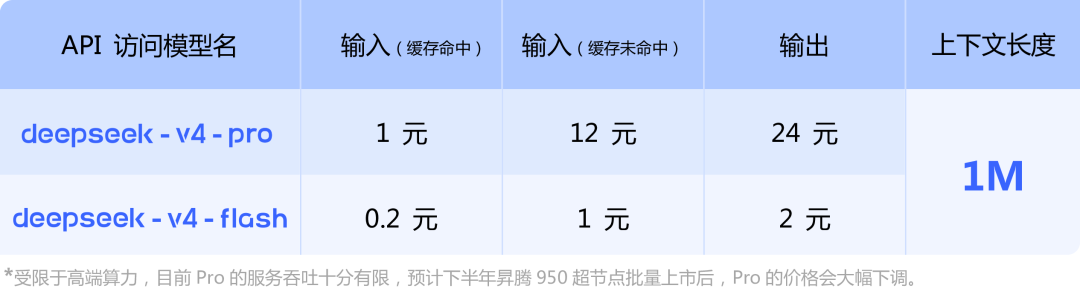

I have a collection of novel probability and statistics problems at the masters and PhD level with varying degrees of feasibility. My test suite involves running these problems through first (often with about 2-6 papers for context) and then requesting a rigorous proof as followup. Since the problems are pretty tough, there is no quantitative measure of performance here, I'm just judging based on how useful the output is toward outlining a solution that would hopefully become publishable.
Just prior to this model, Gemini led the pack, with GPT-5 as a close second. No other model came anywhere near these two (no, not even Claude). Gemini would sometimes have incredible insight for some of the harder problems (insightful guesses on relevant procedures are often most useful in research), but both of them tend to struggle with outlining a concrete proof in a single followup prompt. This DeepSeek V4 Pro with max thinking does remarkably well here. I'm not seeing the same level of insights in the first response as Gemini (closer to GPT-5), but it often gets much better in the followup, and the proofs can be _very_ impressive; nearly complete in several cases.
Given that both Gemini and DeepSeek also seem to lead on token performance, I'm guessing that might play a role in their capacity for these types of problems. It's probably more a matter of just how far they can get in a sensible computational budget.
Despite what the benchmarks seem to show, this feels like a huge step up for open-weight models. Bravo to the DeepSeek team!
reply